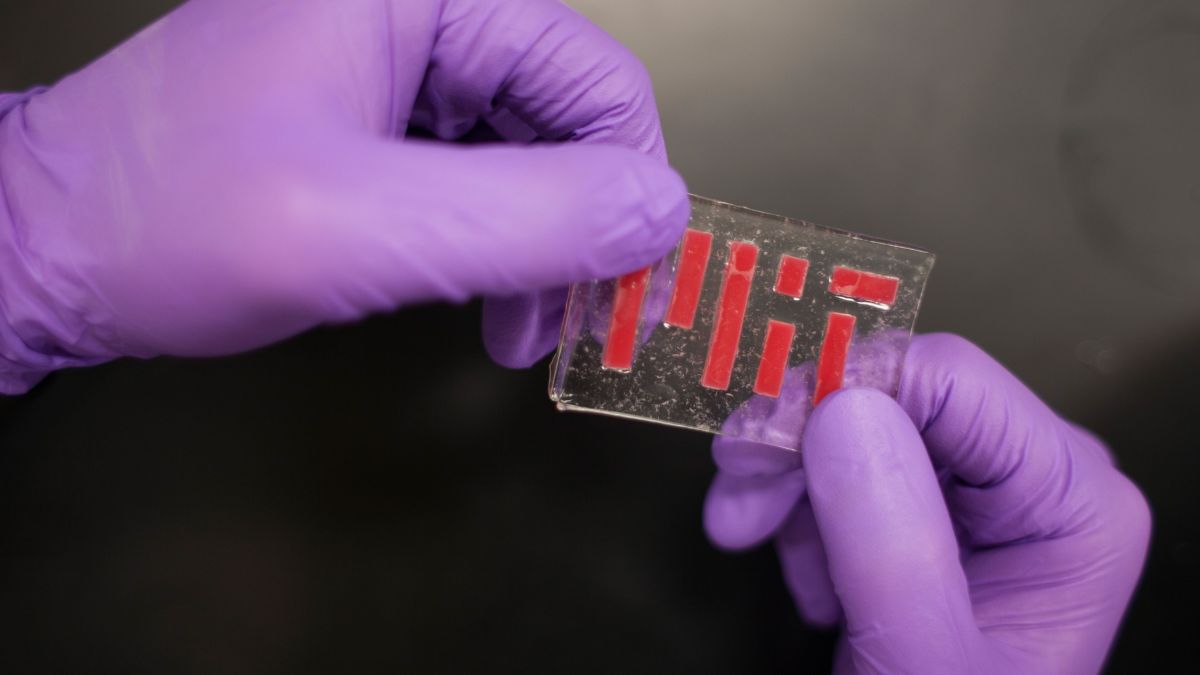
The idea of a material that’s tough like metal but heals like skin sounds like something out of a sci-fi movie, right? Well, it’s not fiction anymore. Scientists have just developed a rigid, self-healing hydrogel that mimics human skin — and it could change everything from medical implants to robotics.
This new material is not only strong and elastic but also regenerates itself without needing any help. No patches, no heat, no special tools. Just like your skin.

Let’s break it down in simple terms and see why this is such a massive breakthrough.
Table of Contents
Breakthrough
Hydrogels have been around for a while. They’re used in all kinds of products — from contact lenses to wound dressings. The problem? They’re either too soft and jelly-like, or too rigid and brittle. You had to pick one: flexibility or strength. And if you went for strength, forget about self-repair.
But that old rule just got smashed.

Thanks to a method called coplanar nanoconfinement, scientists found a way to organize the molecules in the hydrogel so precisely that they can move and shift without tearing the structure apart. That’s the magic trick. The result? A material that’s strong, stretchy, and heals itself multiple times. Yes, even after big fractures.
Healing
So, how does this stuff actually repair itself?
The key ingredient is something called synthetic hectorite. Think of it like a molecular scaffolding system. These are super-thin sheets of clay that hold the material’s internal structure together. When damage happens, the hydrogel molecules are able to slide back into place along the scaffold, slowly restoring the material to its original form.

And here’s the kicker: it doesn’t need external help. No electricity. No heat. Just time and stability. The healing process is built into the material itself.
Strength
Let’s talk numbers. This isn’t your average soft material. The hydrogel can handle up to 4.2 MPa of tension — a huge leap from what we’ve seen before. Even after taking a hit, it maintains 100% of its self-healing efficiency.
Here’s a quick comparison to put things in perspective:
| Property | Traditional Hydrogel | New Hydrogel |
|---|---|---|
| Tensile Strength | < 1 MPa | 4.2 MPa |
| Self-Healing Ability | Partial | 100% |
| External Healing Needed | Yes | No |
| Flexibility | Low (when rigid) | High |
| Sustainability | Moderate | High |
It’s like getting the strength of a rock with the flexibility of rubber — and the healing powers of Wolverine.
Uses
The possibilities for this are wild. In medicine, imagine implants or bandages that heal themselves. You could make prosthetics that don’t need regular replacing because they fix themselves after wear and tear. That’s a game-changer.
Soft robotics, which is all about making machines move like living creatures, can also benefit massively. Robots made with this hydrogel can survive rough conditions, repair themselves on the go, and keep working. Think rescue robots, space explorers, or deep-sea drones — all using this skin-like material.
Flexible electronics could also use this to recover after being scratched or bent. Even 3D printing could take advantage of it to create more durable, adaptive parts.
Versatile
Another big plus? This material is sustainable and doesn’t need complex manufacturing. It can be used with different polymers and doesn’t rely on power-hungry processes.
Researchers are already pushing it further. By mixing in MXenes — a type of smart material — the hydrogel could gain new abilities like conducting electricity or responding to environmental changes. That opens doors to smart bandages that monitor healing, or skin for robots that can feel touch or temperature.
Future
It’s more than just a “skin” — this could become the foundation for next-gen materials across industries. Think space exploration, where repairs aren’t possible. Or deep-sea missions, where machines need to be as tough and adaptable as living organisms. This hydrogel can take hits, adapt, and come back strong — no human intervention needed.
The line between natural and synthetic is getting blurrier. And honestly, that’s exciting. We’re not just copying nature anymore — we’re learning from it and building materials that might be even better in some ways.
So next time you hear about something “healing like human skin,” don’t assume it’s fiction. It might just be science doing its thing.
FAQs
What is coplanar nanoconfinement?
It’s a technique that aligns molecules for strength and self-healing.
Does this hydrogel need external help to heal?
No, it self-heals without heat, electricity, or tools.
Can this material be used in robots?
Yes, it’s ideal for soft robotics and durable machines.
How strong is the new hydrogel?
It withstands up to 4.2 MPa of tension, which is very high.
Is the hydrogel eco-friendly?
Yes, it’s sustainable and doesn’t require complex processes.