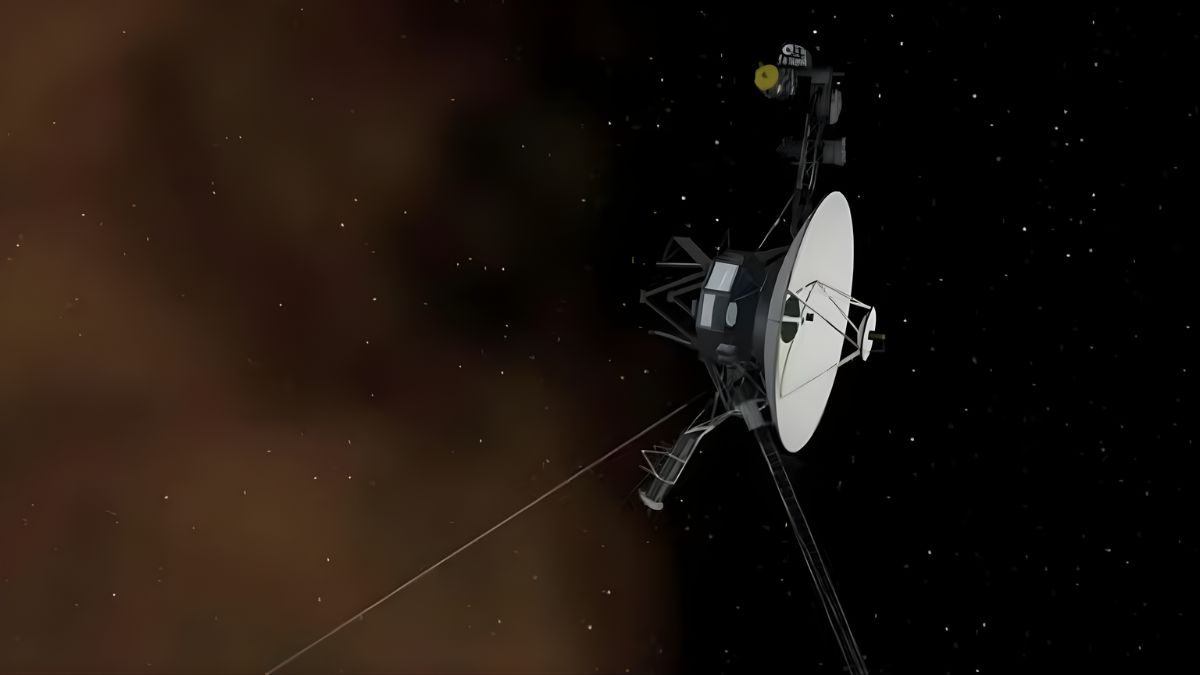
In a twist straight out of a sci-fi movie, NASA scientists were shocked to discover a strange radio signal coming from Earth’s orbit—only to trace it back to a satellite they presumed dead for over half a century. The satellite, known as Relay 2, was launched in 1964 and officially shut down in 1967. But in 2024, it seemingly came back to life… or at least, sent out one last strange message.
Let’s cut into how a long-forgotten chunk of space junk ended up grabbing NASA’s attention again after decades of silence.
Table of Contents
Discovery
On June 13, 2024, scientists using the ASKAP radio telescope in Australia picked up what they believed was a fast radio burst (FRB). These powerful bursts of radio waves usually come from distant galaxies—billions of light-years away. So when one appeared to originate just 4,500 kilometers from Earth, researchers knew something didn’t add up.
After analyzing the signal’s origin and trajectory, they matched it with a very familiar path: that of Relay 2, a communication satellite launched by NASA back in 1964. Though it stopped functioning in 1967, it had quietly remained in orbit ever since.
Meaning
FRB stands for Fast Radio Burst—an intense, brief flash of radio waves. Typically, FRBs are linked to powerful cosmic events far beyond our solar system, like collapsing stars or even black holes. So when scientists found one in low Earth orbit, it sent a wave of confusion through the astronomy world.

How could a decades-old satellite be the source of a signal typically associated with the deep universe?
Reasons
While Relay 2 hasn’t functioned in decades, scientists believe the signal was triggered by one of two events:
- Electrostatic Discharge: Satellites in space can build up static electricity over time. If enough charge builds up, it can suddenly release, creating a burst of energy that looks like a radio signal.
- Micrometeorite Impact: Tiny space rocks—called micrometeorites—are constantly zipping through space. If one of these hits a satellite, it can create an electrical disturbance strong enough to emit a short burst of energy.
In this case, scientists lean toward the electrostatic discharge theory. The signal wasn’t strong enough to suggest a major impact, but it was sharp enough to register as something unusual.
Relay

Relay 2 was part of NASA’s early efforts to develop communication satellites. Its mission was short-lived, but it played a role in building the systems we rely on today—like satellite internet, weather forecasting, and GPS.
Even though it stopped working more than 50 years ago, it never re-entered Earth’s atmosphere. Like thousands of other inactive satellites, it’s now considered space junk.
And yet, even in retirement, it managed to make headlines again by mimicking a cosmic event.
Impact
This might not be the kind of dramatic discovery with jaw-dropping space images or alien theories—but it matters. A lot.
First, it shows how important it is to distinguish between natural cosmic signals and artificial ones caused by human activity. With so many satellites orbiting Earth, even dead ones like Relay 2 can interfere with scientific research.
Second, it highlights the growing problem of space junk. Dead satellites, if not carefully monitored, can cause confusion, send out false signals, or even collide with working equipment.
Finally, this surprise signal reminds us that even “retired” technology can impact current science. Relay 2’s brief moment back in the spotlight could help scientists better understand how electrostatic discharges or impacts from micrometeorites affect other satellites—including the ones we use daily for internet, weather updates, and global communication.
Future
Now that NASA and other space agencies are paying closer attention, more effort is going into monitoring old satellites and debris. This event proves they’re not just floating garbage—they’re unpredictable and sometimes still active in ways we didn’t expect.
So the next time you hear about NASA discovering something odd, remember: space has a long memory, and even the “dead” might have something left to say.
FAQs
What is Relay 2?
A NASA satellite launched in 1964 and inactive since 1967.
What is an FRB?
A fast radio burst—short, powerful radio waves from space.
Why did Relay 2 send a signal?
Likely due to electrostatic discharge built up in orbit.
Could a micrometeorite cause it?
Yes, a tiny impact might trigger an energy burst.
Is space junk dangerous?
Yes, it can disrupt signals and damage working satellites.