What began as a mission to uncover one of Antarctica’s most enduring mysteries—the wreck of Shackleton’s Endurance—took an unexpected and mind-blowing turn. A team of scientists, equipped with advanced mapping gear and icy determination, set off to look into the Weddell Sea.
But instead of shipwreck timbers, they stumbled upon something completely different: a sprawling city of fish nests, aligned with such precision that it looked more like a planned neighborhood than anything you’d expect under the Antarctic ice.
Table of Contents
Discovery
Imagine trekking across a frozen desert expecting to find relics of the past, only to uncover a thriving underwater civilization. That’s essentially what happened here. The British expedition—composed of researchers from the University of Exeter, the Nekton Foundation, the National Oceanography Centre in Southampton, and Ocean Census—was using sonar equipment to chart the seabed where Shackleton’s Endurance sank in 1915.
But when they veered off course into a newly exposed area (thanks to the breaking away of the A68 iceberg), their instruments began to pick up something odd: countless strange, symmetrical shapes under the sea floor. Intrigued, they sent down cameras.
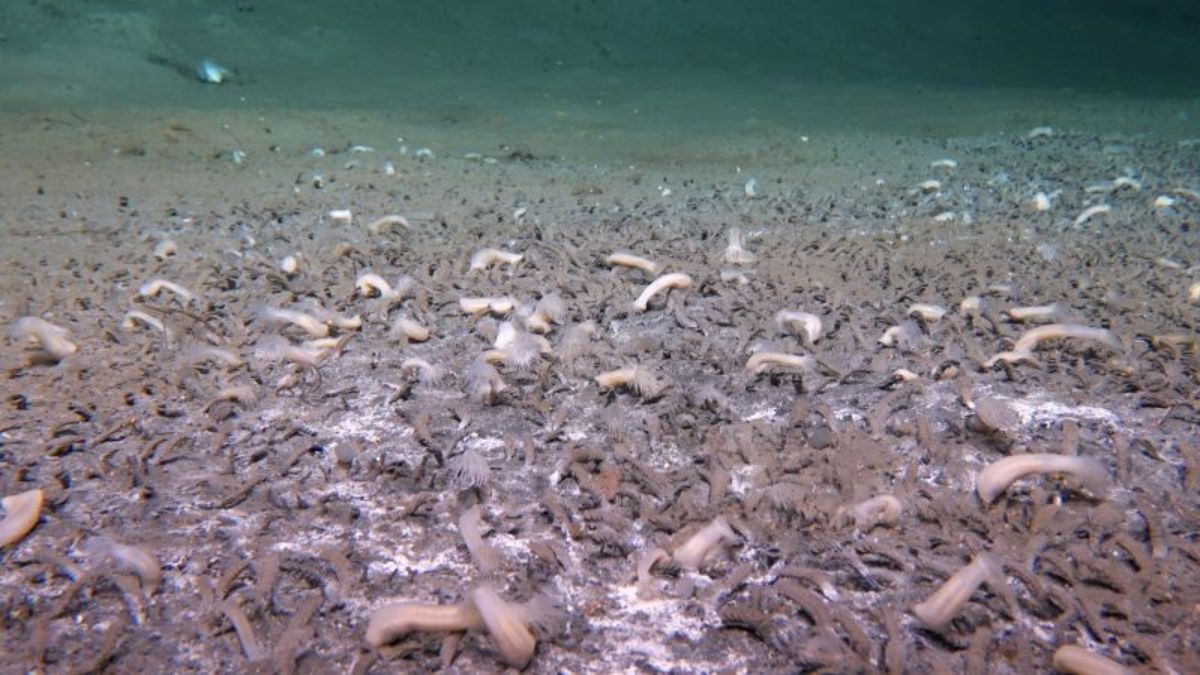
What they saw left them speechless—more than a thousand fish nests, each guarded by an adult, arranged in nearly perfect rows and clusters. It wasn’t just a group of nests. It was a megacolony.
Nests

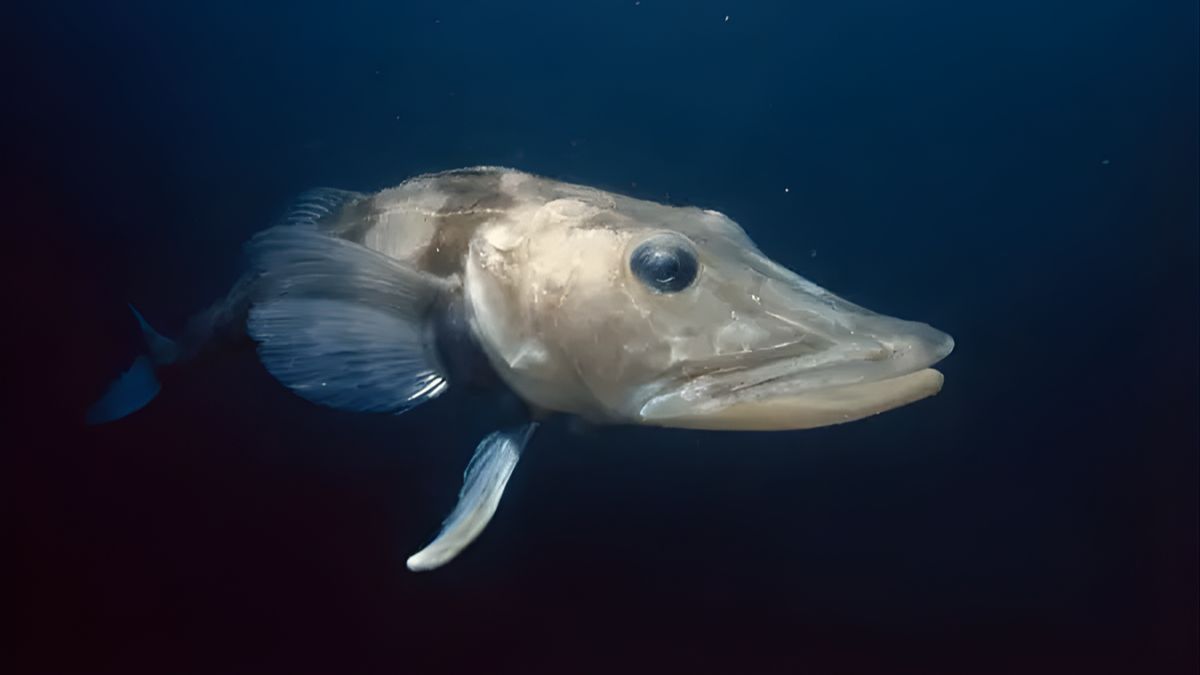
Each of these nests, about 75 centimeters wide, belonged to fish from the genus Neopagetopsis. This type of fish, native to the freezing waters of Antarctica, had always been thought of as loners. Apparently, we were wrong.
Every nest had eggs, and each was guarded by an adult. The fish didn’t just lay eggs and swim away. They stuck around, cleaned the nest, and kept predators at bay. It’s like the underwater version of stay-at-home parents—only colder.
And the layout? Think of it as underwater suburbia: neat rows, carefully spaced plots, and shared responsibilities. It was more organized than most cities on land. This is the largest known fish breeding colony ever found on Earth.
Ice
Here’s the twist—none of this was visible before. The entire area had been sealed off by thick Antarctic ice for centuries. The massive A68 iceberg, which broke away from the Antarctic Peninsula in 2017, created a rare opportunity to explore this hidden section of ocean floor.
Without that shift, the megacolony might have remained a secret for generations. The breakup of ice sheets due to warming temperatures is uncovering more than just geological formations—it’s revealing whole ecosystems that challenge what we know about marine life.
Climate
Now, this isn’t just about fish being good parents. This discovery is a loud and clear reminder of what lies beneath our oceans—and how climate change is pulling back the curtain. As glaciers and icebergs retreat, new marine habitats are emerging, untouched and undisturbed.
Some scientists believe this could be just the tip of the iceberg—literally. There might be more of these underwater colonies hiding beneath other icy regions. And if that’s true, we’re looking at the beginning of a new era in ocean exploration.
This also raises important questions. If human activity expands into these regions, what happens to these delicate, ancient ecosystems? There’s already talk of turning the Weddell Sea into a marine sanctuary to protect this megacolony from fishing and pollution.
Behavior
Why would fish build nests, let alone thousands of them? Most fish don’t bother. But some species—including cichlids, gobies, and sticklebacks—build nests to protect their eggs.
What makes this Antarctic discovery different is the sheer scale and communal nature of the nesting. These fish aren’t just working alone—they’re building a society. Each fish has its space, but they’re all cooperating in a system that seems almost designed.
It’s a reminder that intelligence and organization don’t just exist in mammals or birds. Sometimes, it’s the creatures under the ice that show us what real teamwork looks like.
Future
The expedition team plans to return in 2026, armed with better tech and 3D imaging, to keep tabs on the colony. They want to see how the fish population changes over time—and whether more megacolonies are hiding elsewhere under Antarctica’s icy lid.
This discovery also adds fuel to the conversation about preserving untouched ecosystems. As more ice melts and more ocean is revealed, there will be increasing pressure to balance exploration with protection.
Let’s face it—this isn’t just about science anymore. It’s about responsibility.
Sometimes, nature surprises us not with what’s gone, but with what’s always been there—quietly thriving, out of sight. The hunt for Shackleton’s Endurance may not have ended with a shipwreck, but it gave us something just as precious: proof that there’s still so much we don’t know.
And maybe, just maybe, that’s the best kind of discovery.
FAQs
What kind of fish made the nests?
The nests were made by Neopagetopsis, an Antarctic fish species.
How big is each fish nest?
Each nest is about 75 centimeters in diameter.
Why were the nests hidden before?
The area was covered by Antarctic ice until 2017.
Is this the only fish colony found?
It’s the largest found so far, but others may exist.
Will the site be protected?
Scientists propose making the area a marine sanctuary.