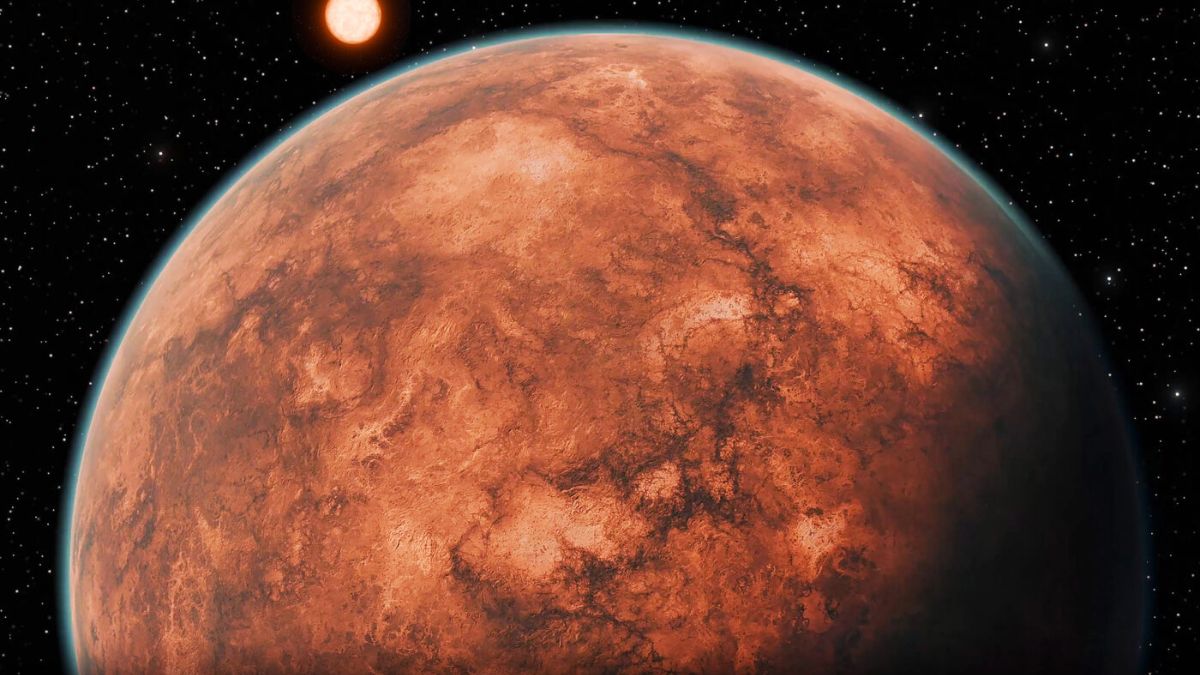

Venus, the mysterious and cloudy twin of Earth, has just surprised scientists once again. Long thought to be geologically dead, new data confirms Venus is actually alive—volcanically speaking. Yes, volcanoes on Venus are erupting, lava is flowing, and the surface is shifting. This changes everything we thought we knew about our closest planetary neighbor.
Thanks to a fresh look at data from NASA’s Magellan mission, scientists now have evidence that Venus is still geologically active. And that has big implications, not just for Venus, but also for how we know Earth’s past and the evolution of rocky planets.
Table of Contents
Discovery
For decades, scientists believed Venus had cooled down and become geologically inactive. That idea has now been tossed aside. A recent NASA study took another look at data collected by the Magellan spacecraft back in the 1990s. Using modern analysis tools, scientists noticed something stunning: Venus’s surface is still changing. It’s hot. It’s alive.
This research confirms that Venus still experiences volcanic activity, with signs of lava flow and surface reshaping over short periods. It’s the first direct evidence that Venus isn’t just a scorched rock floating in space—it’s a dynamic planet.
Surface
The key feature scientists focused on was a group of large circular structures called coronae. These are massive ring-like formations caused by heat pushing up from deep inside the planet. Researchers studied 75 of them and found that 52 were located in areas that are still hot beneath the surface.
That means Venus has internal heat—enough to deform, stretch, and break the crust. And while Venus doesn’t have tectonic plates like Earth does, this internal pressure causes similar surface activity, such as mountain building or even Venus-quakes.
Volcanoes
One volcano in particular grabbed everyone’s attention: Maat Mons. Named after the Egyptian goddess of truth and justice, this giant volcano appears to be active. In fact, scientists observed that its shape changed noticeably over just 8 months—a transformation only possible if lava was moving.
They also detected signs of recent lava flows around this region. Until now, no one had concrete proof that any volcanoes on Venus were still erupting. This is the game-changing moment.
Importance
Why does this matter? Because Venus is Earth’s twin in size, structure, and composition. If Venus is still geologically active, it can help scientists understand how Earth’s interior behaves—or how it once did.
Venus is like a time capsule. Studying it could give us clues about what Earth may have looked like billions of years ago. It could also offer insights into planetary life cycles, and whether planets like Venus could ever support life under different conditions.
Missions
This discovery has kicked future exploration into high gear. NASA has already greenlit the VERITAS mission, set to launch around 2031. Its goal? Create high-resolution 3D maps of Venus and detect geological activity in real time.
But NASA isn’t the only one with Venus fever. The European Space Agency (ESA) is preparing a mission called EnVision. This mission will focus on analyzing volcanic rocks and searching for traces of water, to find out whether Venus once had oceans or conditions for life.
Both missions will work together to paint a clearer picture of Venus—its past, present, and maybe even its future.
Surprises
Venus has long been overlooked in favor of Mars, but this new chapter proves it’s a planet full of surprises. Once thought to be dormant and lifeless, it now shows clear signs of activity. Volcanoes, crustal shifts, and internal heat prove that this planet is anything but dead.
The discovery is a reminder that space is constantly evolving, and that we’re only scratching the surface of what’s really happening in our solar system.
FAQs
Is Venus geologically active?
Yes, NASA confirmed Venus still has volcanic activity.
What mission found Venus volcanoes?
Data from NASA’s Magellan mission revealed volcanic signs.
Which volcano on Venus is active?
Maat Mons showed shape changes and lava flow activity.
Why is this discovery important?
It helps us understand rocky planets and Earth’s past.
What are future missions to Venus?
NASA’s VERITAS and ESA’s EnVision will explore Venus.