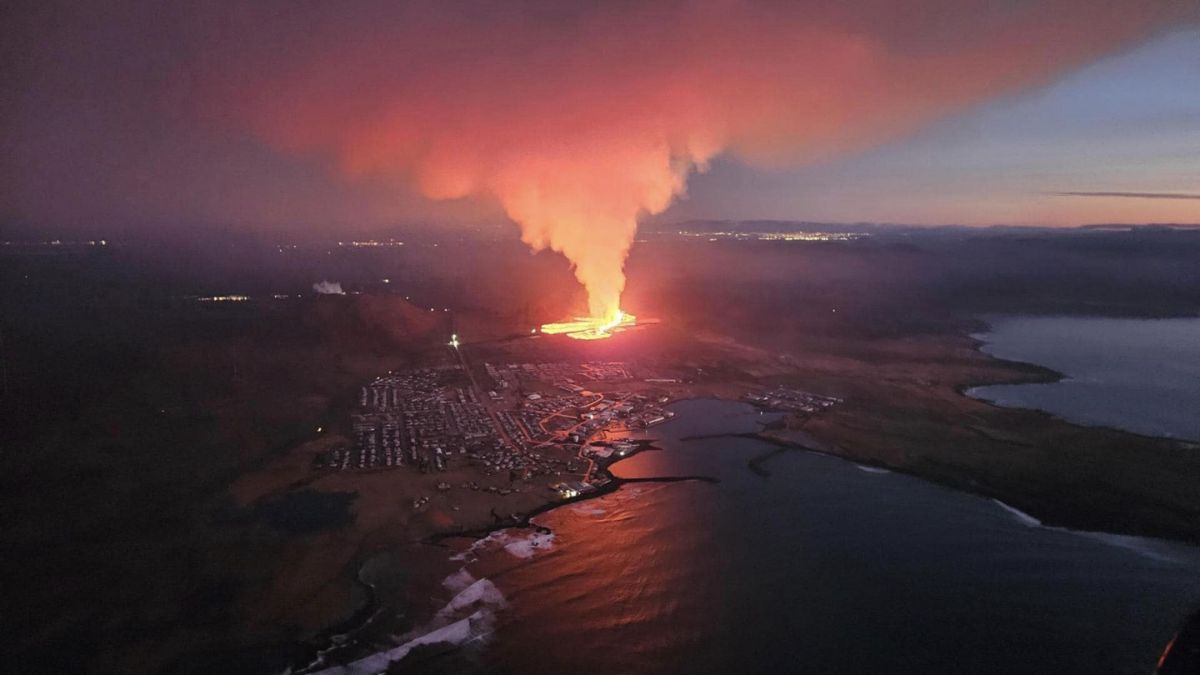
We’ve all heard about climate change bringing more heatwaves, floods, hurricanes, and droughts. But here’s one you probably didn’t see coming: melting glaciers might cause dormant volcanoes to erupt in the future.
Yep, volcanoes. According to recent research presented at the Goldschmidt Conference, this chain reaction between glaciers and volcanoes is real—and could have serious long-term effects on Earth’s climate.
Let’s unpack what this means for the future of our planet and why the ice on mountaintops might be holding back more than just water.
Table of Contents
Volcanoes
At first, it might sound like something out of a movie. But it’s based on real science. Volcanologist Pablo Moreno-yaeger, from the University of Wisconsin-Madison, explains that melting glaciers remove pressure from the Earth’s crust. This pressure acts like a lid on the magma below volcanoes, keeping it trapped underground.
When glaciers melt, this “lid” gets lighter. The crust then lifts slightly, giving the magma more space to move—and gases inside it more room to expand. And when gases expand? That’s one of the key triggers of volcanic eruptions.
This process could turn once-dormant volcanoes into active threats over time. One such volcano, Mocho-Choshuenco in southern Chile, is being closely studied for exactly this reason.
Study
Scientists studying this effect focused on Patagonia in South America, a region that was covered by thick ice around 18,000 years ago. This ice was so heavy that it pushed down on the land, preventing magma from rising to the surface.
As the climate warmed back then, the ice melted, the pressure lifted, and the Earth’s crust rebounded slowly. This allowed the magma to rise, gases to expand, and eventually, volcanoes erupted. According to researchers, this process led to several explosive volcanic events in the region.
The Mocho-Choshuenco volcano is a key example. Although it’s currently inactive, scientists linked its past eruptive behavior to the advance and retreat of surrounding ice.
Timeline
So, should we start worrying now? Not exactly. These volcanic responses aren’t instant. In most cases, it takes anywhere from 3,000 to 5,000 years after major ice melt before eruptions occur. But there’s a catch: glaciers today are melting faster than expected, especially in places like Patagonia. That means the Earth’s crust may also be rebounding faster.
It’s still a long-term issue, but one worth paying attention to. Scientists recommend more monitoring and preparation—even if the full effects won’t show up in our lifetimes.
Locations
While this phenomenon was closely studied in Patagonia, it’s not limited to South America. Iceland has already shown similar patterns, where volcanic activity increased following glacier retreat.
More concerning is that researchers now believe this could happen on a global scale. Other at-risk regions include:
- Antarctica
- Parts of North America
- New Zealand
- Russia
In Antarctica, climate models suggest that excessive ice loss could one day trigger increased volcanic activity there as well. This means future eruptions could happen in places far beyond what we usually associate with active volcanoes.
Climate
Now here’s where it gets even more complicated. Volcanic eruptions release large amounts of greenhouse gases like carbon dioxide and sulfur dioxide into the atmosphere. These gases worsen global warming by trapping more heat.
This creates a positive feedback loop:
- Climate change causes glacier melt.
- Melting glaciers reduce pressure on volcanoes.
- Volcanoes erupt and release more greenhouse gases.
- These gases increase global warming.
- More warming leads to faster glacier melt.
And the cycle repeats.
It’s a domino effect where each event triggers the next, creating a loop that becomes harder to break the longer it continues.
Urgency
It’s true that volcanic eruptions from glacier melt won’t start tomorrow. But ignoring this possibility could put future generations at risk. The fact that the climate system is so interconnected—and that melting ice can wake up ancient volcanoes—is reason enough to take it seriously.
We still have time to act. Reducing greenhouse gas emissions, protecting glaciers, and slowing climate change could all help delay or even prevent some of these future eruptions.
Every small effort counts. After all, this isn’t just about heatwaves or sea level rise anymore. It’s also about the ground under our feet—and what could happen if we keep pushing nature too far.
FAQs
Can melting glaciers cause eruptions?
Yes, less pressure on volcanoes can trigger eruptions.
Which volcano is being studied?
Mocho-Choshuenco in Chile was a main focus.
Where else could this happen?
In Antarctica, Russia, Iceland, and North America.
Will eruptions happen soon?
Not immediately—could take thousands of years.
How does this affect climate change?
Volcanic gases add to global warming.