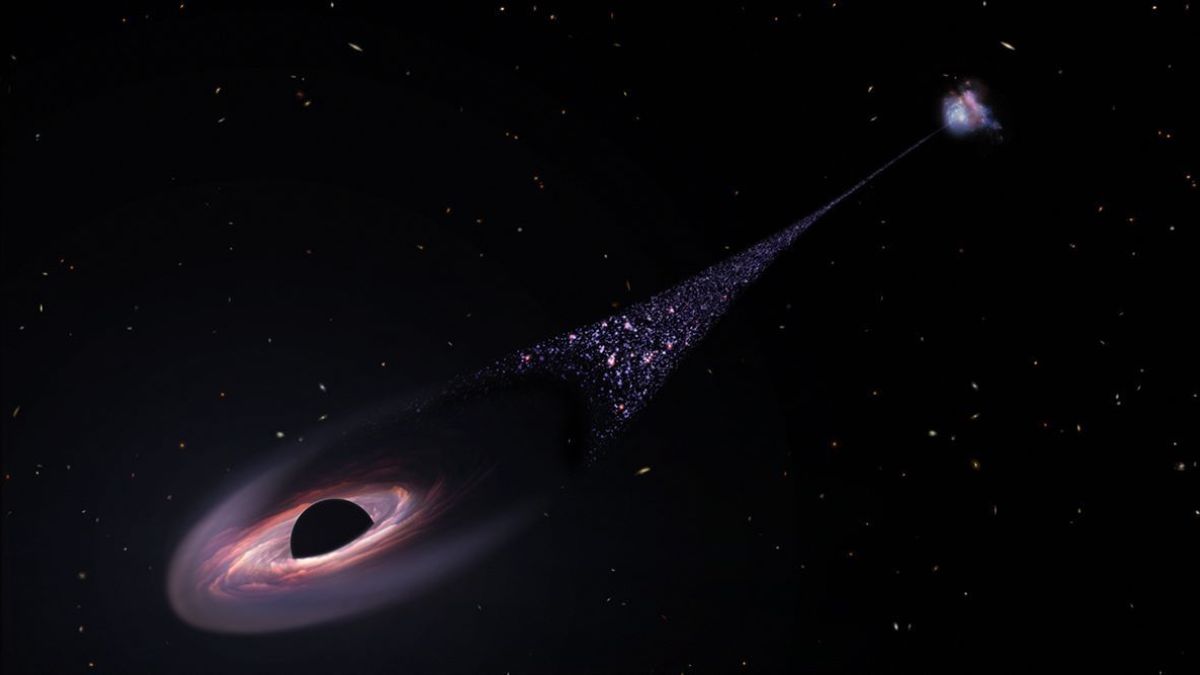

Have you ever looked up at the night sky and wondered what’s out there? Most of us have. But this time, NASA has found something that’s truly blowing minds. A strange, unknown object has entered our solar system — and it’s not like anything scientists have seen before. If you thought space was full of wonders, wait till you hear about this traveler.
Table of Contents
Discovery
It all started like any other routine observation. NASA astronomers, scanning the cosmos for signs of activity, picked up something odd. A distant object was heading toward our solar system — but its path and behavior didn’t add up.
At first glance, it looked like a comet or asteroid. After all, those are the most common space visitors we get. But this one moved differently. Unlike the curving orbits most comets take, this one was cutting a straight line through space, like it had somewhere important to be.
That’s when scientists got curious. If it wasn’t moving like a comet or asteroid… then what was it?
Trajectory
Here’s where things got really strange. Most space objects that enter our system come from the Oort Cloud — a massive region of icy debris beyond Pluto. But this traveler wasn’t coming from that direction. In fact, its path didn’t align with anything familiar in our own Milky Way galaxy.

NASA scientists began to suspect something much bigger: this object might be interstellar. Meaning, it came from outside our solar system altogether. Maybe even from another galaxy. It was a cosmic gatecrasher.
Composition
NASA ramped up their investigation. They used some of the most advanced tools on Earth — including the powerful James Webb Space Telescope — to analyze this object’s brightness, atmosphere, and movement.
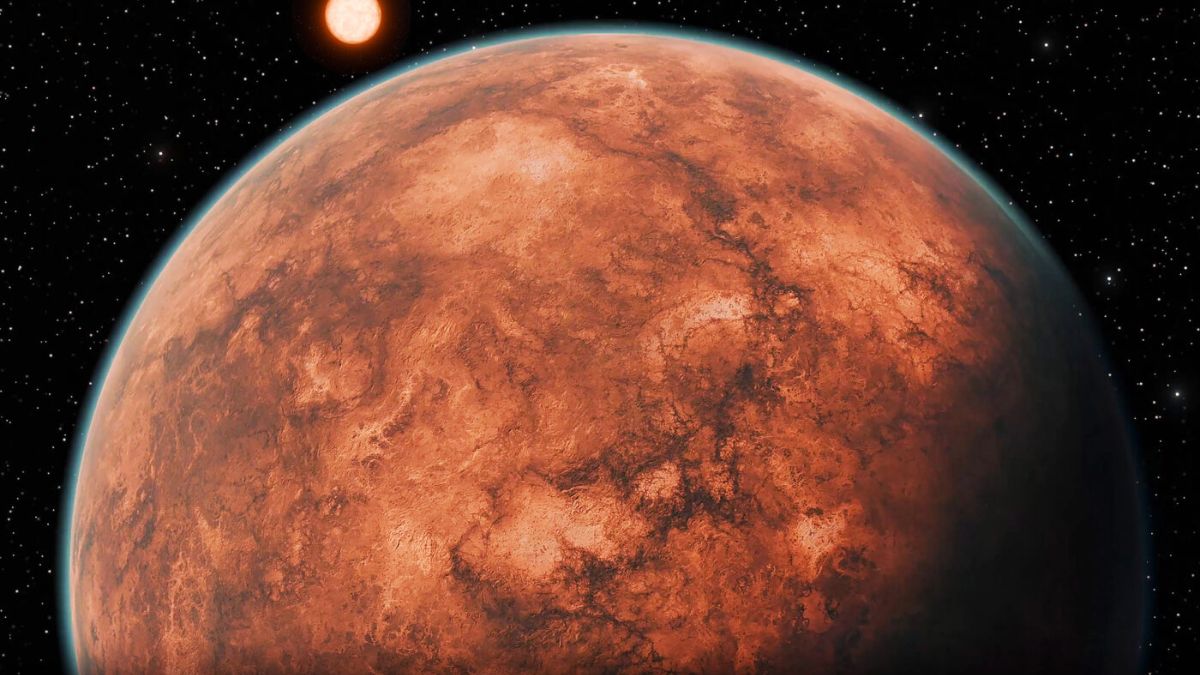
And guess what? The data pointed to something amazing. This was likely an exoplanet — a planet that doesn’t orbit our Sun, but some distant star light-years away.

Now, NASA has already confirmed more than 5,500 exoplanets. But this one? This one stood out. It wasn’t just any exoplanet — it had unique traits that scientists hadn’t seen before.
Atmosphere
To dig deeper, a team led by Everett Schlawin from the University of Arizona and Kazumasa Ohno from Japan’s National Astronomical Observatory took charge. They looked into its atmospheric makeup using infrared imaging from the Webb Telescope.
What they found was wild: faint but clear traces of carbon dioxide. That’s a clue. Another exoplanet, GJ 1214 b, also showed high levels of CO₂ when studied. That planet is 48 light years away and known for its thick atmosphere — denser than even Venus.
This new traveler might share a similar carbon-rich atmosphere, hinting at a composition that could challenge everything we thought we knew about planetary systems.
Here’s a quick comparison of the two:
| Feature | GJ 1214 b | Mysterious Traveler |
|---|---|---|
| Distance from Earth | 48 light years | Unknown, possibly interstellar |
| Atmosphere | Carbon dioxide-rich | Possible CO₂ presence |
| Discovery Tool | Webb Telescope | Webb Telescope |
| Known Star Orbit | Yes | No |
| Movement | Orbit | Linear, interstellar path |
Mystery
Despite all the data, this object still doesn’t fully match anything in NASA’s database. It doesn’t behave like known exoplanets. It’s not orbiting a nearby star. And its route through the solar system is too direct and fast.
Some scientists now speculate it could be a fragment of a distant solar system — maybe even a planet torn from its home after some cosmic disaster. If true, this could be a rare look into how planetary systems break apart and change over time.
Imagine it: a rogue planet, wandering the universe, finally brushing past our corner of space like a message in a bottle.
Wonder
For now, the object remains unidentified. It’s zipping through space, possibly on a one-time visit. And soon, it’ll likely vanish into the cosmic dark again, leaving us with more questions than answers.
But that’s the beauty of space, right? Every mystery is a reminder of how little we truly know. Our solar system might feel familiar, but it’s just one tiny speck in a sea of galaxies, stars, and secrets.
NASA’s discovery gives us hope that there’s still so much more to look. Each passing traveler from the deep unknown is a cosmic invitation to stay curious, keep looking up, and never stop wondering.
FAQs
What did NASA recently discover?
A mysterious object entering our solar system.
Is the object an asteroid or comet?
No, it moves differently and doesn’t match known paths.
Could the object be an exoplanet?
Yes, signs suggest it might be an interstellar exoplanet.
What telescope studied the object?
NASA used the James Webb Space Telescope.
Will the object stay in our system?
No, it’s expected to pass by and leave.