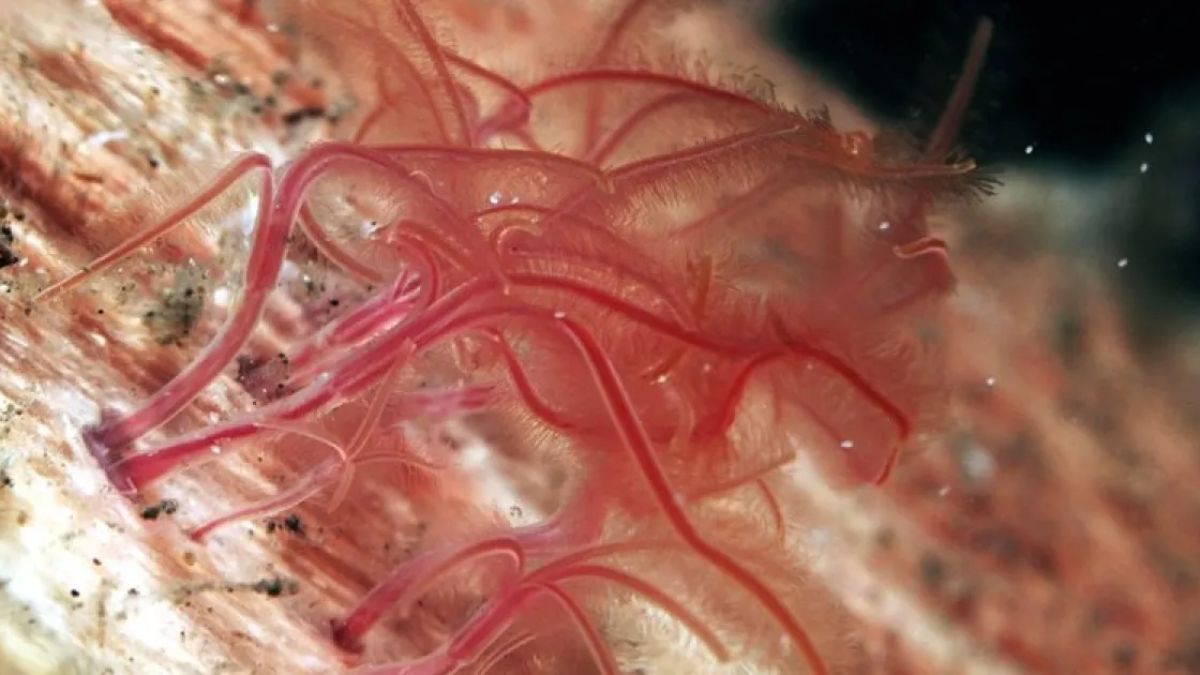
You’ve probably heard of some strange deep-sea creatures, but have you ever come across worms that eat bones? Yep, that’s real—and they’re not new. These odd little organisms, known as Osedax worms, have been doing their thing quietly at the bottom of the ocean for over 100 million years. They don’t munch on plants or leftovers like regular worms. Instead, they feast on massive skeletons—like whales and even ancient sea reptiles.
Sounds like something out of a sci-fi movie, right? Let’s cut into their fascinating world.
Table of Contents
Bone Feeders

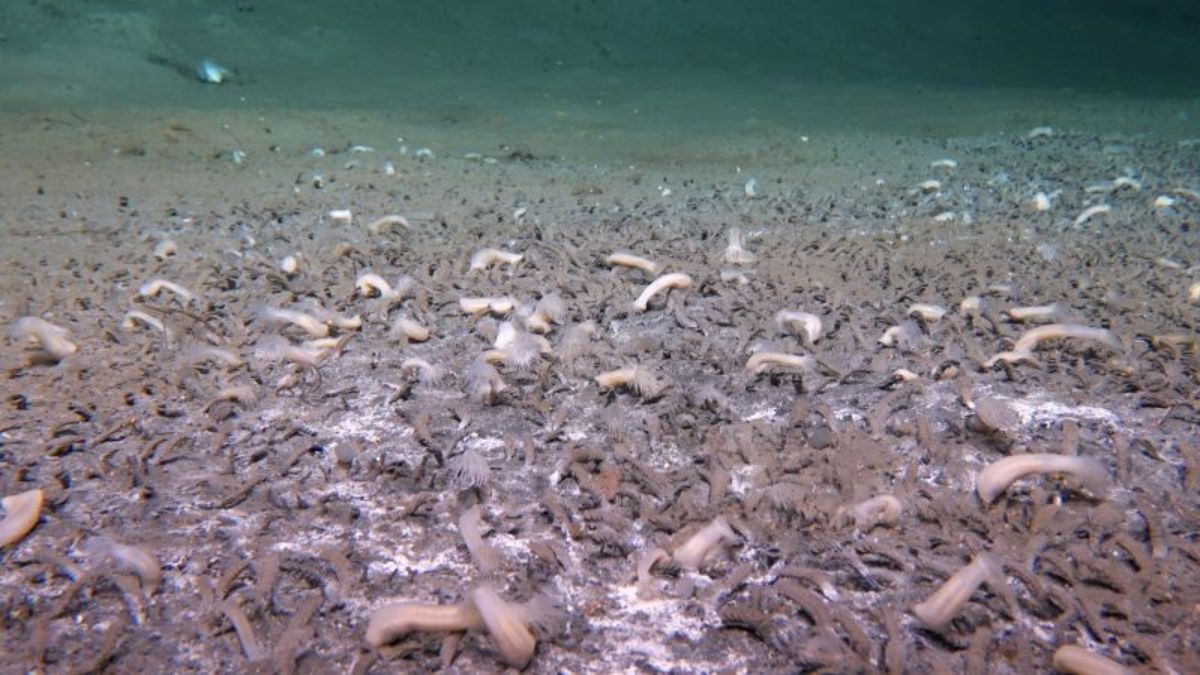
So, what do Osedax worms actually do? When a giant animal like a whale dies and sinks to the ocean floor, its body becomes an underwater buffet for all sorts of creatures. Among the last to arrive are the Osedax worms. These worms don’t have mouths or teeth, but they dig into bones using root-like structures. The real magic happens with the bacteria living inside them—those microbes help the worms absorb the nutrients from the bones.
It’s a pretty clever system, and they carry it out silently in the dark, cold depths of the sea, where hardly any light or humans ever reach.
Ancient Proof
If whales haven’t always existed, how long have these worms been around? That’s what a team from University College London and the Natural History Museum in the UK set out to discover.

They examined more than 130 ancient marine fossils using CT scans (kind of like X-rays) to check the insides without damaging the bones. And guess what? They found six fossils with tiny tunnels that looked exactly like the ones Osedax worms make today.
That means these worms were already active back in the age of dinosaurs. Back then, there were no whales, so these worms fed on the bones of huge marine reptiles like mosasaurs, plesiosaurs, and ichthyosaurs.
Fossil Marks
Thanks to these wormy burrows, scientists were able to identify seven new types of worms. These are called ichnospecies—species known only from the traces they leave behind, not from their actual bodies.

Even more interesting, the ancient burrows look almost identical to modern ones. That means these worms haven’t changed much in over 100 million years. It’s like finding a living fossil, except the evidence is in the bones they’ve been tunneling through for ages.
By analyzing tiny rock particles around the fossils, researchers dated them to the Cretaceous period. That confirms these creepy bone-eaters go way, way back in time.
Evolution Puzzle
So, what comes next? Even with these discoveries, researchers are just scratching the surface. More fossil bones could reveal even more about these worms’ ancient past.
Scientists also want to study living Osedax worms in greater detail. By comparing their DNA to fossil evidence, they hope to figure out how these creatures evolved—and whether the worms we see today are direct descendants of those that lived during the age of dinosaurs.
One researcher, Sarah Jamison-Todd, pointed out that some of the bone tunnels found in fossils look almost exactly like modern ones. That raises a huge question: did the same species make both, or did different worms evolve to cut in similar ways? That process is called convergent evolution, and studying it could help scientists understand how life in the ocean adapts over time.
Deep Mystery
It’s wild to think that such tiny creatures could play such a big role in breaking down some of the ocean’s biggest animals. For millions of years, Osedax worms have been recycling bones and keeping the deep-sea ecosystem moving.
They might not be flashy or famous, but these worms are part of a much bigger story—one that spans dinosaurs, mass extinctions, and the modern-day ocean floor. And their discovery reminds us that there’s still so much we don’t know about life under the sea.
Who knows what else is hiding in the darkness?
Worm Facts
Let’s break it down with some quick facts:
| Feature | Detail |
|---|---|
| Name | Osedax (means “bone-eater” in Latin) |
| First discovered | 2002 (living worms), 100M years (fossils) |
| Eats | Whale bones, marine reptile bones |
| Has a mouth? | No — absorbs nutrients via bacteria |
| Known from fossils | Yes — from Cretaceous period |
| Number of ichnospecies | 7 (identified by fossil burrows) |
FAQs
What do Osedax worms eat?
They feed on the bones of large sea animals like whales.
Do these worms have mouths?
No, they absorb nutrients with help from bacteria.
How old are Osedax worms?
They’ve existed for over 100 million years.
What are ichnospecies?
Species known only from the traces they leave behind.
How were Osedax fossils found?
By using CT scans on ancient marine bones.