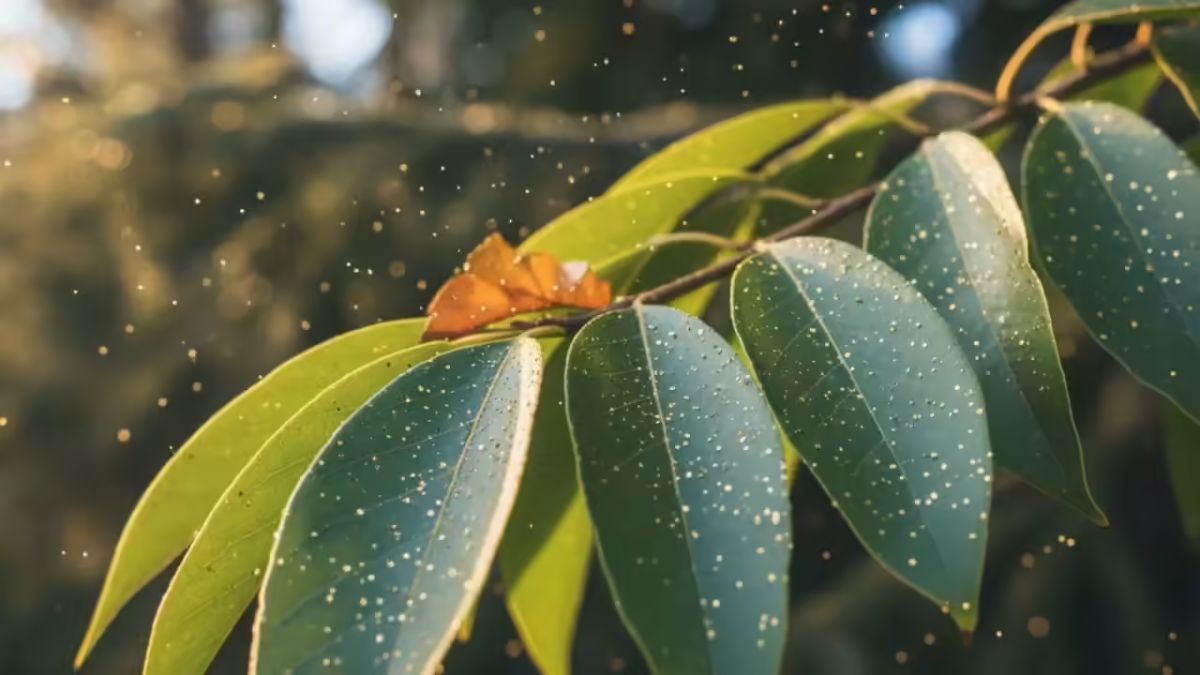
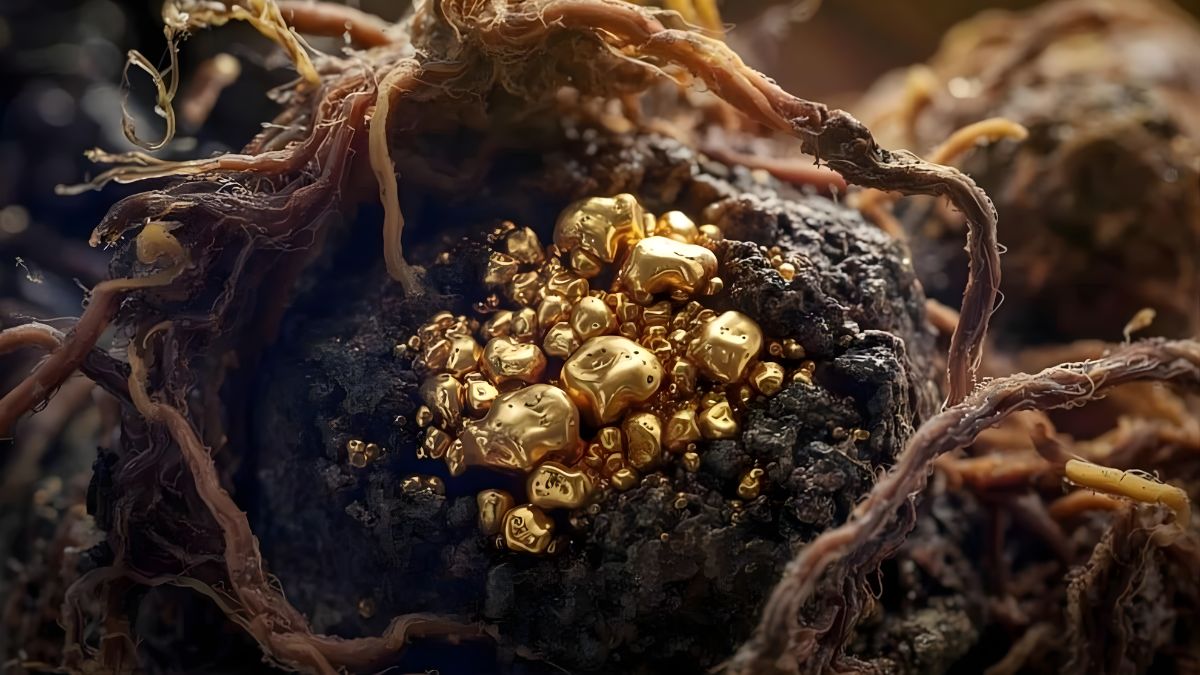
It sounds like something pulled straight from a sci-fi novel — gold-producing fungi. But no, this isn’t a wild theory or the plot of a fantasy film. It’s real science. A group of Australian researchers has discovered a type of fungus that can absorb gold, grow better in its presence, and even coat itself with tiny gold particles. That’s right — it decorates itself with gold like it’s the latest fashion trend.
This strange discovery happened at CSIRO, Australia’s national science agency. What seemed like a quirky lab result may just turn the mining industry upside down.
Table of Contents
Fungus

The scientists stumbled upon a species closely related to Fusarium oxysporum — a common fungus found in soil. But this one has an odd habit: it thrives around gold. Instead of dying from exposure, like many organisms would, this fungus absorbs gold and incorporates it into its structure.
It’s like nature’s version of a blinged-out mushroom. And what’s crazier is that it grows better with gold around. So it doesn’t just tolerate the metal — it seems to enjoy it.
Inversion
This flips everything we thought we knew about geology and mining. Traditionally, finding gold meant digging, blasting, and panning through rivers. But what if fungi can tell us where the gold is — without moving a single rock?

Dr. Tsing Bohu, who’s leading the study, explained it in simple terms: gold is one of the least reactive elements in the periodic table. It usually does nothing. So the fact that a living fungus can interact with it, adapt to it, and even use it… that’s a huge surprise. Basically, biology just schooled chemistry.
Growth
Even more interesting is the possibility that these fungi are not just passive collectors. Some strains may actually create gold nanoparticles under specific conditions. That means they don’t just trap gold from the environment — they might be biologically transforming it.
And it’s not just one species. Others, like Candida rugopelliculosa, have shown similar behavior when under stress. We could be looking at an entire category of fungi with the power to work with gold at a microscopic level.
Clean

And here’s where things get serious. Gold mining today is a messy business. We’re talking about cyanide, deforestation, contaminated water, and massive energy use. But what if fungi could point us toward gold deposits without ever needing to dig?
Some experts are already talking about “biological mining” — using living organisms to detect, isolate, or even extract metals. The process would be cleaner, more precise, and less destructive than current techniques. That’s a huge deal in a world increasingly aware of environmental damage.
Scaling
Of course, there’s a catch. Everything we know so far comes from lab tests. The next big challenge is figuring out if this can work in the real world. What type of soil does the fungus prefer? Does it need certain minerals or microbes to survive? Can it handle the wild conditions outside a Petri dish?
Researchers are now testing different conditions to see how to cultivate this fungus outside the lab. If they figure that out, scaling up might be the next step — and that could revolutionize how we mine gold forever.
Revolution
We may not see gold-hunting fungi deployed in open fields next year. But this discovery has already cracked open a door. A fungus that grows faster with gold and wears it like armor isn’t just fascinating — it might be the future of sustainable mining.
Imagine a mining site without trucks, without explosives, without poisoned rivers. Sounds far-fetched? Maybe. But so did gold-loving fungi… until now.
Nature, once again, proves it had the answers all along. We just needed to look down — literally — and pay attention.
Fungus vs Traditional Gold Mining
| Feature | Gold-Attracting Fungi | Traditional Mining |
|---|---|---|
| Environmental Impact | Minimal | High (toxic waste, deforestation) |
| Energy Usage | Low | High (machines, processing) |
| Detection | Biological markers | Physical excavation |
| Waste Production | Almost none | Tons of rock and chemical byproducts |
| Scalability | In research stage | Already global |
This might be one of those discoveries that feels small today but explodes tomorrow. Gold-hunting fungi aren’t just a fun headline — they’re possibly the first step in building a more sustainable future for one of the world’s most valuable resources.
FAQs
Can fungi really absorb gold?
Yes, some fungi can absorb and decorate themselves with gold.
Which fungus absorbs gold?
A strain related to Fusarium oxysporum does this naturally.
Is biological mining possible?
It’s being studied, and it could be a clean mining alternative.
Why is this discovery important?
It could reduce pollution from traditional gold mining.
What’s the next step in research?
Testing if the fungus works in real-world conditions.