
What’s the first thing you think of when someone says the word gold? For most people, it’s all about jewelry, shiny coins, or maybe treasure chests. But what if I told you that gold just helped scientists challenge some of the most basic assumptions about how matter behaves?
That’s right. Gold isn’t just about wealth anymore—it’s the star of a scientific discovery that left researchers scratching their heads in disbelief. Imagine heating gold to a temperature hotter than the Sun and it still doesn’t melt. Sounds like science fiction, doesn’t it? Let’s break it down.
Table of Contents
Discovery

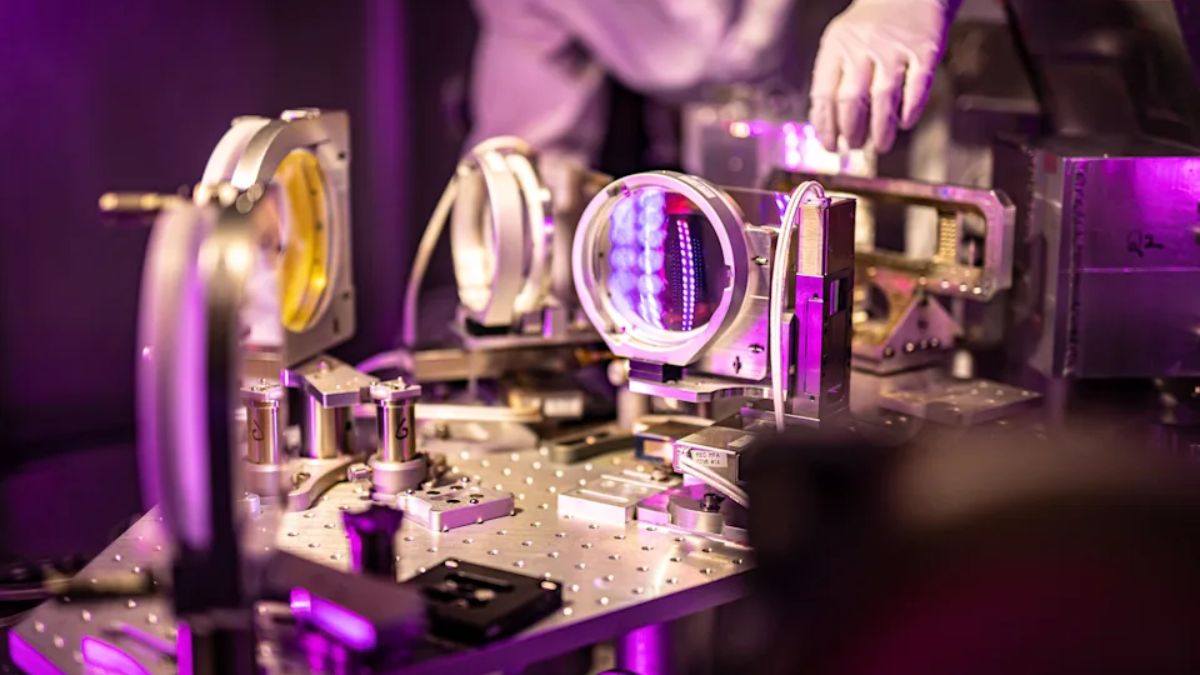
A group of international scientists recently ran a fascinating experiment. They took tiny samples of gold and blasted them with super-fast, ultra-powerful lasers. The goal? To see exactly how and when gold would melt when exposed to intense heat.
Now, you’d expect it to melt as soon as it reached its melting point, right? Well, gold had other plans.
Instead of instantly turning into liquid at its fusion point, the gold stayed solid. Not forever, of course—but long enough to prove that our understanding of melting and heat at the atomic level isn’t as solid (pun intended) as we thought.

They heated gold to an insane 19,000 Kelvin, or more than 18,700 degrees Celsius—that’s hotter than the surface of the Sun! And still, the gold kept its structure for a short but important time: around two picoseconds. That’s a trillionth of a second, which might seem like nothing, but in the science world, it’s a big deal.
Superheating
So how is it even possible?
This weird reaction is thanks to a phenomenon called superheating. Normally, when a solid gets hot, its atoms vibrate more and more until the structure breaks down and it turns into liquid. But if you heat something super quickly—so quickly that the atoms can’t even react—it might stay solid for a bit longer.

Think of it like heating a chocolate bar in a microwave for one second. The outside starts to warm, but the inside is still rock solid. That’s a very basic way of imagining what happened with gold.
Scientists used to believe that there was a “point of no return” called entropy catastrophe—a temperature at which no solid could stay solid anymore. It was assumed to be three times a material’s melting point. But gold just blew that theory out of the water by staying solid at 14 times its melting point. Incredible, right?
Materials
This experiment focused entirely on gold, but now researchers are asking bigger questions. Could other materials do the same? What if there are even more elements that can resist melting when heated fast enough?
That’s the next step—testing this theory on other solids to see if our whole understanding of melting and material limits needs to change. If so, we might be on the edge of a major leap in materials science.
Impact
You might wonder: what’s the big deal about heating gold until it melts? Isn’t that just a fancy science trick?
Actually, this finding could change a lot of things—especially in fields where materials are exposed to extreme heat and pressure. Take a look:
| Application | Why It Matters |
|---|---|
| Space exploration | Helps design materials that survive extreme heat |
| Nuclear reactors | Makes systems safer and more heat-resistant |
| Asteroid impact modeling | Explains behavior during high-pressure collisions |
| Medicine and industry | Could lead to stronger, smarter tools and machines |
This could even help us build better spacecraft, smarter medical devices, and stronger industrial machines.
Future
So, what started as a simple “let’s melt gold” experiment has opened up a doorway to new physics. It’s challenged long-standing theories and sparked a wave of curiosity in the scientific world.
Next time you look at a piece of gold, think about this: it’s not just a symbol of beauty or wealth—it’s a piece of a much larger puzzle in knowing how the universe works. And who knows? Maybe gold is just the beginning.
FAQs
Can gold stay solid at extreme heat?
Yes, gold stayed solid at 19,000K due to superheating.
What is superheating?
It’s when a material resists melting if heated extremely fast.
How hot was the gold in the experiment?
It reached over 18,700°C, hotter than the Sun’s surface.
Why is this discovery important?
It challenges current models of how solids behave under heat.
Will other materials be tested?
Yes, scientists plan to study superheating in other solids too.