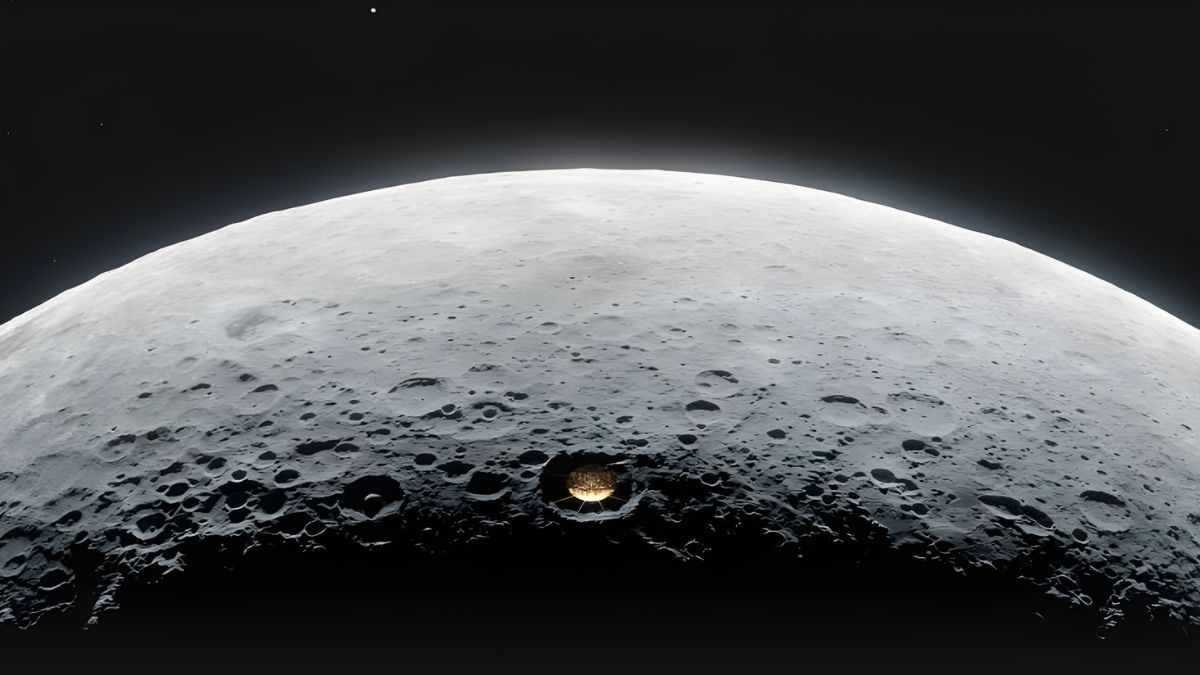
For decades, space exploration has been about pushing boundaries—sending rockets, deploying satellites, and building orbiting space stations. But now, there’s a whole new twist in the cosmic journey: a telescope installed on the far side of the Moon.
Yep, the side we never see from Earth. It’s a bold move in astronomy that could unlock hidden corners of the universe. Still, while scientists are thrilled, privacy advocates are raising eyebrows. Is this a leap forward or a potential risk? Let’s look.
Table of Contents
Isolation
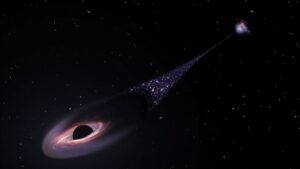
Why stick a telescope on the far side of the Moon in the first place? Simple: silence.
The dark side of the Moon, which always faces away from Earth, is shielded from all kinds of interference. No buzzing satellites, no flashing city lights, not even radio signals can reach it. It’s like putting noise-cancelling headphones on a telescope—it gets to listen to the quiet hum of the universe without distractions.
By setting up shop there, scientists can pick up cosmic whispers we can’t detect from Earth. Think of it like standing in the middle of a forest at night with zero light pollution—you suddenly see stars you never knew existed. That’s what this telescope is doing: pulling in signals from ancient galaxies and distant stars without Earth’s noisy background getting in the way.
Mystery
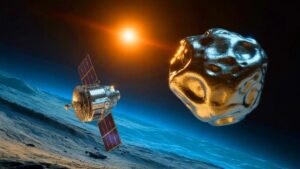
Now comes the part that feels like something out of a sci-fi movie—nobody really knows who’s behind this telescope. NASA, ESA, and China’s CNSA are all suspects, but none have claimed it officially. Some people believe it could be a joint project between countries, kept quiet for political or strategic reasons.
What we do know is that the telescope is fully functional and already sending back data. Scientists are thrilled by the tech leap, but others are urging governments and space agencies to clarify what’s really going on. After all, if this thing can see deep into space, what else can it see?
Duality
Here’s where things get even more interesting: this telescope isn’t just watching distant galaxies—it’s also keeping a close eye on Earth.
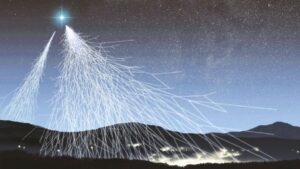
With infrared sensors and cutting-edge quantum processors, it can detect things like volcanic eruptions, earthquakes, or shifting weather patterns. In theory, it’s a dream come true for environmentalists and disaster response teams. Imagine predicting an earthquake days in advance or spotting greenhouse gas levels rising in real time.
But there’s a catch. If it can see that clearly, what’s stopping it from mapping entire cities in high detail? Who’s watching the watchers?
Concerns
Sure, we already live in a world full of security cameras and satellites. But this telescope is different. It’s not just capturing motion; it can scan, analyze, and potentially track people or activities without anyone noticing.
That’s why privacy experts are sounding alarms. They’re not paranoid—they’re asking valid questions: Who owns this data? Can it be misused? Could it be turned into a surveillance tool under the guise of science?
Still, for every concern, there’s a potential breakthrough. This tech could help prevent natural disasters, track climate change more accurately, and even detect alien life or threatening asteroids. It’s a delicate balance—privacy versus progress.
Breakthroughs
This might be the biggest shake-up in space observation since the Hubble Telescope. We’re talking about a telescope placed in the most interference-free zone we know of, operating with near-futuristic precision.
Imagine unlocking parts of the universe that have remained hidden simply because Earth was too noisy. This telescope could give us a first look at signals from the early universe, or even catch rare cosmic events like black hole collisions in better detail.
Here’s a quick table summarizing the pros and cons:
| Benefits | Concerns |
|---|---|
| Clearer cosmic signals | Unknown ownership |
| Disaster prediction | Possible surveillance |
| Monitoring climate change | Lack of transparency |
| Potential to detect alien life | Data misuse risks |
| Asteroid detection | Ethical oversight needed |
Outlook
So, should we be worried? That depends on who’s holding the remote. If used ethically, this telescope could be one of the most valuable scientific tools we’ve ever built. But without public transparency, it’s no wonder people are suspicious.
Still, the tech itself is awe-inspiring. Whether this is just the beginning of a new era in astronomy or the start of a cosmic debate on privacy, one thing is clear—we’ve stepped into the next chapter of look into space.
FAQs
Why use the Moon’s dark side for a telescope?
It’s shielded from Earth’s interference, offering clearer space signals.
Can the lunar telescope watch Earth too?
Yes, it can monitor Earth’s activity and climate in high detail.
Who built the Moon telescope?
No official agency has claimed responsibility so far.
Is this telescope spying on people?
There are concerns, but no proof of personal surveillance yet.
What benefits does this telescope offer?
It helps predict disasters, study climate, and explore deep space.