Something extraordinary has just shaken up the scientific world — and it all started with a meteorite that landed in Germany nearly 300 years ago. Inside it, researchers found a mineral so unique it doesn’t behave like anything else known on Earth. It’s called silica tridymite, and what makes it even more exciting is that it might help reduce carbon emissions on our planet. Sounds like sci-fi? Well, it’s not — this is real science, and the future might just depend on it.
Table of Contents
Origin
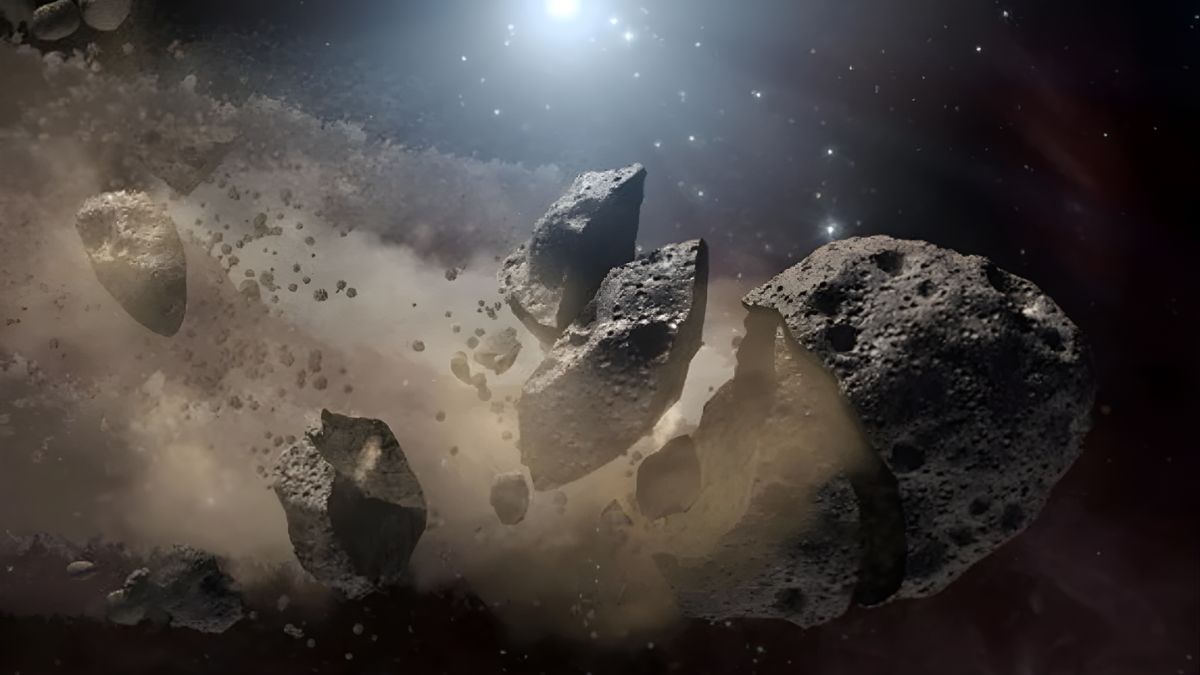
This alien mineral was recently described in a study published in Proceedings of the National Academy of Sciences (PNAS). Scientists found it in a meteorite that fell in 1724, and although the rock has been known for centuries, its secrets are only now being unraveled.

Tridymite is a rare form of silicon dioxide, and while silicon dioxide is everywhere — think sand, quartz, and glass — this version is completely different. Its unique structure gives it properties that scientists say we’ve never seen before on Earth.
Stability
Here’s the weird part: tridymite maintains constant thermal conductivity even when temperatures change. That’s a big deal. On Earth, materials usually behave one of two ways — crystals lose conductivity as they heat up, and glasses tend to increase it.
But tridymite? It doesn’t care. Whether it’s cool or blazing hot, it stays steady. This thermal stability is what makes it so valuable for industries that work with extreme temperatures, like steel production.
Classification

So, is tridymite a crystal? A glass? Neither. Or maybe both. Scientists are puzzled because this material has a little bit of order, like a crystal, but also some disordered features, like glass.
It’s basically rewriting the rulebook. This balance between structure and chaos gives it its unique properties, and that’s what has scientists so intrigued. If they can figure out how it works, they might be able to replicate or even improve it.
Purpose
Let’s talk real-world use. The metallurgy industry — especially in places like the United States — is one of the largest contributors to carbon emissions. Around 7% of all CO₂ in the U.S. comes from this sector alone. Why? Because melting metals takes an insane amount of energy.

If we could create materials based on tridymite that are better at handling high temperatures, industries wouldn’t need to use as much energy. That means fewer emissions, lower energy bills, and a step closer to sustainable production.
Potential
Right now, tridymite is just one mineral found in a very old meteorite. But the concept it unlocks is much bigger. The research, titled Temperature-invariant crystal–glass heat conduction: From meteorites to refractories, lays the foundation for developing next-gen, heat-resistant materials.
What began as a rock from the sky could help Earth lower its greenhouse gas footprint. Imagine — something formed billions of years ago in deep space, now helping solve one of our most urgent problems.
Outlook
Of course, we’re still in the early stages. Scientists are just beginning to understand how tridymite works. But they’re already dreaming big: new materials for furnaces, kilns, spacecraft, and other high-heat environments.
And there’s another twist — the same mineral was also detected on Mars. Which raises more questions: Could Mars hold more of these exotic materials? Are there even more bizarre compounds waiting to be found on other planets?
This discovery is a beautiful reminder that space isn’t just something to observe — it’s something we can learn from. Sometimes, what falls from the sky can help us fix what’s happening on Earth.
FAQs
What is silica tridymite?
A rare form of silicon dioxide found in a 1724 meteorite.
Why is tridymite special?
It keeps the same thermal conductivity at all temperatures.
Can tridymite reduce emissions?
Yes, it could lower energy use in high-heat industries.
Is tridymite found on Earth?
No, this form doesn’t naturally occur on Earth.
Where else is tridymite found?
It has also been detected on Mars.