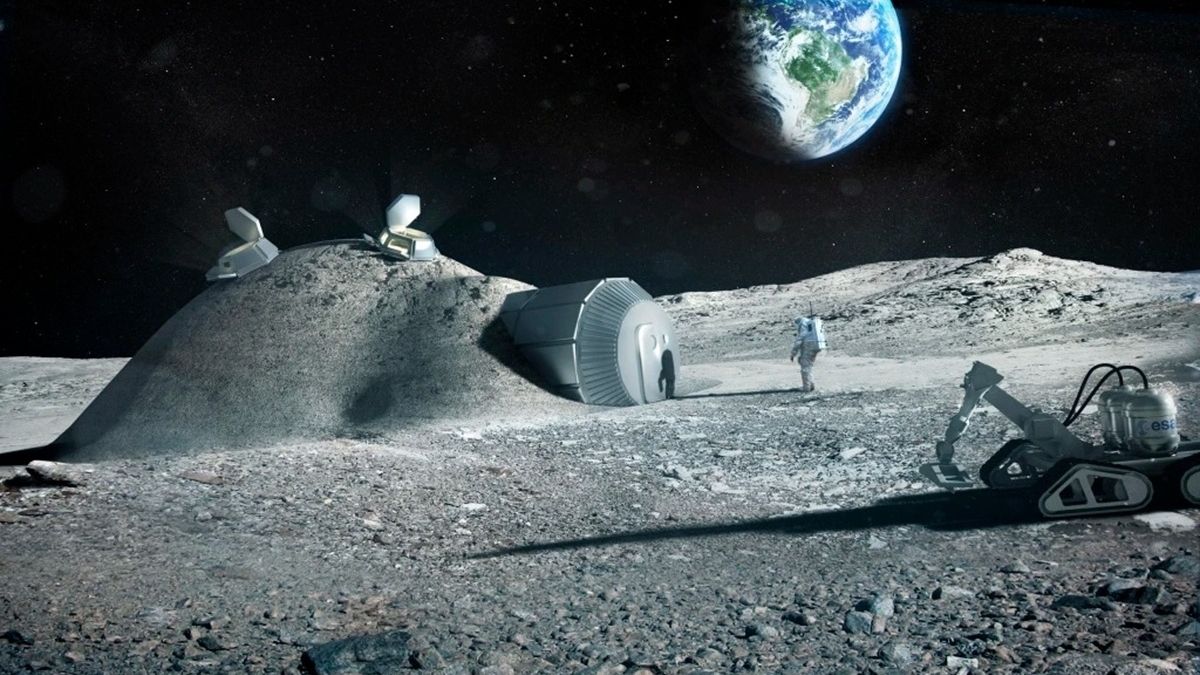
Crazy theories about NASA? We’ve all heard them. But this time, the space agency has announced something that sounds like it came straight out of a sci-fi film: putting a nuclear reactor on the Moon. And no, it’s not a joke or a futuristic dream. This is a real plan that could take shape before the decade is over.
NASA’s goal? To power human bases on the Moon and secure its spot in the new global space race. Let’s break down what this bold move means for space exploration—and why it’s more urgent than ever.
Table of Contents
Energy
Life on the Moon is no picnic. Lunar nights last about 14 Earth days, and that makes it extremely difficult to maintain power. Without sunlight, solar panels aren’t reliable. So, NASA is turning to something stronger—nuclear energy.
They plan to use a system called Fission Surface Power (FSP). It’s a compact nuclear reactor that can produce 100 kilowatts of electricity. That might not sound like a lot, but it’s enough to power about 80 homes on Earth. On the Moon, it’s more than enough to keep habitats warm, run labs, support life systems, and power communications around the clock.
This kind of energy independence is key if astronauts are going to live and work on the Moon long term.
Action
NASA’s been working on this for a while. Back in 2022, they gave $5 million to private companies to start designing these lunar reactors. Now, things are moving faster. The new goal is to double the output and go from blueprints to a working reactor in just five years.
So, what used to be just research is now becoming reality. We’re not talking about experiments anymore. We’re talking about building a real nuclear system that will operate on the Moon’s surface.
It’s a huge shift in pace—and purpose. The Moon isn’t just a destination anymore. It’s a base.
Race
NASA’s urgency makes sense when you consider the competition. Both China and Russia have made it clear: they also want permanent bases on the Moon, and yes, they’re planning to use nuclear power too.
This has raised concerns in Washington. The fear is that these countries might create “exclusion zones” on the Moon—areas where other nations aren’t allowed access. That could turn the Moon into a political and territorial battlefield.
To prevent this, the U.S. is increasing its space budget, speeding up development, and pushing nuclear innovation as a top national priority. NASA isn’t just working for science anymore—it’s playing a major role in space geopolitics.
Leader
At the center of this effort is Sean Duffy, NASA’s acting administrator. You might know him from TV, but now he’s leading one of the most critical projects in space policy.
Duffy has been vocal about staying ahead of China. He said, “we are on a race to the Moon against China, we can’t fall behind.” It’s clear he sees this reactor not just as a power source, but as a symbol of U.S. leadership in space.
Under his guidance, NASA is shifting into high gear, balancing science with strategy.
Beyond
But the reactor isn’t just about powering lunar bases. It’s part of a much bigger plan that includes:
- Retiring the International Space Station (ISS) by 2030.
- Building new space stations with global partners.
- Using the Moon as a launch point for future Mars missions.
The Moon, in other words, is just step one. If the nuclear project succeeds, it could lay the foundation for long-term human presence throughout the solar system.
Message
This project sends a clear message: NASA wants to lead the next era of space exploration. By installing a nuclear reactor on the Moon, the U.S. is showing it has both the vision and the tools to go further than ever before.
Sure, it still sounds like science fiction. But with each step, it’s becoming science fact. And whether it’s the Moon, Mars, or beyond, the U.S. wants to plant its flag first.
FAQs
Why does NASA want a reactor on the Moon?
To provide stable energy for future Moon bases.
How much power will it generate?
Around 100 kilowatts—enough for 80 Earth homes.
Is this about beating China to space?
Yes, it’s part of a global race for space leadership.
When could it be built?
NASA aims to complete it within 5 years.
Is this nuclear system safe?
It’s designed to be compact, stable, and space-safe.