What’s the first thing that comes to mind when you think of Texas? Cowboys? Barbecue? Country music? Maybe a packed football stadium under Friday night lights? Sure, that’s the cultural side of Texas. But hiding beneath all that buzz is something far more subtle — a wild desert secret tucked away in Big Bend National Park. Say hello to the Woolly Devil, a plant so rare and odd that it shocked even seasoned scientists.
And here’s the kicker — it’s the first time a new plant genus has been found in a U.S. national park since 1976. Intrigued? Let’s cut into the story of this tiny marvel.
Table of Contents
Big Bend

Big Bend National Park sits in the vast desert region of southwestern Texas. Most people visit for the incredible views, rugged terrain, and blazing temperatures — not for its plant life. Honestly, the area isn’t exactly known for supporting much greenery at all. The climate is harsh, the soil is dry, and the environment doesn’t easily welcome newcomers.
So when a park volunteer named Deb Manley came across a strange, tiny plant while out on a walk, nobody expected it to be anything special. But that little plant turned out to be the beginning of a botanical surprise: the Woolly Devil.
Woolly Devil
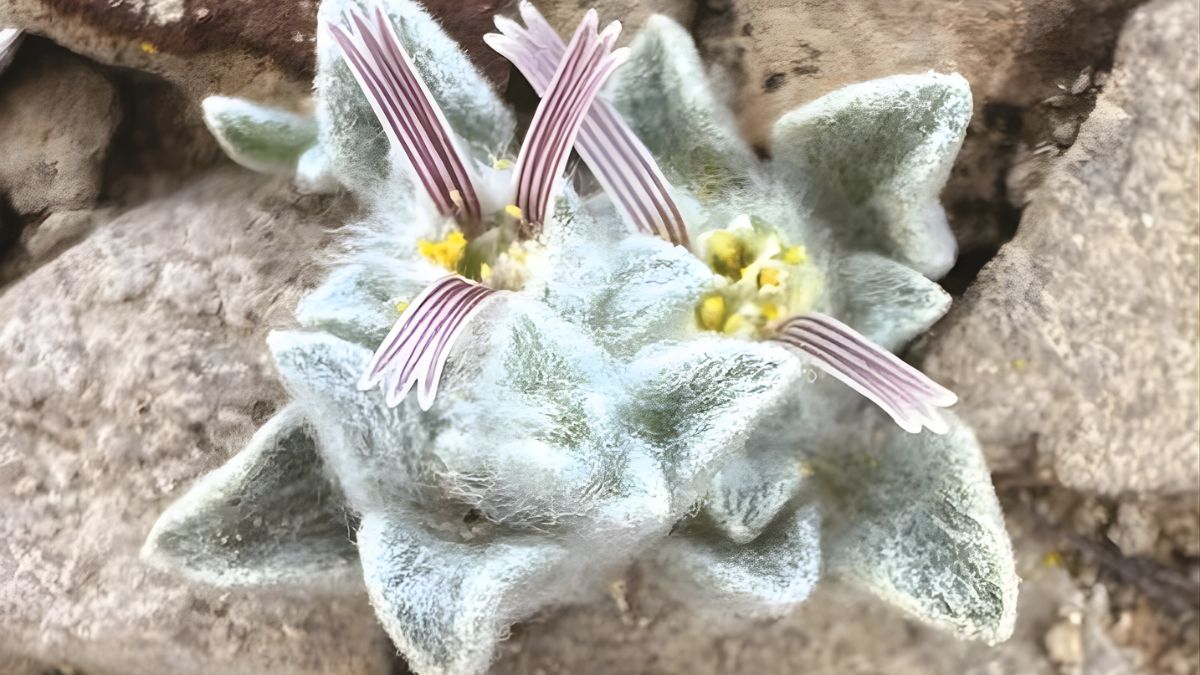
Now, don’t let the name fool you. The Woolly Devil isn’t some towering cactus or poisonous shrub. It’s incredibly small — less than 8 centimeters in diameter. You could walk right by it and never notice.

But up close, it’s like nature’s odd little artwork. Here’s what makes it so unique:
- It’s covered in soft white hairs, giving it a fuzzy, wool-like look.
- It has two small maroon florets that resemble little horns — hence the “devil” part.
- It has trouble reproducing, which means it’s extremely rare and fragile.
- It was so unique that scientists had to create an entirely new genus for it: Ovicula biradiata.
That’s right — it’s not just a new species, but a new genus. That doesn’t happen every day.
1976 Flashback
To understand how rare this find is, we need to rewind to 1976. That was the last time something this big happened in a U.S. national park. Back then, scientists discovered Dedeckera eurekensis — nicknamed “July Gold” — in California’s Death Valley. Just like the Woolly Devil, July Gold was tough to reproduce and completely unexpected.

Almost 50 years later, the Woolly Devil has become the next big thing in U.S. botanical discovery, earning Texas a well-deserved spotlight in the scientific world.
Significance
Sure, a weird little plant might not seem groundbreaking — but it actually is. Here’s why this Texas discovery matters:
- Adaptation to harsh environments: The Woolly Devil shows that even extreme desert conditions can host life.
- Uncharted scientific territory: We still haven’t discovered everything. Even areas like Big Bend, studied for decades, hold surprises.
- Conservation value: This plant highlights why national parks are so important. They protect rare life forms we don’t even know exist.
Here’s a quick breakdown of what makes the Woolly Devil special:
| Feature | Description |
|---|---|
| Size | Less than 8 cm in diameter |
| Appearance | Fuzzy white hairs with maroon florets |
| Nickname Meaning | “Devil” from horn-like florets |
| Genus Name | Ovicula biradiata |
| Found By | Deb Manley, volunteer |
| Location | Big Bend National Park, Texas |
| Climate | Hot, dry desert environment |
| Rarity | Extremely rare, hard to reproduce |
| Last Similar Discovery | 1976, Death Valley (July Gold) |
Future
So what’s next after discovering something like the Woolly Devil? Scientists believe this could open the door to more discoveries in forgotten corners of deserts, mountains, and forests. If one tiny plant managed to hide in plain sight all this time, who knows what else is out there?
It also sends a powerful message — scientific breakthroughs don’t just happen in high-tech labs. Sometimes, they begin with a walk in the park, a curious eye, and someone willing to look a little closer.
And next time someone says, “What’s so special about Texas?” you’ve got an answer ready that’s way cooler than barbecues or football. The Woolly Devil — a reminder that even in the dry, dusty corners of the Earth, life finds a way.
FAQs
What is the Woolly Devil?
A rare tiny plant found in Texas with fuzzy hairs and horn-like flowers.
Where was it discovered?
In Big Bend National Park, Texas.
Why is it called Woolly Devil?
Its hairs look like wool and flowers like tiny horns.
When was the last similar discovery?
In 1976, with a plant called July Gold in California.
Is Woolly Devil common?
No, it’s extremely rare and hard to reproduce.