We’ve all heard of diamonds, quartz, and other dazzling minerals, but what if I told you one of the rarest minerals on Earth was rediscovered not through a high-tech lab or modern excavation — but because of an old forgotten letter from 1949? That’s exactly what happened with Humboldtine, a peculiar and little-known mineral with an even more fascinating backstory.
Let’s cut into the mystery and magic of this extraordinary find.
Table of Contents
Humboldtine
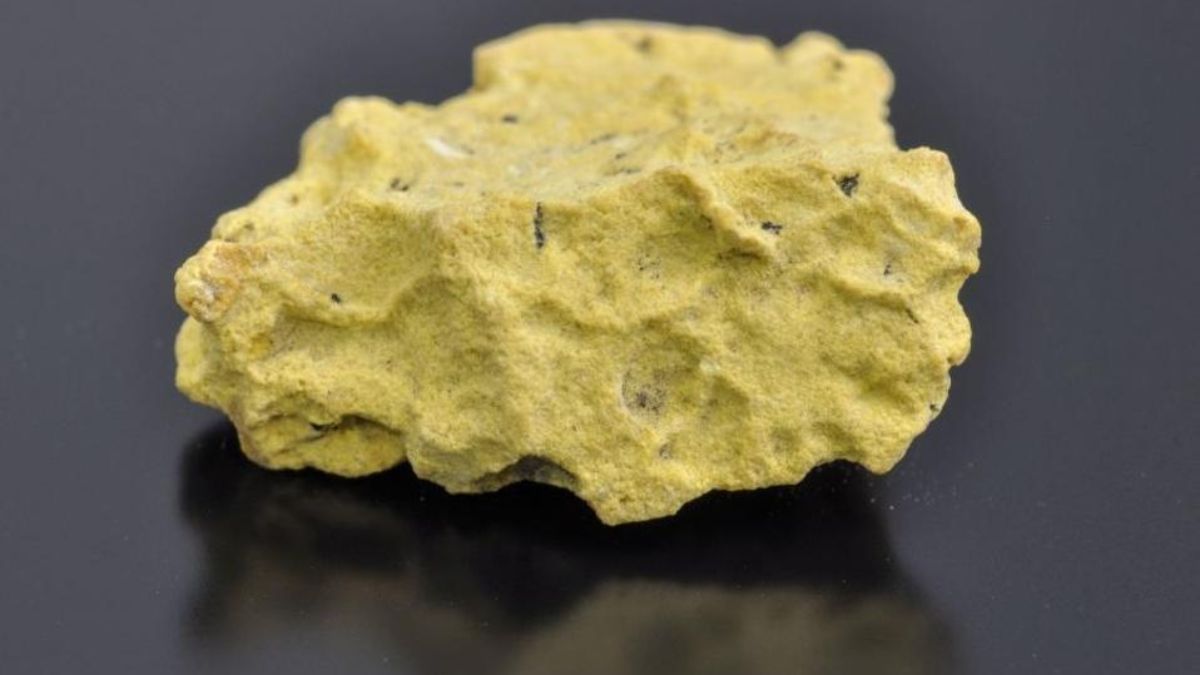
Humboldtine isn’t your typical sparkly museum gem. In fact, it looks quite unremarkable to the untrained eye — usually turning up as a yellowish, lumpy mass or tiny crumb-like fragments. But behind that dull exterior lies something extremely rare.
Discovered in the 19th century and named after the famous German explorer and naturalist Alexander von Humboldt, Humboldtine has only been found in about 30 places on Earth. These include countries like Germany, Brazil, the United States, Canada, the United Kingdom, Hungary, Italy, and the Czech Republic.
That limited appearance makes it one of the rarest minerals known — and an exciting find for geologists and collectors alike.
Rarity

So, why is Humboldtine such a big deal? The answer lies in its chemistry.
Most minerals are inorganic, but Humboldtine breaks that mold. It belongs to a very rare group called organic minerals. These minerals contain carbon, hydrogen, and oxygen in their crystal structure — a combination that’s rarely found in naturally occurring stones.
This makes Humboldtine not only rare but chemically fascinating. It’s like stumbling upon a naturally occurring piece of organic chemistry hidden inside the Earth’s crust.
Rediscovery
Here’s where things get really interesting.
Back in 1949, a German coal mine owner claimed to have found Humboldtine in a mine called Matthiaszeche near Schwandorf. He sent a letter to the environmental authorities, reporting the find and offering samples for analysis.
But for whatever reason — maybe bureaucracy, maybe skepticism — the sample was never verified, and the letter was buried in a dusty archive.
Fast forward 75 years later to 2023.
Archives
While digitizing old records at the Bavarian Environment Agency, a team of researchers stumbled upon that same 1949 letter. Naturally, they were intrigued.
Their curiosity led them to the agency’s historic minerals collection — a basement stash of over 13,000 mineral samples tucked away in drawers and boxes. After some digging (pun totally intended), they discovered a small box labeled “Oxalit” — the German word for organic minerals.
Inside? A yellowish mineral fragment from the very same mine mentioned in the letter. When they analyzed it, their jaws dropped — it was Humboldtine.
Lostmine
Of course, such an incredible discovery came with a bittersweet twist.
The Matthiaszeche mine had shut down in 1966 and was later flooded. That means this rediscovered sample might be one of the last remaining Humboldtine pieces from that location. There’s virtually no chance of going back and digging up more.
For mineral collectors, that’s heartbreaking news. Once the current samples are studied, stored, or displayed in museums, that’s it — no more from this historic site.
Here’s a quick summary:
| Detail | Information |
|---|---|
| Mineral | Humboldtine |
| Type | Organic mineral (contains carbon compounds) |
| First Named | 19th century |
| Named After | Alexander von Humboldt |
| Rediscovered | 2023 (from a 1949 letter) |
| Found In | 30 locations worldwide |
| Notable Countries | Germany, Brazil, USA, UK, Italy, etc. |
| Appearance | Yellowish, amorphous fragments |
| Mine Location | Matthiaszeche, Schwandorf, Germany |
| Mine Status | Closed in 1966, now flooded |
Legacy
The Humboldtine rediscovery teaches us more than just geology. It’s a reminder that the past isn’t really gone — it’s just waiting to be uncovered. Sometimes, the most groundbreaking discoveries don’t come from digging in the ground but from digging through archives.
It also shows the importance of preserving old records. Who would’ve thought that a dusty letter could bring an extinct mineral back into the spotlight after nearly a century?
So next time you come across an old letter or box in your attic, take a second look. It might just lead you to a forgotten piece of Earth’s history.
From unexpected archives to scientific surprises, Humboldtine’s story proves that Earth still holds mysteries — and sometimes, it just takes a little curiosity to find them.
FAQs
What is Humboldtine?
A rare organic mineral made of carbon, oxygen, and hydrogen.
Where was Humboldtine rediscovered?
In an old mineral sample found in Germany in 2023.
Why is Humboldtine so rare?
It’s only found in about 30 places worldwide.
Who was Humboldtine named after?
Alexander von Humboldt, a German explorer and naturalist.
Can we mine more Humboldtine now?
No, the mine is closed and flooded since 1966.