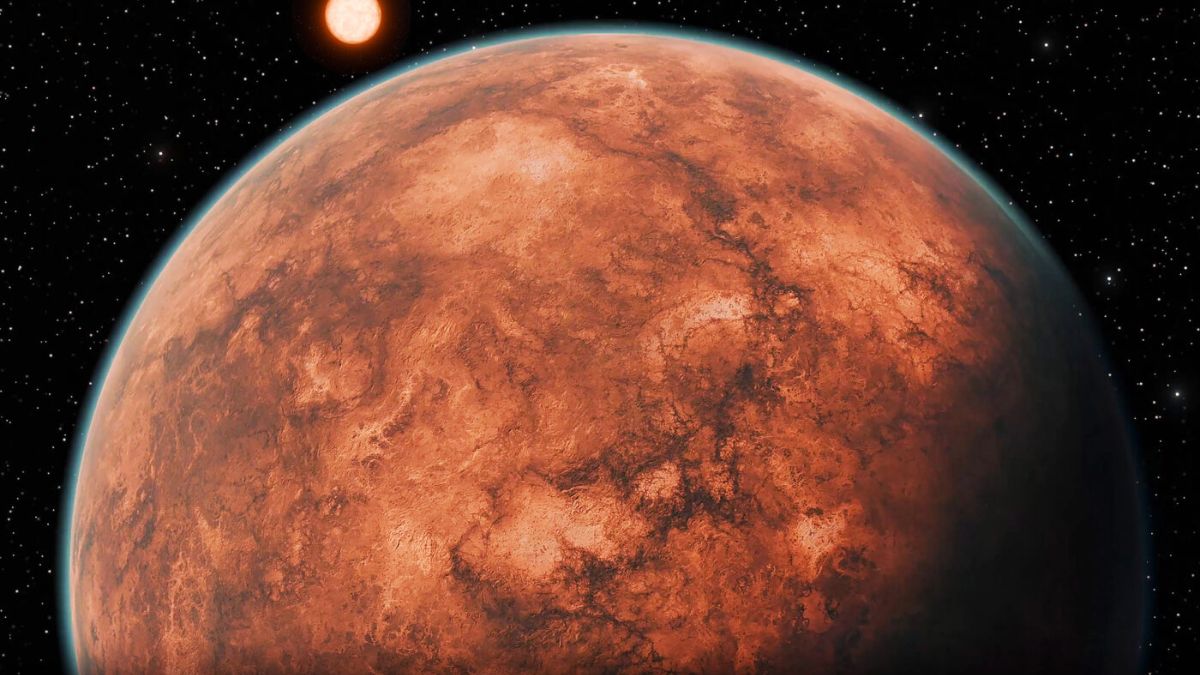
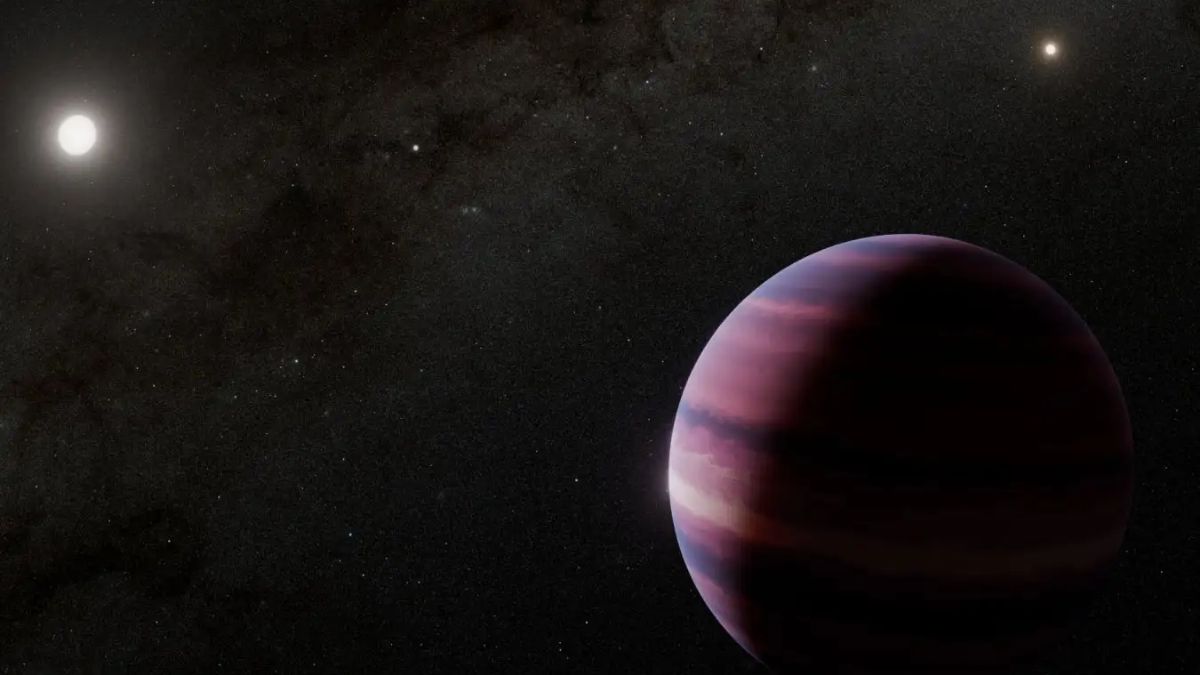
Something strange is happening 124 light years from Earth, and scientists are paying close attention. A distant world called K2-18b might just be the key to unlocking one of humanity’s biggest questions: are we alone in the universe?
Using the James Webb Space Telescope, researchers have detected molecules in the atmosphere of this planet that, on Earth, only living organisms produce. Sounds wild, right? Let’s break it down and see why K2-18b is stirring up so much excitement.
Table of Contents
Discovery
K2-18b orbits a red dwarf star in a region called the habitable zone — a space where temperatures might allow for liquid water. And as we all know, water is a big deal. It’s essential for life as we know it. This alone makes the planet interesting, but what scientists found in its atmosphere is even more fascinating.
Using high-tech sensors aboard the James Webb Space Telescope, researchers identified molecules like dimethyl sulfide (DMS) and dimethyl disulfide (DMDS). These molecules on Earth are primarily produced by microorganisms such as phytoplankton and specific bacteria. Finding them on K2-18b? That raises eyebrows — and hope.
Atmosphere
What really adds to the mystery is what scientists didn’t find — ammonia. Why is that important? On Earth, ammonia is often absorbed by oceans. So, its absence could hint that K2-18b has large bodies of water, doing the same thing. Could this planet be covered in oceans? That’s one of the theories.
If this holds up, K2-18b might be more than just another gas giant. It could be an “ocean world,” perhaps similar to Earth’s early environment. That kind of setting could support a biological ecosystem — even if it’s just microbial life floating around in a distant alien sea.
Molecules
Let’s take a closer look at what was found in K2-18b’s atmosphere and what it could mean:
| Molecule | Source on Earth | Implication on K2-18b |
|---|---|---|
| Dimethyl sulfide (DMS) | Produced by phytoplankton | Possible sign of life |
| Dimethyl disulfide (DMDS) | Bacteria and decaying matter | Similar biological activity? |
| Ammonia (not detected) | Absorbed by oceans | Could indicate presence of water |
This mix of biological signals (or “biosignatures”) makes K2-18b stand out in the sea of exoplanets discovered so far. But is it really proof of life? Not so fast.
Caution
Here’s the catch: while the detection of these molecules is exciting, science doesn’t work on gut feelings. The current level of certainty is about 99.7% — that’s pretty solid, but not enough for a full scientific confirmation. Researchers generally look for five-sigma certainty, or 99.99999%, before making bold claims.
Catherine Heymans, a leading astronomer, has warned that we can’t yet rule out non-biological sources for these molecules. For example, volcanic activity or some unknown geological process might be creating them. So while it’s tempting to jump to conclusions, science requires patience.
Telescope
The real hero of this discovery? The James Webb Space Telescope. It’s opened a completely new chapter in space exploration, giving astronomers the power to analyze the atmospheres of far-off worlds with incredible precision. Before Webb, this kind of analysis was nearly impossible. Now, it’s changing the game in real-time.
Thanks to this telescope, we can peer into atmospheres light-years away and look for signs of life. This isn’t just exciting — it’s groundbreaking.
Future
So, what’s next? K2-18b is now at the top of the list for future observations. Follow-up studies will focus on confirming whether the molecules detected truly come from biological processes. If they do, it could mean that K2-18b hosts some form of alien life — not necessarily little green men, but life nonetheless.
The next few years will be critical. More time with the James Webb Telescope, more data, and better analysis could bring us the answers we’ve been chasing for generations. Imagine the impact: a confirmed biosphere beyond Earth. It would change everything — from science books to how we see ourselves in the universe.
K2-18b may still be far away, but it’s bringing us closer than ever to solving the ultimate mystery.
FAQs
What is K2-18b?
It’s an exoplanet 124 light years away in the habitable zone.
Why is K2-18b important?
It may contain molecules like DMS, linked to living organisms.
What molecules were found there?
DMS and DMDS, both produced by life on Earth.
Is ammonia missing from K2-18b?
Yes, and that could mean oceans are absorbing it.
Has life been confirmed on K2-18b?
No, more data is needed to confirm any biological origin.