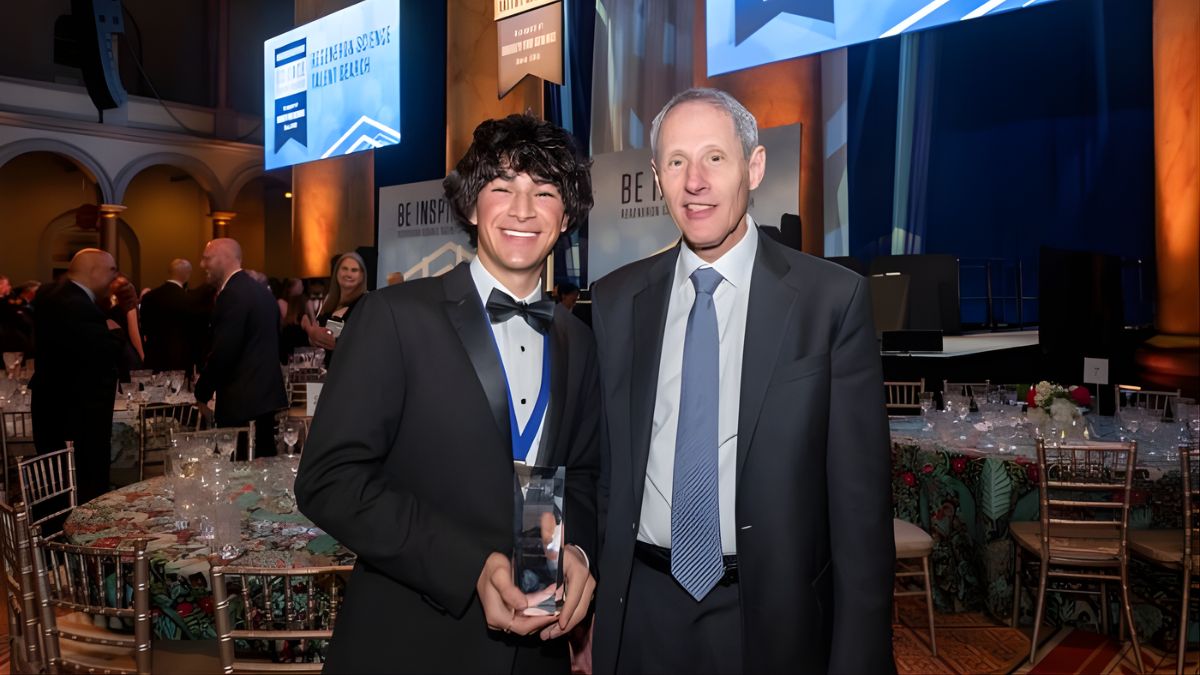
Sometimes, groundbreaking discoveries don’t come from billion-dollar labs or senior scientists — they come from the minds of students who are just getting started. That’s exactly what happened with Matteo Paz, a high school student from Pasadena, California, who shocked the scientific world by identifying 1.5 million previously unnoticed space objects.
Yes, you read that right. A teenager, working on a classroom exercise, may have just rewritten the way we explore the universe. Let’s break down this incredible story.
Table of Contents
Who
Matteo Paz is not your average high schooler. During a class project, he managed to uncover more than a million hidden celestial objects by analyzing archived data from a NASA space telescope. His discovery was so significant that it made it into The Astronomical Journal, a highly respected publication in the field.
He achieved all of this while participating in the Planet Finder Academy at Caltech, guided by astrophysicist Davy Kirkpatrick. And no, he didn’t just stumble upon a fluke. Paz developed his own machine learning model to make it happen.
Discovery
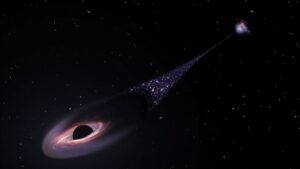
The project began with archived data from the NEOWISE telescope — a space observatory launched in 2009 to find asteroids near Earth. Though it’s no longer active, the data it gathered over a decade is still incredibly valuable.
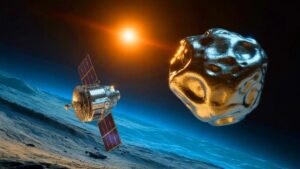
What made Paz’s work stand out is how he used this massive archive. Within just six weeks, he had a machine learning system ready to detect faint light signals — the kind that reveal distant or hidden space objects like binary stars, quasars, or even ancient supernovas. These signals were buried in noise, invisible to the human eye, but not to Paz’s algorithm.
NEOWISE
The NEOWISE mission collected more than 200 billion observations in the infrared spectrum. That’s an ocean of data — far too much for any person or small team to sift through manually. But with AI and a smart approach, Paz made what seemed impossible… possible.
He used mathematical techniques such as Fourier transforms and wavelet analysis — tools that detect fluctuations in light over time. These fluctuations are key to identifying objects that move, change, or suddenly appear in the night sky.
Catalog
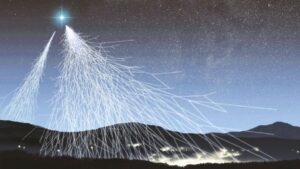
Let’s be clear — Paz didn’t just find a few interesting stars. He built an entire catalog of 1.5 million space objects. That’s the kind of work some research teams spend years trying to complete.
Even more exciting is that his discoveries can now be examined further using powerful modern telescopes like the James Webb Space Telescope. His findings have created a roadmap for future space observation — and he did it before graduating high school.
Future
Caltech didn’t waste any time. They hired Paz as a research assistant at IPAC (Infrared Processing and Analysis Center). Now, he’s working on refining his algorithm, training other students, and pushing the boundaries of what’s possible with machine learning in astronomy.
His journey began at the Math Academy in Pasadena, a program within the public school district. It was there that he developed advanced skills in astrophysics, computational modeling, and time series analysis — skills that allowed him to succeed at a level far beyond his years.
AI
Paz’s achievement also highlights how powerful machine learning has become in fields like astronomy. AI isn’t just about convenience anymore — it’s revolutionizing how we analyze complex data and make discoveries.
Still, not everyone is fully on board. Some experts say AI lacks precision and that classical methods are still necessary for validation. That may be true, but as Paz’s work shows, AI is already transforming the way we do science — and that momentum isn’t slowing down.
At the end of the day, Matteo Paz is proof that brilliance can come from the most unexpected places. With curiosity, a computer, and an archive of forgotten data, he opened a new window into the universe.
Maybe the future of space exploration lies not in rockets, but in algorithms — and in the young minds still learning how to use them.
FAQs
Who is Matteo Paz?
A high school student who discovered 1.5M space objects.
What data did he use?
Archived data from NASA’s NEOWISE telescope.
How did he make the discovery?
By creating his own machine learning model.
Where was he studying?
At Planet Finder Academy, Caltech.
Why is this important?
It shows AI’s power in space exploration.