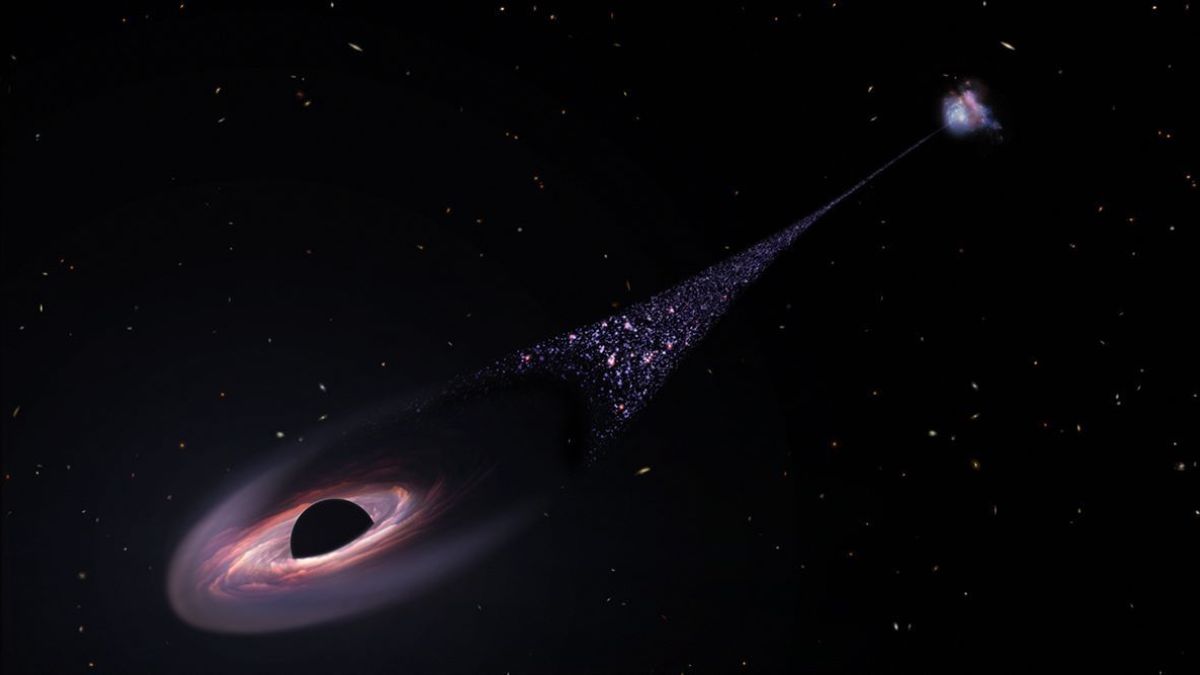
Every once in a while, something extraordinary drifts into our cosmic neighborhood, and this time, it’s A11pl3Z — a mysterious object speeding through space at 245,000 km/h. NASA has been watching it for months, and while it’s not a comet, not an asteroid, and not from around here, it’s definitely grabbing the attention of scientists around the globe.
Let’s break down what we know, what we don’t, and why A11pl3Z is one of the most exciting visitors our solar system has seen in a while.
Table of Contents
Discovery
NASA’s early detection of A11pl3Z came after months of tracking a fast-moving object that clearly wasn’t obeying the typical rules of solar system traffic. This thing isn’t looping around the Sun like most comets and asteroids do. Instead, it’s on a hyperbolic trajectory — meaning it’s just passing by and won’t return. That path alone was the first clue: this object is interstellar.
Size
Here’s the wild part. A11pl3Z is estimated to be between 10 and 20 kilometers wide. That’s big — like, city-sized big. To put it in perspective, it’s significantly larger than the average near-Earth object, and even bigger than some of the most famous interstellar visitors like ‘Oumuamua and 2I/Borisov. Despite its massive size and speed, there’s no danger to Earth. It’ll keep a safe distance, so no need to worry about apocalyptic headlines.
Speed
Clocking in at 245,000 km/h, A11pl3Z is moving faster than any spacecraft we’ve ever built. This speed not only confirms its interstellar origin but also means it’ll zoom through our system quickly. Scientists have a narrow window to observe and study it before it disappears back into deep space forever.
Behavior

Now, here’s where it gets really strange. A11pl3Z doesn’t behave like anything we’ve seen before. Unlike comets, it doesn’t have a glowing tail or coma of gas and ice. It also doesn’t reflect light like a typical rocky asteroid. So what is it?
Scientists think it could be a few things:
- An extinct comet that no longer emits gas
- A dark asteroid coated in organic material
- A crusted-over body hiding internal activity
The truth is, they don’t know yet — and that’s what makes it so exciting.
Interstellar

What makes an object interstellar? It’s all about the orbit. Solar system objects move in elliptical paths, pulled in by the Sun’s gravity. A11pl3Z, however, is flying along a hyperbolic curve — a one-way ticket from another star system. This proves it wasn’t born here, and it won’t be staying.
Here’s a simple comparison:
| Object | Origin | Orbit Type | Return? |
|---|---|---|---|
| Comet | Solar System | Elliptical | Yes |
| Asteroid | Solar System | Elliptical | Yes |
| A11pl3Z | Interstellar | Hyperbolic | No |
| ʻOumuamua | Interstellar | Hyperbolic | No |
| 2I/Borisov | Interstellar | Hyperbolic | No |
Telescopes
An international effort is already underway to study A11pl3Z. Ground-based observatories with large aperture telescopes and space telescopes — especially those capable of infrared — are being prepared to capture every detail.
Here’s what they’ll be looking for:
- Light curve: reveals its rotation and shape
- Spectral data: tells us what it’s made of
- Brightness: helps refine size and surface features
- Gas emissions: tracks any signs of a coma
If it shows signs of gases like CO or CO₂, we’ll get clues about its internal composition. If not, scientists will study how reflective its surface is to understand what kind of material it’s made of.
Chemistry
One of the big questions is: does it carry the building blocks of life? Probably not life itself, but possibly organic molecules. Similar molecules have been found on Mars and even on comets in our own system. If A11pl3Z has any traces of complex chemistry, it could help us understand how life-supporting elements travel across the universe.
Study
Studying a one-time visitor like this is tricky. It involves precise measurement of brightness, tracking its trajectory, and decoding its chemical spectrum. It takes patience, teamwork, and a bit of luck with weather and timing.
Here’s the general process:
- Track brightness over time (photometry)
- Analyze light spectrum (spectroscopy)
- Look for changes (e.g. gas release, tumbling motion)
- Share data globally and compile results
Open data will be shared in the coming months, allowing both professionals and citizen scientists to contribute. Smaller observatories might help measure brightness changes or confirm orbit predictions.
Meaning
So what does this all mean for us?
Well, it’s not about danger — it’s about discovery. A11pl3Z is a reminder of how vast and mysterious our universe really is. It gives scientists a rare chance to study a messenger from another solar system. With every observation, we learn more about how other worlds form and what might be out there, floating in the darkness, just waiting to be discovered.
Who knows what secrets it carries? One thing’s for sure — we’ll be watching closely.
FAQs
What is A11pl3Z?
It’s an interstellar object passing through our solar system.
Is A11pl3Z dangerous to Earth?
No, it will remain at a safe distance from our planet.
How fast is A11pl3Z moving?
It travels at 245,000 km/h through the solar system.
Will A11pl3Z return again?
No, its hyperbolic path means it won’t return.
Can telescopes see A11pl3Z?
Yes, it’s being observed from Earth and space telescopes.