It sounds like science fiction, but it’s now rooted in real science—astronomers believe we may soon witness the explosion of a black hole. Not just any black hole, but a tiny, ancient remnant from the early universe that could unlock the deepest mysteries of physics, dark matter, and even the birth of space and time.
According to a recent study led by physicists at the University of Massachusetts Amherst, there’s a 90% chance we’ll observe such an event within the next decade using existing technology. If that happens, it could be one of the most important astronomical events in human history.
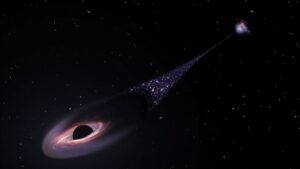
Here’s what it all means.
Table of Contents
Type
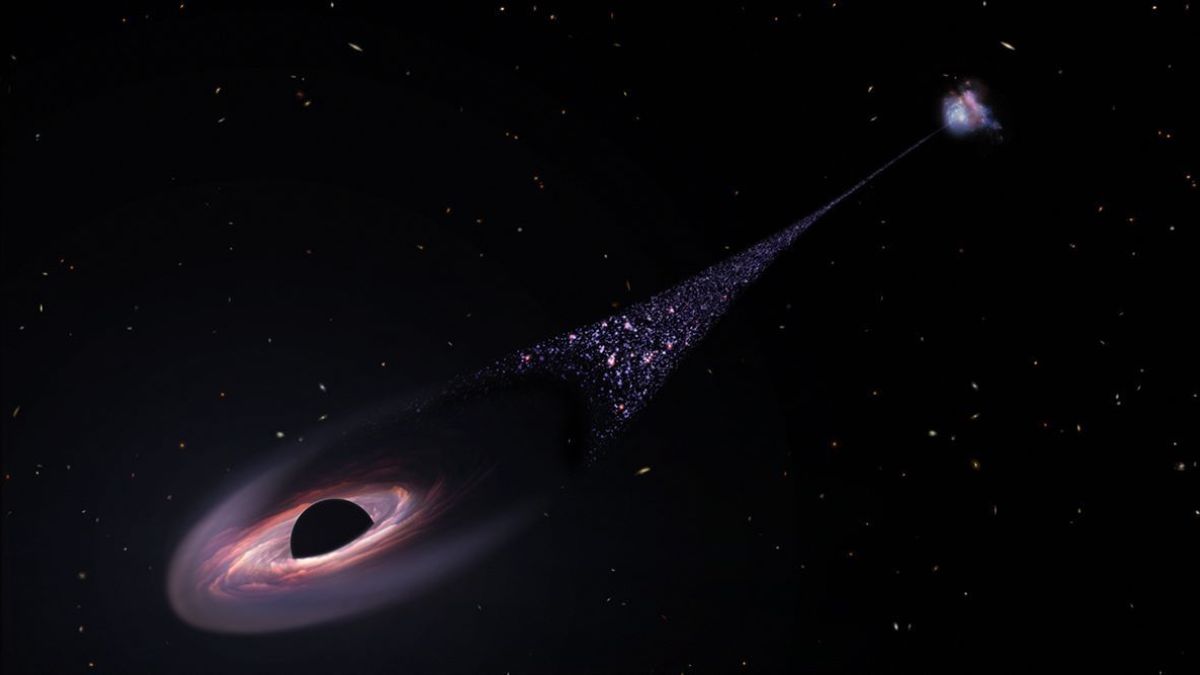
This potential explosion wouldn’t come from the massive black holes we usually hear about—those lurking at the center of galaxies or formed from dying stars. Instead, the study focuses on primordial black holes (PBHs).
These are tiny black holes theorized to have formed right after the Big Bang, during the universe’s most chaotic and energetic moments. Unlike their massive cousins, PBHs might be as small as asteroids but pack incredible density. And thanks to their size, they may now be reaching the end of their lives.
Death

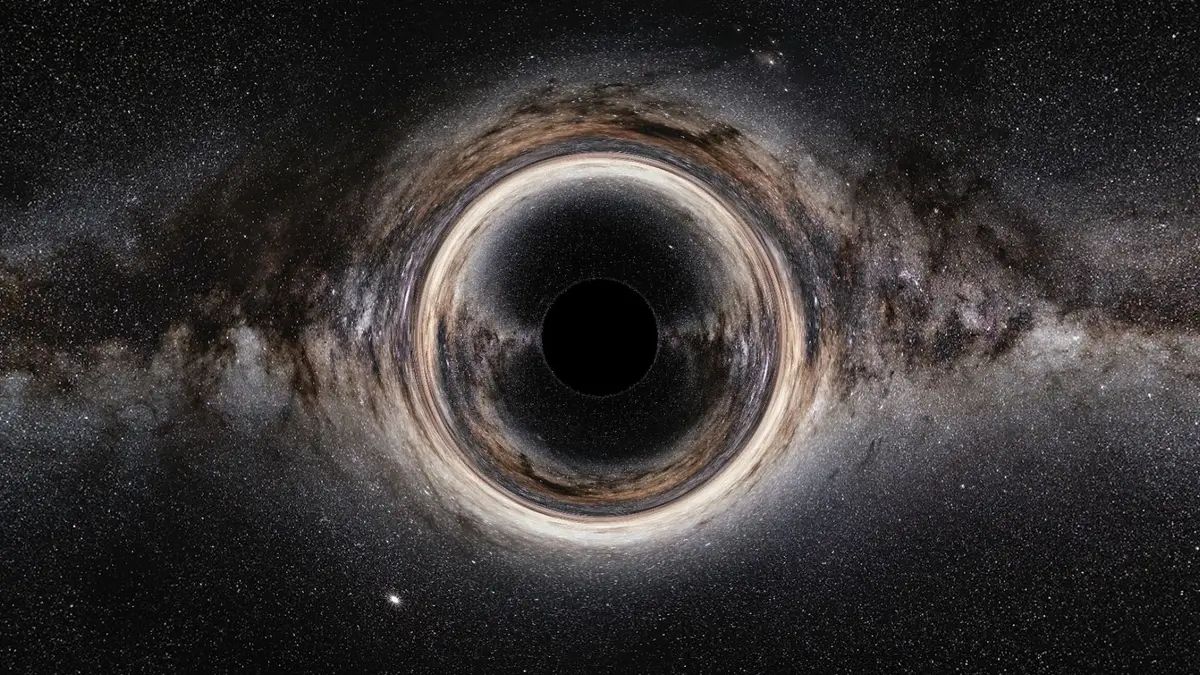
You might wonder, don’t black holes just suck things in and live forever? Not quite.
Back in 1974, Stephen Hawking shocked the physics world by proposing that black holes emit what we now call Hawking radiation. Over time, this radiation causes a black hole to lose mass. For large black holes, the process is so slow it would take longer than the current age of the universe.
But for tiny black holes, like PBHs, this evaporation could be finishing right now. And when a black hole gets small enough, that process accelerates, ending in a massive explosion similar to a mini supernova.
Sight
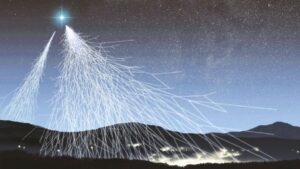
So what would we actually see?
When a PBH explodes, it would release a powerful burst of energy along with a flood of fundamental particles. These could include:
- Known particles like electrons and neutrons
- Hypothetical particles like those making up dark matter
- Even completely new particles we’ve never imagined
It would be like opening a cosmic loot box filled with the raw ingredients of the universe. Joaquim Iguaz Juan, a UMass Amherst astrophysicist, says witnessing such an event could help rewrite the rules of physics and offer direct insight into what the universe is really made of.
Delay
You might be wondering—why haven’t we seen any of these explosions yet?
Until recently, scientists thought these events were extremely rare—maybe happening once every 100,000 years. But the new study suggests they could be far more common, possibly happening once every 10 years.
So why haven’t we spotted them?
One possible explanation: a “dark electron”. This theoretical particle is like a heavier version of a normal electron and may give PBHs a hidden charge. This could stabilize them for a longer period, delaying their final explosion and helping them survive until now.
Physicist Michael Baker, a co-author of the study, says the dark electron theory explains how a PBH could avoid evaporating too early—until now.
Detection
The most exciting part? We have the tools to catch it.
Current gamma-ray telescopes are sensitive enough to detect a PBH explosion, especially if it happens somewhere in our cosmic neighborhood. If even one is observed, it would:
- Confirm the existence of primordial black holes
- Offer the first direct evidence of Hawking radiation
- Reveal particles that could explain dark matter
- Possibly introduce unknown particles to physics
This would be the kind of discovery that redefines what we know about space, time, and matter.
Timeline
The study estimates that the odds of detecting a PBH explosion are around 90% within the next 10 years. That’s not just exciting—it’s soon.
Here’s a quick summary:
| Feature | Description |
|---|---|
| Type of black hole | Primordial (formed after Big Bang) |
| Size | Tiny (similar to asteroids) |
| End process | Hawking radiation and final explosion |
| Particle release | Known, hypothetical, and unknown particles |
| Detection method | Gamma-ray observatories |
| Likelihood in next 10 years | 90% chance |
This means we might be living in the generation that witnesses the death of a black hole and the birth of a new era in physics.
FAQs
What are primordial black holes?
Tiny black holes formed shortly after the Big Bang.
Can black holes explode?
Yes, small ones can explode as they evaporate via Hawking radiation.
What could we detect from an explosion?
Particles like dark matter, electrons, and unknown ones.
Why haven’t we seen one yet?
They may have been stabilized by dark particles like ‘dark electrons’.
When could we see one?
Astronomers say we may detect one within the next decade.