A massive shift is happening in the skies above us—one that scientists say is changing the climate of entire continents. Atmospheric rivers, those invisible but powerful vapor highways that carry moisture across the globe, are no longer following their usual paths. Instead, they’re drifting toward the poles, leaving some regions parched and others drowning.
This unexpected change, revealed by scientists at the University of California, Santa Barbara, is altering everything from rainfall patterns to flood risks, and could reshape how we manage water, agriculture, and even cities.
Table of Contents
Rivers

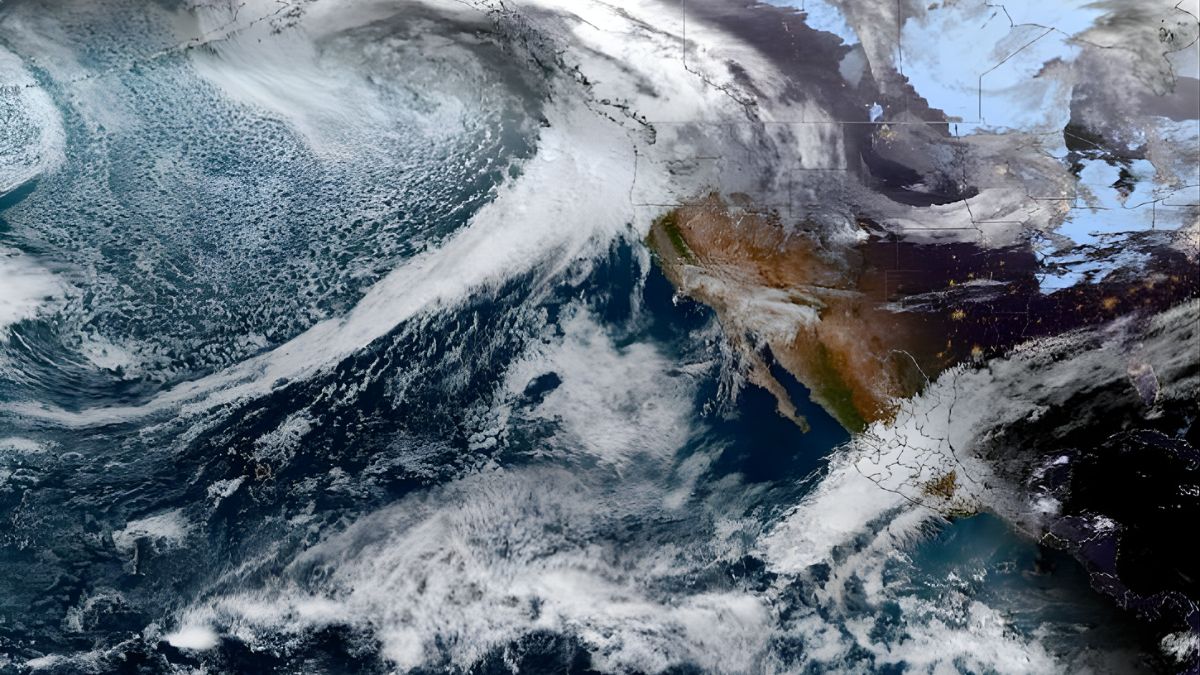
Atmospheric rivers might sound poetic, but they’re a real force of nature. These are long, narrow bands of moisture in the atmosphere, often stretching for thousands of kilometers and transporting huge volumes of water vapor—far more than the Amazon River, but in the form of vapor, not liquid.
They move through the sky, and when they hit land, they slow down. That vapor condenses into clouds and turns into heavy rain or snow. A single atmospheric river can bring days of downpours, cause major floods, or dump meters of snow in mountainous regions.
Shift
So, what’s changing? According to the team led by Zhe Li and Qinghua Ding, atmospheric rivers have been shifting their paths poleward over the last 40 years. Imagine moving the moisture that used to fall on Los Angeles now falling over San Francisco or beyond.

This isn’t just a small nudge north. It’s a meaningful shift—enough to disrupt weather patterns on multiple continents. And it doesn’t line up neatly with climate models that mostly blame global warming. Instead, researchers are now pointing to the Pacific Ocean as a major driver behind the shift.
Clues
To uncover the truth, the scientists used ERA5 data from the European Centre for Medium-Range Weather Forecasts, which includes detailed atmospheric records going back to 1979. By reconstructing four decades of atmospheric behavior, they saw a clear trend: the rivers are moving toward the poles.
This means that places that used to get reliable winter rains are now dry, while other areas that barely got any rain are suddenly dealing with more water than they can handle.
Impact
In real-world terms, this shift has enormous consequences. In many parts of the Americas, Europe, and Asia, water supply depends on just a handful of strong atmospheric rivers each year. If even one of them veers off course, reservoirs can remain empty and drought conditions can spiral.
On the flip side, areas not designed to handle large amounts of rainfall are now seeing flash floods, overwhelmed storm drains, and damage to homes, roads, and crops.
Risk
Another major issue is snow. In colder regions, these rivers used to bring snow, which acted like a natural water bank. That snow would slowly melt through spring and summer, providing a steady source of water.
Now, as the rivers shift and temperatures rise, these same regions get rain instead of snow. That leads to two problems—immediate flooding from the rain and water shortages later on when the snowmelt is gone.
| Region Type | Past Effect | Current Effect |
|---|---|---|
| Snowy Mountains | Snow accumulation | More rain, less snow |
| Semi-arid Regions | Regular winter rain | Drier winters |
| Urban Lowlands | Occasional storms | Flash flooding |
Agriculture
For farming, the timing and location of water is everything. Crops depend on predictable rainfall, and irrigation systems are built around historic water availability.
With atmospheric rivers no longer playing by the old rules, some agricultural regions now face dry fields, dying crops, and rising costs. Others face flooded lands and rotting harvests.
Preparation
What’s the big takeaway? Infrastructure and water planning are out of date. Reservoirs built to collect rain in January are useless if the rain now falls in February—or skips the region entirely. Flood prevention systems designed for rare storms are now being tested every season.
Experts are urging cities, states, and countries to overhaul water management plans, reinforce dams and drainage systems, and expand alert systems. Because the reality is clear: the climate has already changed.
Future
The atmospheric rivers haven’t disappeared—they’ve just moved. And they’re now disrupting climate zones, shifting rainfall, and challenging everything from farming to city planning.
We’re entering an era where extreme is the new normal. Stronger storms, longer droughts, and sudden flooding aren’t isolated incidents anymore—they’re signals of a deeper, faster transformation.
If we’re going to adapt, we need to pay attention to the signs in the sky. Because what seemed like rare weather events are quickly becoming the rule, not the exception.
FAQs
What are atmospheric rivers?
They’re narrow bands of water vapor that bring heavy rain or snow.
How are they changing?
They’re shifting toward the poles, altering global rain patterns.
Why is the Pacific Ocean involved?
It influences the paths of atmospheric rivers beyond just warming.
Which regions are at risk?
Snowy, dry, and flood-prone areas are all increasingly affected.
Can current infrastructure handle this?
No, experts say updates are urgently needed to adapt.