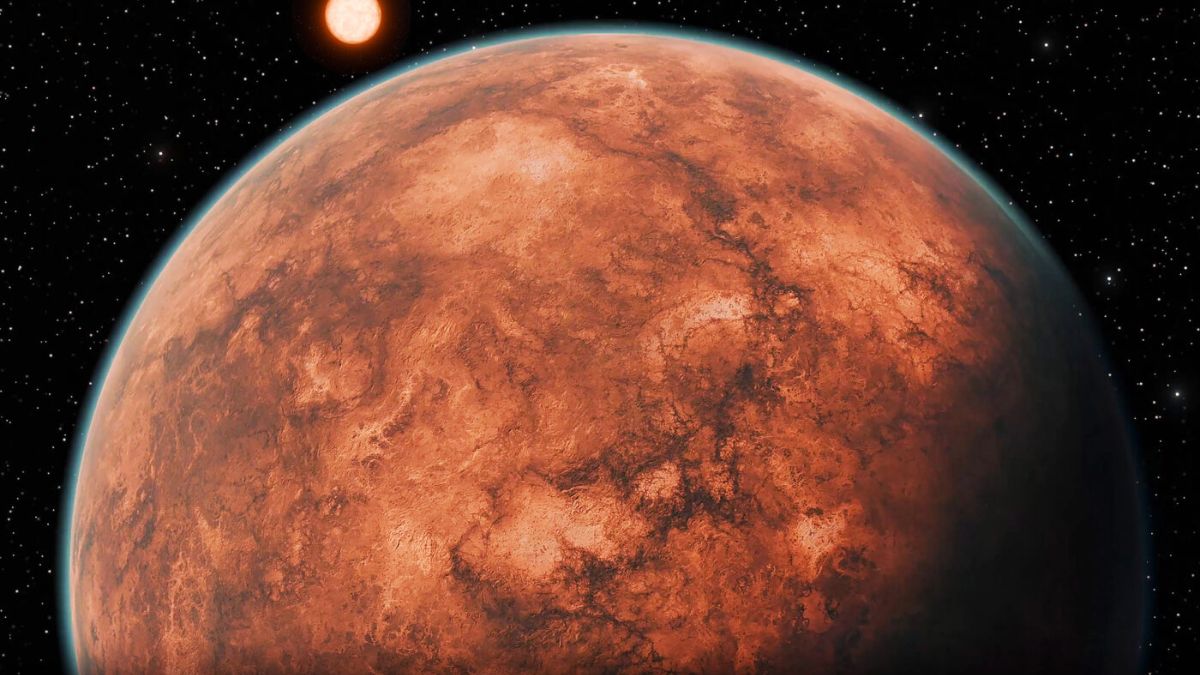
Was there ever life on Mars? It’s the question that has haunted astronomers, philosophers, and sci-fi fans for generations. While no one can say for sure just yet, NASA’s Perseverance rover might be closer than ever to unlocking the mystery.
Since it landed on Mars in 2021, Perseverance has been digging up some truly intriguing evidence that could point to ancient life — but there’s a twist. Let’s cut into what NASA has found, what it really means, and why there’s a problem holding everything back.
Table of Contents
Discovery

The Perseverance rover is currently exploring Jezero Crater, an area believed to have held a large lake billions of years ago. Think of it like a dried-up lakebed here on Earth — except this one is on a completely different planet.
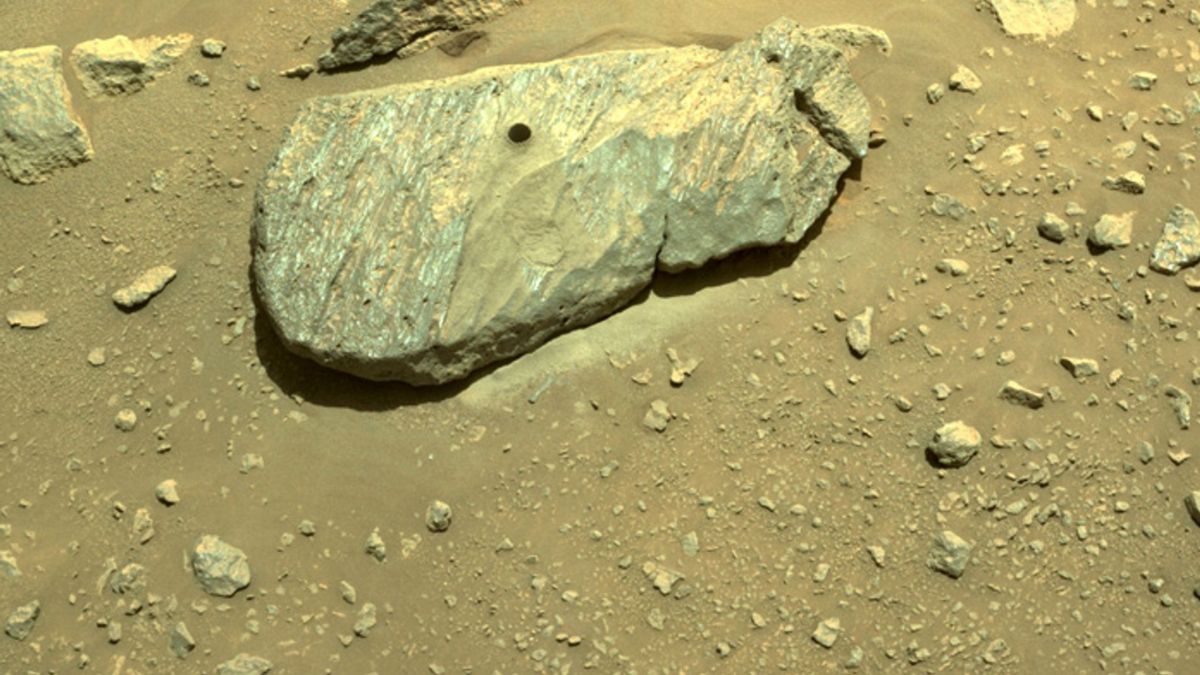
In 2024, the rover stumbled upon something special: a rock called “Cheyava Falls.” Inside it? Organic molecules, signs of ancient water, and odd mineral patterns. Now, on Earth, organic molecules are usually linked to life. They’re the building blocks of everything from plants to people. But here’s the catch — these compounds can also form through non-biological processes. So, while promising, it’s not a slam dunk.
Still, scientists were intrigued enough to dig deeper.
Patterns

Perseverance didn’t stop at Cheyava Falls. It went on to investigate two new regions: Sapphire Canyon and Masonic Temple. What it found there made scientists do a double take.
Buried in the Martian rocks were minerals like vivianite and greigite — minerals that aren’t just rare, but arranged in very specific ways. These patterns showed something known as redox cycling. It’s a fancy term for when electrons bounce between different chemical compounds — a process some microbes on Earth use to generate energy.
Basically, Mars showed signs of the kind of chemistry that life uses to survive on Earth. That’s pretty mind-blowing.
Reaction

One of the researchers, Michael Tice, a geobiologist at Texas A&M University, said the team was stunned. When they began analyzing samples from the Bright Angel area, the rocks looked unlike anything they had seen before.
Tice pointed out another crucial detail — while some chemical reactions happen naturally, they usually need extreme heat. But there’s no sign of high temperatures in these Martian rocks. That makes the biological explanation a little more likely.
Still, the team knows that assumptions won’t cut it. They need to test the samples properly — and for that, they must bring them back to Earth.
Challenge
Here’s where things get tricky. Perseverance has already collected samples, but bringing them home is a huge challenge.
NASA and the European Space Agency were planning a joint mission called the Sample Retrieval Lander, aiming for a 2033 return date. But there’s a problem. Reports suggest that major budget cuts — reportedly pushed by former President Donald Trump — could delay or even cancel the mission.
And without those samples, scientists can’t run the in-depth tests needed to confirm if what we’re seeing is biological or not.
Here’s what they hope to do on Earth:
| Test Type | Purpose |
|---|---|
| Isotopic analysis | To see if the organic molecules match biological patterns |
| Microscopic mineral study | To look at the formation process in detail |
| Microfossil hunt | To find direct evidence of past life |
| Thermal analysis | To measure how hot the rocks have ever been |
All of these can help separate natural chemistry from possible signs of ancient life.
Mystery
So, do we have a final answer? Not yet. NASA scientists are walking a fine line — cautiously optimistic but still skeptical.
These signs are the best we’ve ever had. But without those samples in a lab, we’re still guessing. That said, every new sample, every image, and every rock Perseverance explores brings us closer to the truth.
Who knows? The answer to the age-old question — are we alone in the universe? — might be waiting quietly in a Martian rock, just a return trip away.
FAQs
What did Perseverance find on Mars?
It found organic molecules and mineral patterns in rocks.
Does this confirm life on Mars?
No, scientists are still analyzing the findings.
Why are minerals like vivianite important?
They show patterns that life uses on Earth to get energy.
Why can’t we confirm life yet?
Samples need to be tested on Earth for confirmation.
When could samples return to Earth?
NASA plans a mission around 2033, but it’s uncertain.