Mars always feels like a frontier of mystery and ambition. Its red soil, wind-blown dunes, and alien landscapes call out to scientists and dreamers alike. Somewhere among that rusty terrain lies a silent witness to our interplanetary journey: the InSight lander. Once full of life and data, it now rests quietly, cloaked in Martian dust.
Recently, NASA’s Mars Reconnaissance Orbiter (MRO) rediscovered InSight, capturing a distant image of the lander in its final resting place. The photo, posted by NASA with the playful caption “Can you spot @NASAInSight?”, stirred up emotion across social media. But behind that image lies an incredible story of science, survival, and the relentless power of Martian dust.
Table of Contents
MRO

The Mars Reconnaissance Orbiter has been orbiting Mars since 2006. Its job? To take high-resolution photos, map the surface, look for evidence of past water, and act as a kind of aerial support for missions on the ground.
MRO has played a key role in selecting landing sites, scouting geological formations, and relaying data between Earth and rovers like Curiosity and Perseverance. This time, it added something sentimental to its resume: capturing a glimpse of an old friend—InSight—still sitting where it landed.
InSight
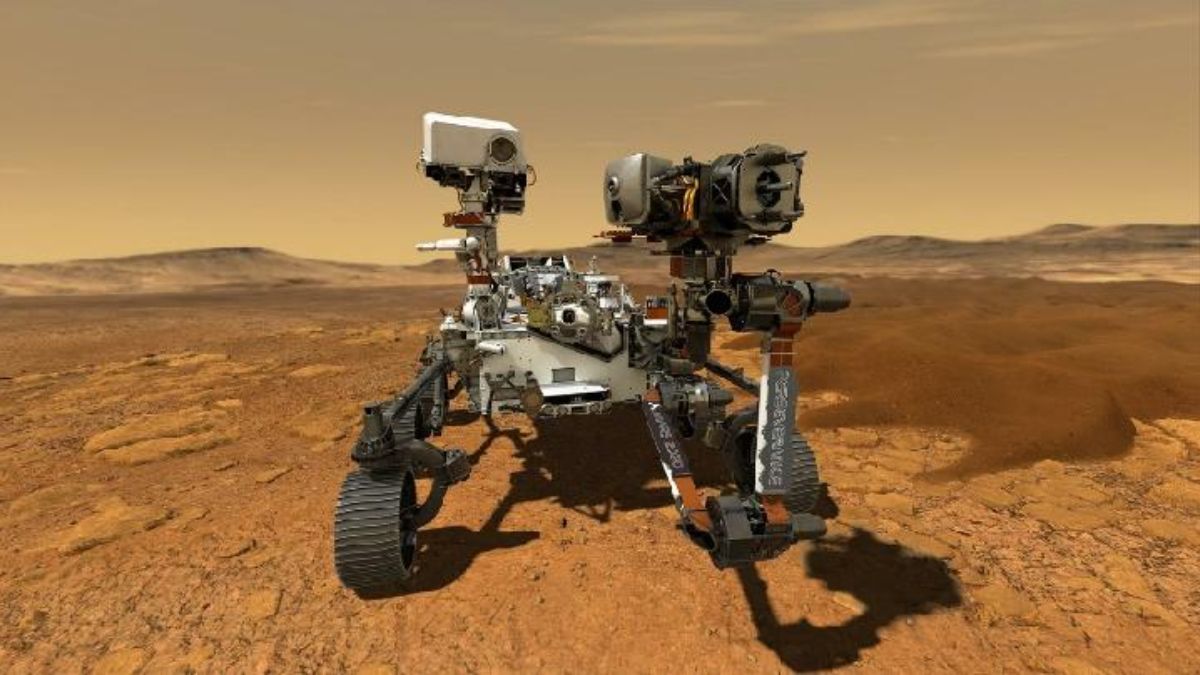
InSight wasn’t like the rovers we often hear about. It didn’t roam around taking selfies or drilling rocks. It was a stationary lander, built to study Mars from the inside out. Launched in 2018, it focused on the planet’s geology, detecting seismic activity and probing beneath the surface.

During its mission, InSight recorded over 1,300 marsquakes. It gave scientists a better understanding of Mars’ core, mantle, and crust. It even tracked daily weather, offering insights into Martian atmospheric conditions.
Its findings were crucial in reshaping how we understand Mars—not as a dead rock, but as a planet with ongoing geological activity.
Shutdown
Unlike Curiosity, which uses nuclear power, InSight relied entirely on solar panels. That was always a gamble. Mars is not a place known for clean energy—it’s dusty, stormy, and unpredictable. Over time, Martian dust built up on the panels, choking off its power supply.

By late 2022, InSight could no longer send signals back to Earth. It wasn’t a dramatic end, just a quiet fade into silence. When MRO’s camera recently spotted the lander, it was clear that it remained intact—just completely blanketed in Martian dust.
Discoveries
InSight’s mission may have ended, but its contributions are far from forgotten. Here’s what we’ve learned:
- Mars is still active: Thanks to marsquakes, we now know that Mars isn’t geologically dead.
- Dust is a major issue: Future missions might require cleaning systems to maintain solar power.
- Mars is hard on tech: The environment limits the lifespan of even the most well-built robots.
- Planning for humans: InSight’s weather data and seismic readings help pave the way for future human exploration.
Imagine how vital this kind of data will be when astronauts eventually land on the Red Planet.
Relics
InSight now joins a quiet, dusty collection of robotic explorers abandoned on Mars—each with its own story and contribution.
Here are a few of Mars’ most iconic relics:
| Name | Year Lost | Mission Type | Legacy |
|---|---|---|---|
| Opportunity | 2018 | Rover | 15 years of data, ended after dust storm |
| Ingenuity | 2024 | Helicopter | First powered flight on another planet |
| InSight | 2022 | Stationary lander | Studied Mars’ interior and seismic activity |
Opportunity’s last transmission—“My battery is running low, and it’s getting dark”—still tugs at the hearts of space fans everywhere.
Future
The lonely image of InSight is more than just a space photo—it’s a symbol. One day, humans may walk on Mars and brush the dust off these long-lost machines with their own hands. They might even create museums on Mars, preserving these robots as monuments to human curiosity and perseverance.
Until then, these machines remain silent pioneers, scattered across the surface of a world we’re still just beginning to explore.
Our journey to Mars is only just getting started. And who knows—maybe the next photo MRO sends back will include boot prints.
FAQs
What is the InSight lander?
A stationary NASA lander that studied Mars’ interior.
Why did InSight stop working?
Dust covered its solar panels, cutting off power.
What did InSight discover?
It recorded over 1,300 marsquakes and studied geology.
Who found InSight again?
NASA’s Mars Reconnaissance Orbiter spotted it.
What other robots are on Mars?
Opportunity and Ingenuity are among the relics left.