
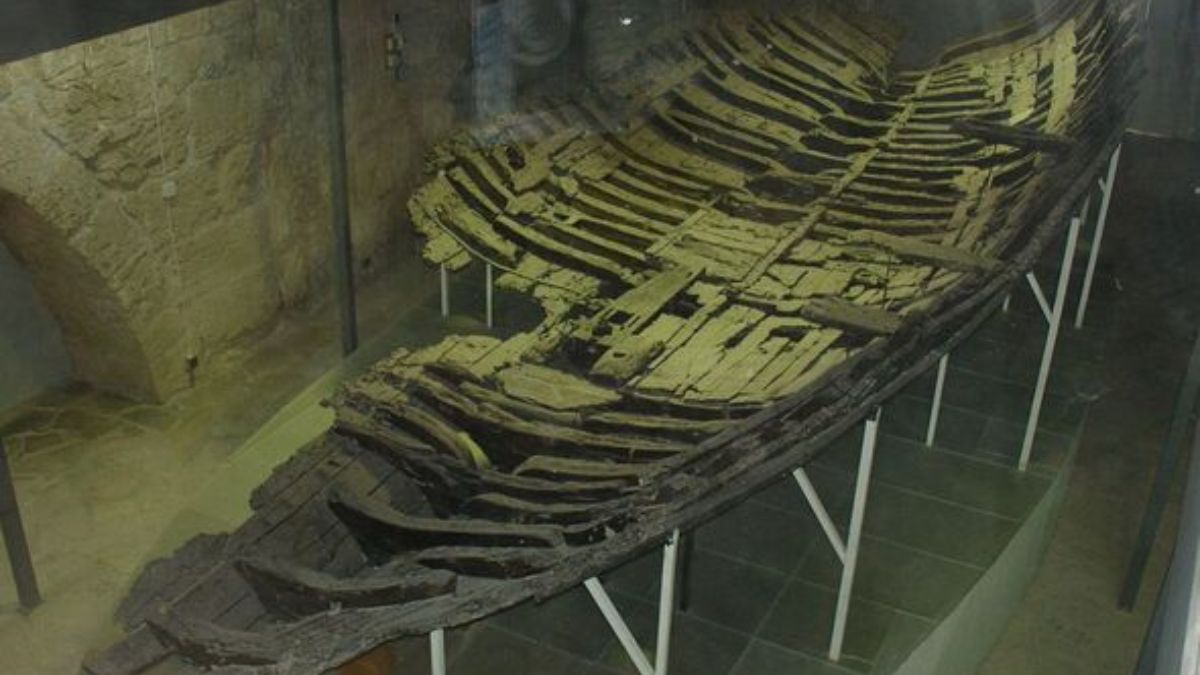
When we think of history, we usually picture mighty kings, grand battles, and legendary empires like Rome, Greece, or Egypt. But what about the everyday people? The quiet traders, the humble sailors, the ones whose lives didn’t make it into textbooks? Turns out, one of the biggest historical discoveries of the 20th century came not from a palace or battlefield, but from under the sea—and it tells a different kind of story.
The ship is called Kyrenia, and it was discovered by accident in 1965 off the coast of Cyprus by a diving instructor named Andreas Cariolu. He wasn’t looking for treasure—he was just searching for sea sponges. What he found instead was a time capsule from over 2,300 years ago.
Table of Contents
Ship

The Kyrenia was a 14-meter-long Greek merchant ship loaded with nearly 400 amphorae—large ceramic jars used in ancient times to store goods like wine, olive oil, and almonds. Not gold, not statues—just everyday products, exactly what you’d expect from a humble trade mission.
For decades, experts tried to date the ship based on what was found inside. Most believed the last voyage happened around 300 BC, but it wasn’t until much later that researchers began focusing on the ship’s wood, twigs, and animal bones, and that’s when things got more accurate.
Dating
Using radiocarbon dating and dendrochronology (analyzing tree rings), archaeologists finally pinpointed the Kyrenia’s final journey to sometime between 286 and 272 BC.

Led by archaeologist Sturt Manning, the research not only dated the wreck but highlighted the ship’s importance as a piece of Mediterranean history. It was a clear example of classical-era shipbuilding and gave new insights into ancient maritime trade networks.
This wasn’t a royal ship or a military vessel. It was the kind of ship used by common traders, men who likely didn’t follow official routes, possibly even ancient smugglers trying to earn a living far from the spotlight of kings and empires.
Crew
So, how do we know the people on board were humble workers?

We don’t know for sure who was on that ship, but the lack of luxury items offers a clue. No gold, no rare artifacts—just goods used for basic trade. Some experts suggest valuable objects may have been looted later, like tombs often are, but there’s no evidence of that. It makes more sense that this was simply a merchant vessel doing what merchant vessels did—carrying goods from one port to another.
Think of it like an ancient delivery truck that got lost at sea.
Legacy
The Kyrenia might be small, but its impact is massive. It shows us that Mediterranean trade wasn’t just about kings sending gifts or armies moving supplies—it was also about normal people trying to make a living.
And more importantly, it proves that history isn’t just written in castles or temples. Sometimes, it’s found underwater, in the form of a humble ship carrying groceries across the sea.
This ship also speaks to the multicultural connections of the ancient Mediterranean. Goods were exchanged across regions, creating links between communities long before modern borders existed. The Kyrenia is a reminder that global trade is nothing new—it’s been happening for thousands of years.
Wonder
So here we are, looking at a sunken wooden boat that somehow survived more than two millennia. A ship that never made it to its destination but still managed to tell a story.
Not a story about emperors or battles. A story about everyday people. About sailors who risked the open sea, about traders who packed jars of oil and wine hoping for a fair deal at the next port.
And it leaves us wondering—how many more Kyrenias are out there, still hidden beneath the waves, waiting to remind us that history belongs to all of us—not just the powerful?
FAQs
What is the Kyrenia ship?
An ancient Greek merchant ship found off the coast of Cyprus.
When did the Kyrenia ship sink?
Between 286 and 272 BC, based on radiocarbon dating.
What was found inside the ship?
Nearly 400 amphorae filled with wine, oil, and almonds.
Who found the Kyrenia shipwreck?
Diving instructor Andreas Cariolu in 1965.
Why is the discovery important?
It reveals the daily life and trade of common people in ancient times.