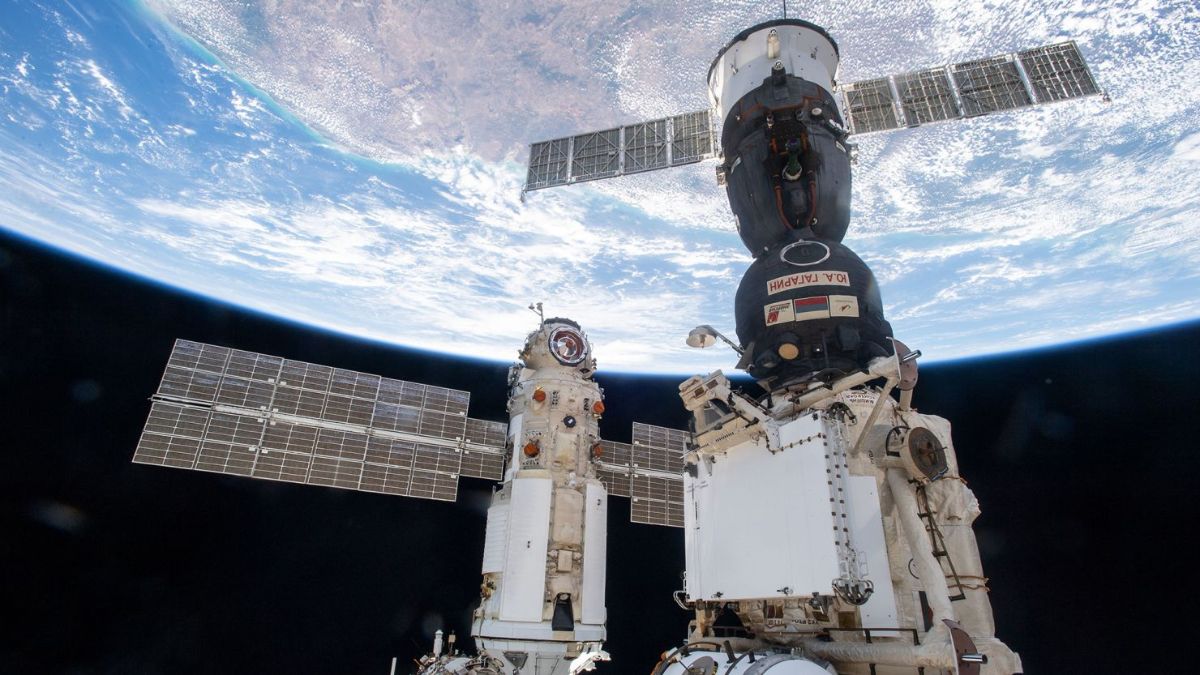
The International Space Station (ISS), once the proud symbol of global cooperation and scientific achievement, is now facing the toughest chapter in its history. After more than two decades orbiting Earth, signs of serious structural damage, outdated technology, shrinking budgets, and the absence of a concrete retirement plan are pushing the station toward an uncertain—and potentially dangerous—end.
According to NASA’s own Aerospace Safety Advisory Panel (ASAP), the station is currently in its most unstable phase. If urgent measures aren’t taken soon, the consequences could be catastrophic.
Table of Contents
Deterioration
The most alarming issue? Structural degradation.
The Russian Zvezda module has been showing signs of fatigue since 2019. In April 2024, a major air leak in the PrK transfer tunnel forced a full closure of the affected section. Despite years of monitoring and patchwork repairs, the problem hasn’t gone away. In fact, it’s worse than ever—and there’s still no permanent fix in place.
ASAP has rated the situation at risk level 5 out of 5—the highest possible. That means the danger is not only real but urgent.
Planning
Here’s where it gets even more worrying: there is no confirmed retirement plan in place.
The current idea is to use a yet-to-be-built deorbiting spacecraft called the USDV (U.S. Deorbit Vehicle), possibly built by SpaceX. This ship would gently guide the ISS toward Earth’s atmosphere, ensuring it burns up and crashes safely into the Pacific Ocean around 2030–2031.
But the ship doesn’t exist yet. And if the ISS begins to destabilize before then, the risk of an uncontrolled fall increases drastically. We’re talking about a 450-ton object falling from orbit—not a situation anyone wants to deal with.
Obsolete
Many components of the ISS are simply too old. Most of its hardware was designed in the 1990s, and several original suppliers are no longer in business. Replacements are nearly impossible to find.
Even the space suits astronauts use during spacewalks are out of date—they were originally built in the 1970s. In 2024, one of these suits leaked coolant during a mission, forcing NASA to cancel the operation. That’s not the first time either. In 2013, astronaut Luca Parmitano nearly drowned when his helmet filled with water.
These suits are still in use. Let that sink in.
Support
The vehicles meant to support the ISS are also struggling:
- Russia’s Progress MS-29 cargo ship was plagued by strange smells.
- Boeing’s Starliner experienced thruster issues during critical moments.
- Northrop Grumman’s Cygnus NG-22 mission was cancelled entirely.
When your supply chain starts failing, the risks multiply fast.
Budget
Despite all these issues, the ISS’s budget is shrinking. In 2023, NASA allocated $1.03 billion to keep the station running. In 2024, that dropped to $993 million—at the very moment the station needs more resources than ever.
A large portion of this money is now going toward designing the future deorbit vehicle and investing in upcoming commercial space stations. Meanwhile, the ISS is being held together by patches and wishful thinking.
Debate
Elon Musk, never shy about big space opinions, has publicly suggested the ISS should be decommissioned by 2027—three years earlier than originally planned. His concern? That waiting until 2030 might be too late. With no ship to safely guide it back to Earth, the risk of an uncontrollable descent becomes very real.
Legacy
The ISS has served humanity well. It’s been a floating laboratory, a hub for scientific experiments, and a symbol of what nations can achieve when they work together. But even great things have lifespans.
Without proper planning and urgent intervention, this icon of space exploration could end in chaos instead of celebration. It’s not just about setting a date for shutdown. It’s about ensuring that when the time comes, the ISS is retired safely—not left to crash back to Earth like space debris.
FAQs
What is the main risk to the ISS?
Structural damage and lack of a retirement plan.
What is the Zvezda module?
A Russian module with recurring cracks and air leaks.
When will the ISS be retired?
Planned for 2030–2031, but that may be too late.
What is the USDV?
A planned deorbit ship that hasn’t been built yet.
Why are experts worried now?
Because time, money, and hardware are all running out.