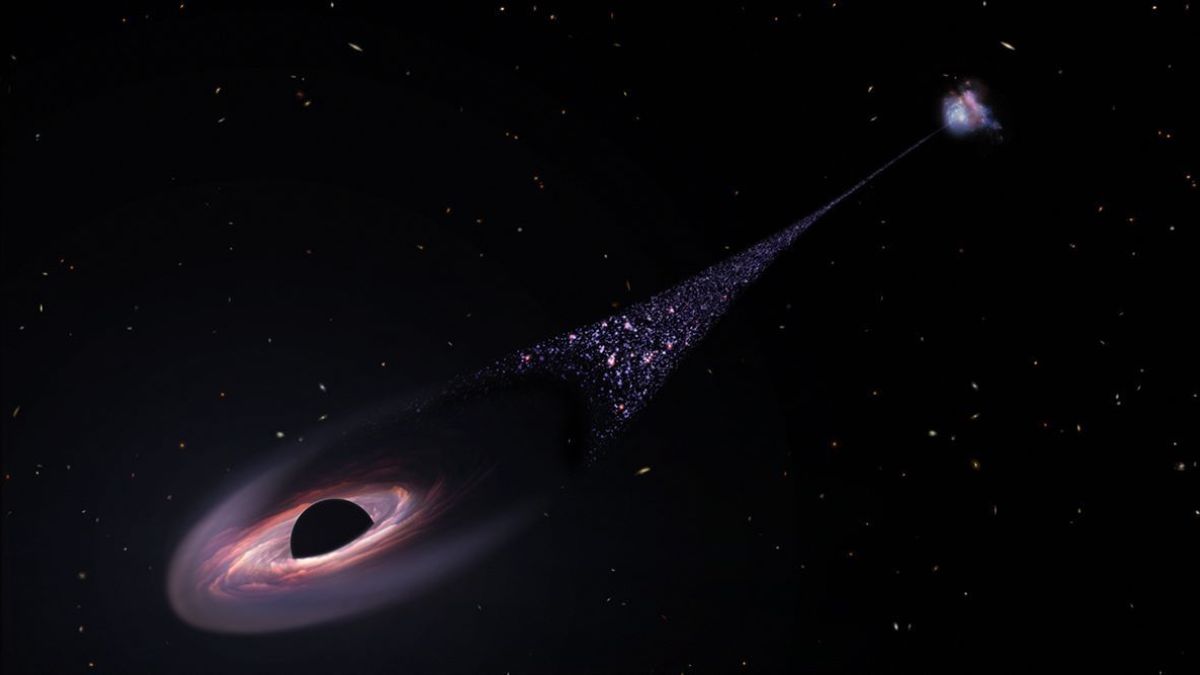
NASA has spent years exploring black holes, those mysterious voids in space that swallow everything in their path. But now, something completely new has scientists buzzing: white holes. Yes, white holes. The total opposite of black holes—and they might just rewrite what we thought we knew about space.
Let’s cut into what these strange cosmic objects are and how they could transform our understanding of the universe.
Table of Contents
Blackholes
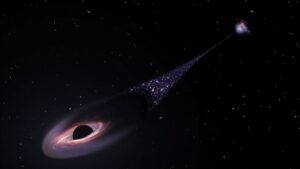
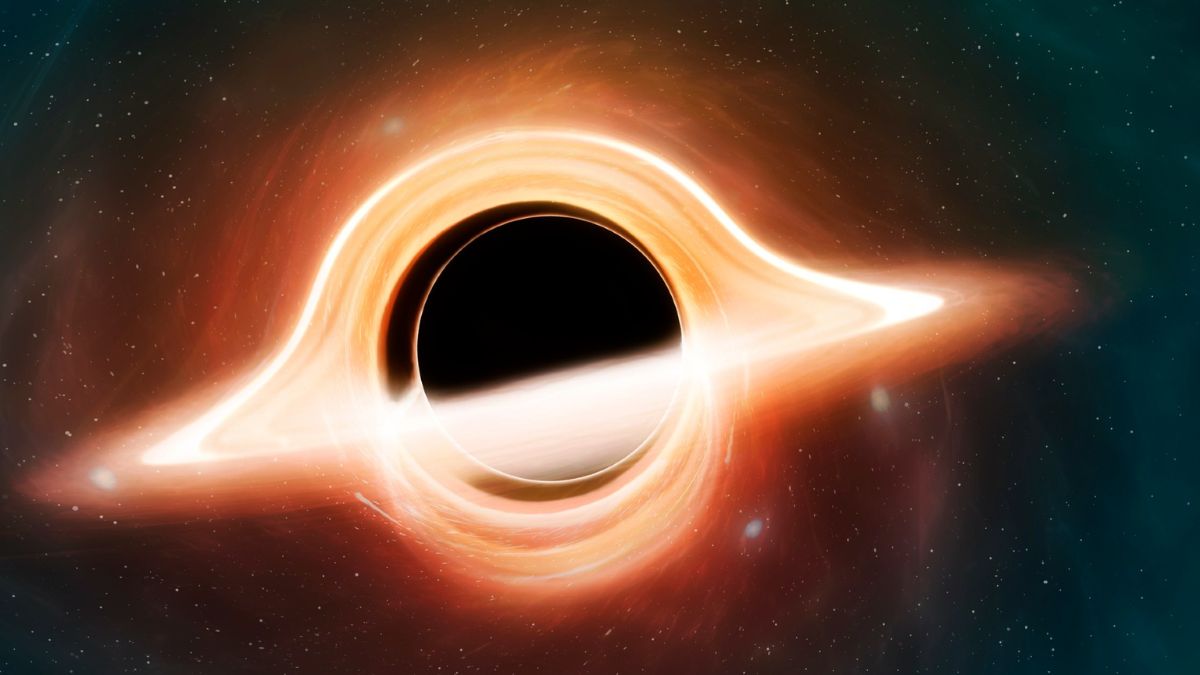
To understand white holes, let’s quickly review black holes. These are regions in space where gravity is so strong that nothing—not even light—can escape. They’re invisible to the human eye and have always been seen as one-way portals. Once something crosses their boundary, it’s gone forever.
Albert Einstein’s theories even suggested that the laws of physics break down inside black holes. This is why they’ve always fascinated NASA and physicists—they’re like nature’s ultimate mystery box.
Quantum
But there’s more to the story. Some British scientists decided to look at black holes using quantum mechanics, a field that studies super tiny particles like electrons and atoms. What they found was surprising. Instead of destroying everything, black holes might actually transform what they absorb.
And that’s where the idea of white holes comes in.
Whiteholes
White holes are the theoretical reverse of black holes. Instead of sucking things in, they push matter and energy out. Think of them like cosmic fountains, constantly ejecting particles instead of trapping them.
They’re not a brand-new idea, though. White holes have been a part of mathematical theories since Einstein’s time. But thanks to modern tools and deeper analysis, scientists are now closer than ever to proving they might actually exist.
Technology
How can we detect something so mysterious and far away? That’s where NASA’s advanced technology comes in. To observe black holes—and now possibly white holes—NASA uses some of the most powerful space telescopes ever built.
Here are the three main telescopes involved in this kind of research:
| Telescope | What It Does |
|---|---|
| Chandra X-ray Observatory | Detects X-rays near black holes from gas and dust emissions |
| Hubble Space Telescope | Captures visible light and images of distant galaxies |
| James Webb Space Telescope | Views faint, far-off objects in space in infrared wavelengths |
Each one plays a unique role. While Chandra focuses on X-ray emissions, Hubble and Webb give us a broader picture of galaxies, some of which have giant black holes at their centers.
Relevance
So, is this just a cool theory—or does it really matter? It matters a lot.
For decades, black holes were seen as ultimate ends. No escape, no return, no transformation. But if white holes exist, they could suggest that black holes are not dead ends at all. They might be part of a much larger cosmic cycle—where matter goes in one place and comes out somewhere else.
This idea could completely reshape how we think about time, space, energy, and even the future of our universe.
Future
Every new discovery brings us closer to understanding how the universe works. White holes could open the door to brand-new theories—maybe even concepts like time travel, alternate dimensions, or how the Big Bang itself began.
Thanks to NASA’s ongoing efforts and the work of scientists around the world, we might one day get real evidence of a white hole in action. Until then, the theory itself is already shaking the foundations of astrophysics.
It’s exciting, mysterious, and proof that we’ve only scratched the surface of what space holds for us.
FAQs
What is a white hole?
A white hole is a theoretical space object that expels matter.
Are white holes the opposite of black holes?
Yes, they eject instead of absorb matter and energy.
Can white holes be seen with telescopes?
Not yet confirmed, but scientists use advanced telescopes to search.
Did Einstein predict white holes?
They are based on Einstein’s equations but not directly predicted by him.
Why do white holes matter?
They could change our understanding of black holes and the universe.