A single feather found over 160 years ago might seem like a small detail in the grand history of life on Earth. But this one fossil sparked a mystery that puzzled scientists for generations—and its answer has reshaped what we know about the evolution from dinosaurs to birds.
Let’s cut into the story behind the first feather fossil ever found, the questions it raised, and the surprising truth that modern technology finally revealed.
Table of Contents
Discovery

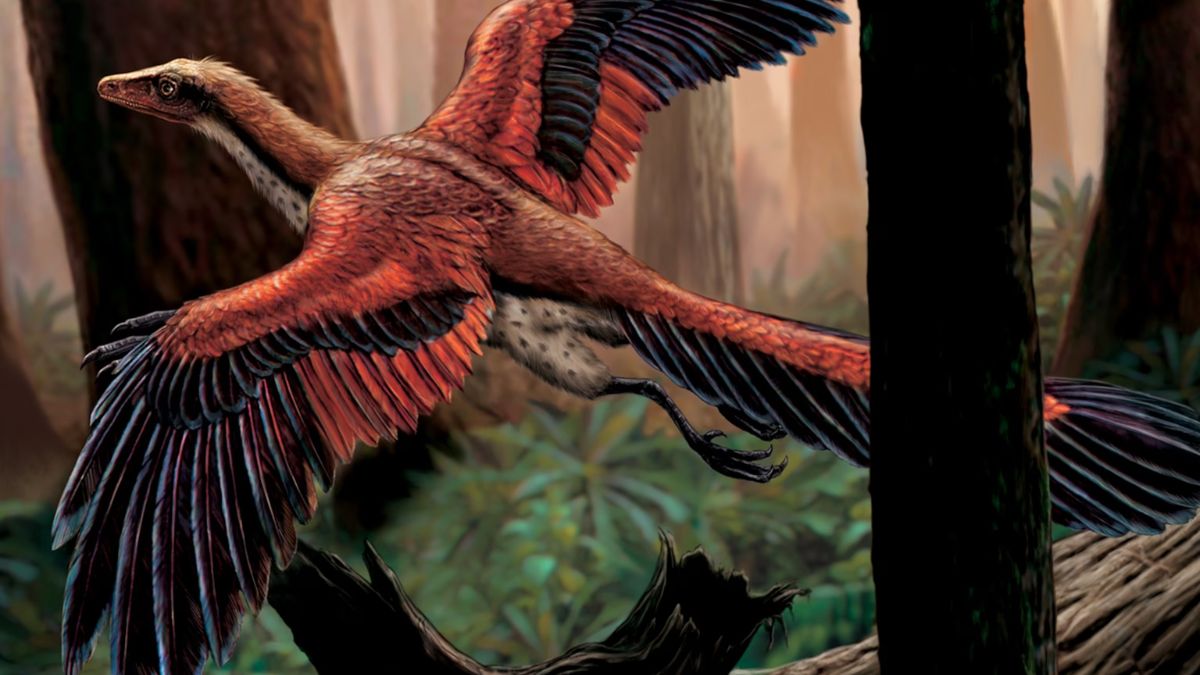
In 1861, just two years after Charles Darwin published On the Origin of Species, a strange and exciting fossil turned up in Germany. It was a feather—perfectly preserved in stone—and the first of its kind ever found. Scientists at the time believed it belonged to a creature called Archaeopteryx, a species that lived about 150 million years ago and showed both bird and dinosaur traits.
But here’s where things got strange. As more Archaeopteryx fossils were discovered over time, none of them had feathers that matched this first one. That led to decades of debate. Was the fossil really from Archaeopteryx—or had it come from an entirely different, unknown creature?
Identity
For years, the mystery remained unsolved. Then, a group of international paleontologists decided to take another look using advanced imaging and scanning technology. They compared the feather to a specific Archaeopteryx specimen known as the Altmühl specimen—one of the best preserved examples ever found.

And the results? A perfect match.
The feather’s size, shape, and curve aligned exactly with a feather from the left wing of the Altmühl Archaeopteryx. After more than 160 years, the mystery was finally solved—the fossil really did come from an Archaeopteryx.
Color
The story doesn’t end there. Scientists also wanted to know what color the feather had been. Using microscopic scans, they found structures called melanosomes inside the fossil. These tiny bodies hold pigment, and in this case, they revealed that the feather was entirely black and matte in texture.

Turns out, the black color wasn’t just for looks. It actually made the feather stronger and more durable—perfect for creatures that were learning how to fly. These black feathers helped them glide and flap without the feathers breaking down too quickly.
Who would have thought color could boost flight performance?
Importance
Confirming that this feather belonged to Archaeopteryx means something much bigger than solving a fossil mystery. It strengthens the idea that this species was truly a “missing link” between dinosaurs and modern birds.
Archaeopteryx had wings and feathers like birds do today—but also had teeth, clawed fingers, and a long bony tail, just like small theropod dinosaurs such as the Velociraptor. It was a creature caught in between two worlds—walking the line between past and future.
Flight
So, did Archaeopteryx fly like today’s birds? Not quite. Its flight was probably limited to short bursts—maybe jumping between trees or gliding over small gaps. But this still shows an early form of flight, powered by feathers that had already evolved for other purposes like warmth or display.
This supports the theory that feathers were first used for insulation before becoming essential tools for flying. Over time, these flying adaptations became more advanced, leading to the birds we see in the sky today.
Evolution
This discovery is one more piece in the massive puzzle of evolution. It proves that changes happen over time as animals adapt to their environment. No one engineered these changes—they occurred naturally, through survival and adaptation.
It’s amazing to think that a feather, formed 150 million years ago, could help explain how birds evolved from their dinosaur ancestors. And even more amazing? Nature figured it all out without any help.
FAQs
What is the first feather fossil?
A feather found in Germany in 1861, likely from Archaeopteryx.
Did the feather belong to Archaeopteryx?
Yes, modern scans confirmed it matched the Altmühl specimen.
What color was the fossil feather?
It was black and matte, which made it stronger for flight.
Could Archaeopteryx fly?
Yes, but only short distances—not like modern birds.
Why is the fossil important?
It links dinosaurs to birds and shows early evolution of flight.