Along the muddy bottom of the Sava River in northeastern Bosnia and Herzegovina, a remarkable discovery was made after just two days of underwater exploration: a massive cluster of nearly 200 ancient iron ingots. Found in the riverbed near Bosnian Posavina, this cache could rewrite parts of European trade and metalwork history from the late Iron Age.
These iron bars—bipyramidal ingots—date back to a period when Celtic La Tène cultures and Roman expansion overlapped, around the 1st or 2nd century BC. But the true story lies not only in their age, but in their volume, craftsmanship, and trade implications.
Table of Contents
Discovery

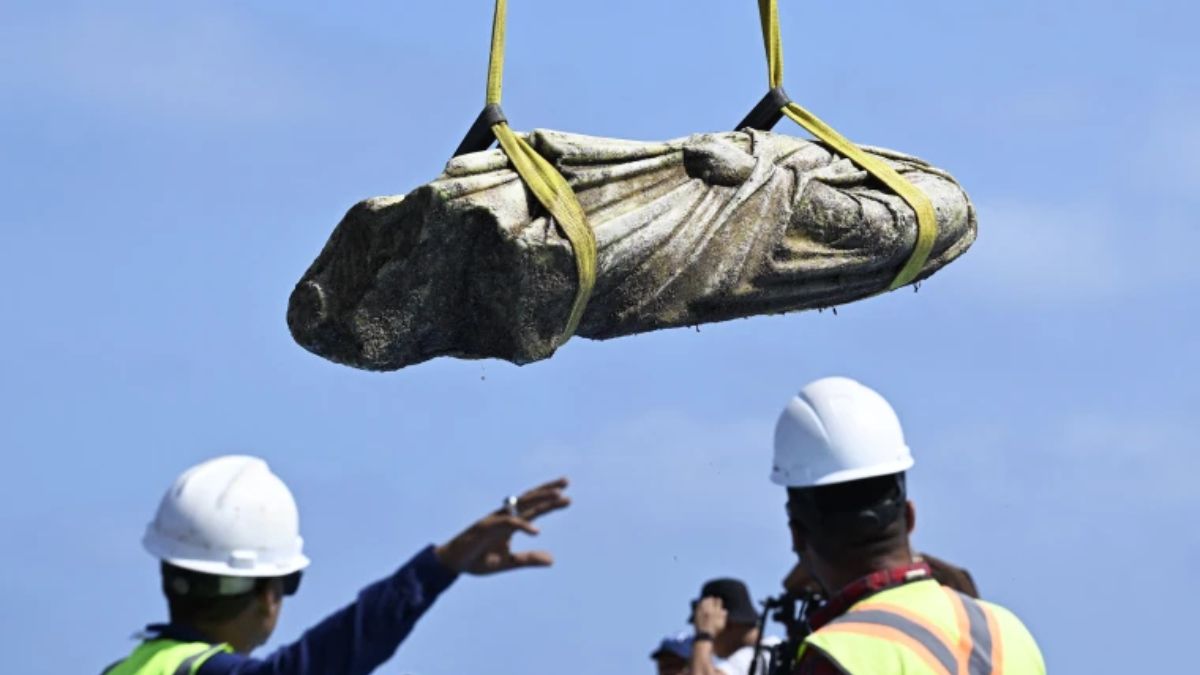
The recovery was led by Krunoslav Zubčić, senior conservator archaeologist from the Croatian Conservation Institute’s Department for Underwater Archaeology.
The site was first flagged by a local history enthusiast, and within days, a professional team was diving the river, mapping the layout, and lifting each piece with great care. The discovery was quickly hailed as one of the largest of its kind in the region.
Ingots
These aren’t just rusty iron bars. They are bipyramidal ingots—shaped like two joined pyramids and used in antiquity as semi-processed, movable stock by metalworkers.

The form was perfect for storage, transport, and reworking into tools, blades, and fittings. Metalworkers could reheat, weld, and forge them as needed.
What makes this discovery unique is the scale. “In this case, we are talking about a large quantity, nearly two hundred pieces,” Zubčić emphasized. Most previous finds have been isolated ingots. A stash this size offers a rare look into the economic systems of ancient Europe.
Making
Now that the bars have been recovered, the next step is figuring out how they were made and where they came from.

Researchers plan to conduct a chemical and isotopic analysis, comparing trace elements in the iron to known mining areas across Europe. This could reveal if the iron came from the eastern Alps, the Pannonian Basin, or another source—essentially pinpointing ancient trade networks.
They will also perform radiocarbon dating on carbon trapped within the iron, using modern techniques to avoid contamination and determine exact production dates.
Trade
These iron bars are more than tools—they were likely standardized trade stock, used to move value across regions. If their chemical makeup links them to ore from distant regions, that could suggest a network of suppliers, trade routes, and port stops along the Sava and beyond.
The river wasn’t just a boundary—it was a corridor for commerce. A cargo this size hints at a riverine trade system, likely involving rafts or barges. The Sava connected cultures and economies, from Celtic tribal zones to the Roman frontier.
Process
Recovering metal from underwater isn’t easy. The team used:
- Mapping and reference points to track exact positions
- Photogrammetry to build a 3D model of the site
- Distilled water storage to slowly leach salts and prevent corrosion
These conservation steps are vital. Without them, ancient iron would crumble once exposed to air.
Shapes
The shape of each ingot tells a story. Slight differences in length, angles, or end cuts can help identify the workshop or region where it was made.
Researchers will scan for:
- Hammer marks
- Weld lines
- Slag inclusions
- Porosity
- Heat treatment zones
Each detail could reveal the skill and tools of Iron Age metalworkers—and how knowledge moved across Europe.
People
Behind the find is a mix of local knowledge and professional expertise. It started with a keen observer who spotted something unusual, leading to a multi-disciplinary team bringing conservation science, regional history, and international collaboration together.
As Jezercic, director of the Museum of the Franciscan Monastery (Tolisa Vrata Bosne), put it:
“We will establish contact with those museums, that is, experts from that area.”
Cross-border cooperation will be essential to fund analysis, share data, and match the ingots with known artifacts elsewhere in Europe.
Impact
If all signs point to the 1st or 2nd century BC, this cache could illuminate a key moment in European history—when the Roman frontier pushed east and Celtic and Roman economies began to blend.
Whether these bars came from a single source or were assembled from various suppliers, the find offers clues to ancient manufacturing, commerce, and the people behind both.
In short, this isn’t just about rusty iron. It’s about how ancient Europe worked, and the quiet power of rivers, trade, and craftsmanship.
FAQs
What are bipyramidal ingots?
Iron bars shaped like two joined pyramids, used for trade and forging.
Where were the ingots found?
In the Sava River in northeastern Bosnia and Herzegovina.
How old are the iron ingots?
They date back to the 1st or 2nd century BC.
Why is this discovery important?
It offers rare insight into Iron Age trade and metallurgy.
Who led the recovery effort?
Krunoslav Zubčić and the Croatian Conservation Institute team.