In a world urgently needing cleaner and more efficient energy storage, scientists have just made a remarkable leap: the development of the first rechargeable hydride ion battery. While lithium-ion batteries dominate today’s devices, this new technology could someday rival or even surpass them—especially when it comes to safety, sustainability, and performance.
So what makes this new battery different, and why is it such a big deal? Let’s break it down.
Table of Contents
Concept

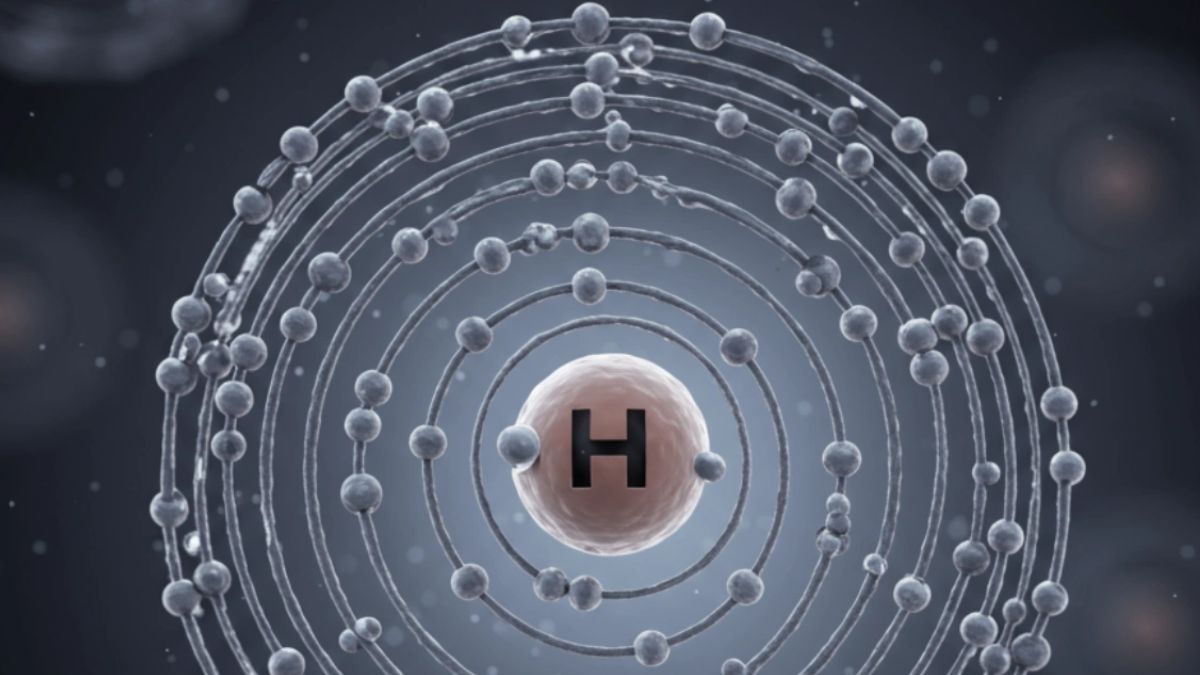
Hydride ions (H⁻), which are simply hydrogen atoms with an extra electron, have long intrigued researchers as potential charge carriers. They’re incredibly light—lighter than even lithium—and boast a high redox potential, which means they can carry a lot of energy per unit of mass.
Theoretically, this should make them ideal for powering future energy systems. But in reality, building a battery around hydride ions has been extremely difficult—mainly because scientists couldn’t find an electrolyte that allowed for fast ion movement, thermal stability, and compatibility with electrodes.
Until now.
Breakthrough

A research team led by Professor Ping Chen at the Dalian Institute of Chemical Physics (DICP), part of the Chinese Academy of Sciences, has reported a major breakthrough. In a recent study published in Nature, they announced the successful creation of a new core–shell electrolyte that finally makes hydride ion batteries viable.
This new material is called 3CeH₃@BaH₂—a layered or “core–shell” structure where a thin layer of BaH₂ (barium hydride) encapsulates CeH₃ (cerium hydride).
- CeH₃ provides high hydride ion conductivity
- BaH₂ offers thermal and electrochemical stability
The combination allows hydride ions to move freely at room temperature, which has never been achieved before in a stable, rechargeable battery using these materials.
Prototype

Once the electrolyte was ready, the team built a working prototype:
- Anode: CeH₂
- Electrolyte: 3CeH₃@BaH₂
- Cathode: NaAlH₄ (a well-known hydrogen storage material)
The performance numbers were impressive:
- Initial discharge capacity: 984 mAh/g at room temperature
- Capacity after 20 cycles: 402 mAh/g
- Operating voltage: 1.9 V
- Real-world test: Powered a yellow LED light
This might seem small compared to commercial batteries, but for a first-generation, solid-state, hydride ion battery, it’s a huge achievement.
Why It Matters
One of the most promising aspects of this design is its safety and sustainability:
- No lithium or rare metals needed
- No dendrite formation, a common issue in lithium batteries that leads to overheating and fire risk
- All-solid-state structure eliminates flammable liquid electrolytes
- Uses hydrogen, the most abundant element in the universe, as the charge carrier
In short, this could pave the way for a new class of clean, stable, and high-capacity batteries—perfect for future energy storage needs, from home solar systems to electric vehicles.
Advantages
| Feature | Hydride Ion Battery | Lithium-Ion Battery |
|---|---|---|
| Charge Carrier | Hydrogen ion (H⁻) | Lithium ion (Li⁺) |
| Safety | No dendrites, all-solid | Risk of fire with liquids |
| Sustainability | No rare metals | Depends on mined lithium |
| Electrolyte Type | Solid-state | Often liquid-based |
| Operating Temperature | Works at room temperature | Typically needs regulation |
| Energy Potential | High (early stages) | Mature technology |
The Road Ahead
While the current version is still in the lab phase, the door is now open for further development. The ability to tune the properties of hydride-based materials means scientists can keep optimizing the performance, durability, and capacity of these batteries.
And because this technology avoids some of the key limitations of lithium-ion systems—like resource scarcity and safety concerns—it could become an essential part of the global shift toward renewable energy.
So, while lithium has ruled the battery world for decades, hydrogen may soon be ready to share the crown.
FAQs
What is a hydride ion battery?
A battery that uses hydrogen ions (H⁻) as charge carriers.
Who developed the first hydride ion battery?
Prof. Ping Chen’s team at the Dalian Institute of Chemical Physics.
What makes 3CeH₃@BaH₂ unique?
It combines fast ion conduction with thermal and chemical stability.
Is the battery safe to use?
Yes, it’s all-solid-state and avoids dendrite formation.
How much voltage does it produce?
The prototype reached 1.9 volts in a stacked setup.