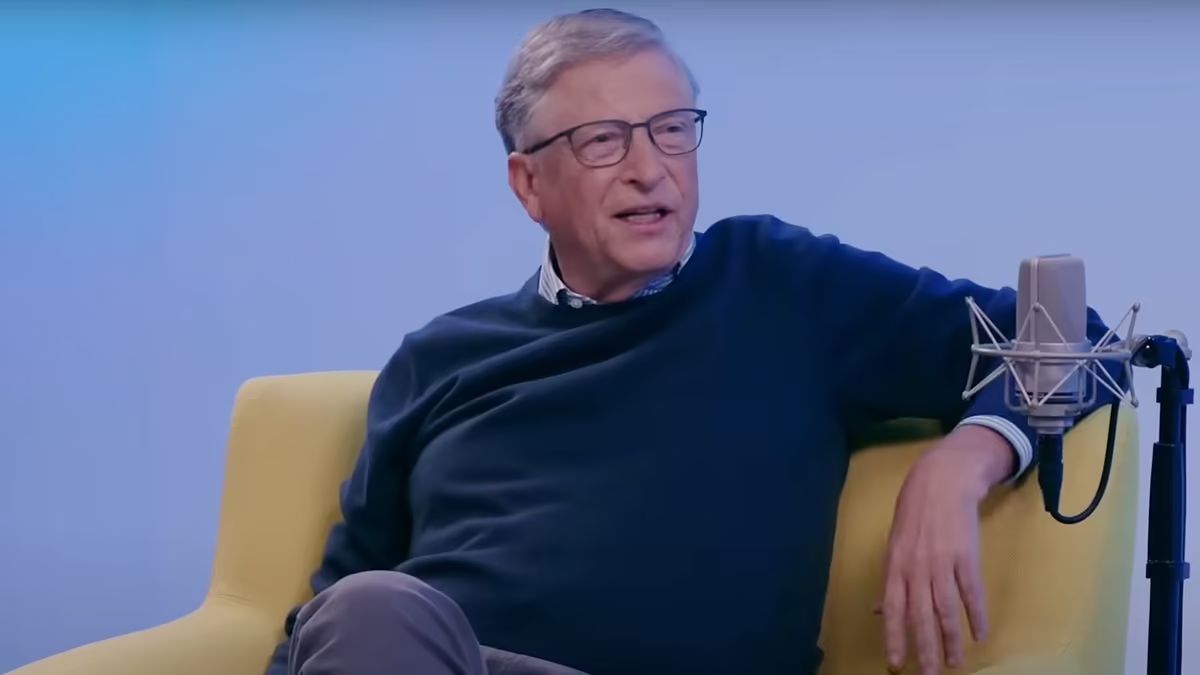
As artificial intelligence continues reshaping industries at an astonishing pace, many of us are left wondering: will my job survive the AI revolution? Bill Gates, one of the most respected figures in tech, has weighed in with some guidance. His insights are clear—while automation is changing how we work, not all careers are at risk. In fact, some fields may become even more important in an AI-driven world.
So which careers are safe? And what skills should we be doubling down on to stay relevant? Let’s cut into Gates’ predictions and the real-world examples behind them.
Table of Contents
Biology

Among the first careers Gates highlights is biology. AI is brilliant at analyzing vast amounts of data, but it lacks the creativity and intuition that biological sciences often demand.
Think about what goes into discovering a new drug or understanding a disease. It’s not just data analysis—it’s forming bold hypotheses, chasing unexpected results, and reading between the lines. AI can assist, but it can’t feel when a theory is onto something or follow a gut instinct.
That’s where human scientists still shine. Gates believes this human spark—the ability to see patterns where machines can’t—is irreplaceable in biology and life sciences.
Software

You might assume AI would take over software development, but Gates says not so fast. While AI can help developers work faster—fixing bugs or generating code—it still can’t replace the creative thinking behind programming.
Software isn’t just lines of code; it’s problem-solving, innovation, and reimagining what’s possible. From building a new app to creating game-changing algorithms, the real breakthroughs happen when human creativity takes the lead.
I’ve had a few moments writing code where a fresh idea or a twist on an old concept changed everything. That’s not something AI is wired to do. Gates sees AI as a powerful assistant to developers, not a replacement. The future of software lies in combining machine speed with human originality.
Energy

The energy sector is another area where Gates sees AI playing a supporting role, not taking over. Power grids, renewable energy systems, and plant operations are incredibly complex. While AI can monitor, predict, and analyze data, it can’t replace the judgment and experience needed in high-stakes decisions.
I recall watching a segment on energy managers balancing grid loads during emergencies. AI made predictions, but the decisions still came down to experienced humans who understood the risks involved. The margin for error in this field is razor-thin, and human responsibility remains central.
Value
So what’s the common thread in these careers? They all depend heavily on human qualities—judgment, imagination, intuition, and decision-making. AI can crunch numbers and recognize patterns, but it struggles with abstract thinking and emotional intelligence.
That’s why careers in research, innovation, and real-world problem-solving will continue to thrive. Gates reminds us that machines are tools, not replacements. When we use AI to handle repetitive tasks, it frees us to focus on the creative and critical work machines can’t do.
Future
In an AI-driven world, the most successful people will be those who double down on their human edge. That might mean sharpening your soft skills, staying curious, or seeking roles that allow room for problem-solving and creativity.
It also means being open to using AI as a tool to amplify your abilities—not compete with it. The smartest workers of the future will blend tech fluency with uniquely human strengths.
The real takeaway from Gates’ insight is this: AI is not the enemy of human work—it’s a partner. But to thrive, we need to lean into the parts of ourselves that no machine can replicate.
FAQs
Which career is safe from AI?
Biology, due to its need for human intuition and creativity.
Can AI replace software developers?
No, developers use creativity and strategy that AI can’t match.
What role does AI play in energy?
AI supports, but humans make critical judgments and decisions.
What skills stay valuable with AI?
Creativity, intuition, judgment, and problem-solving.
Is AI a threat to all jobs?
No, it’s a tool that complements rather than replaces human work.