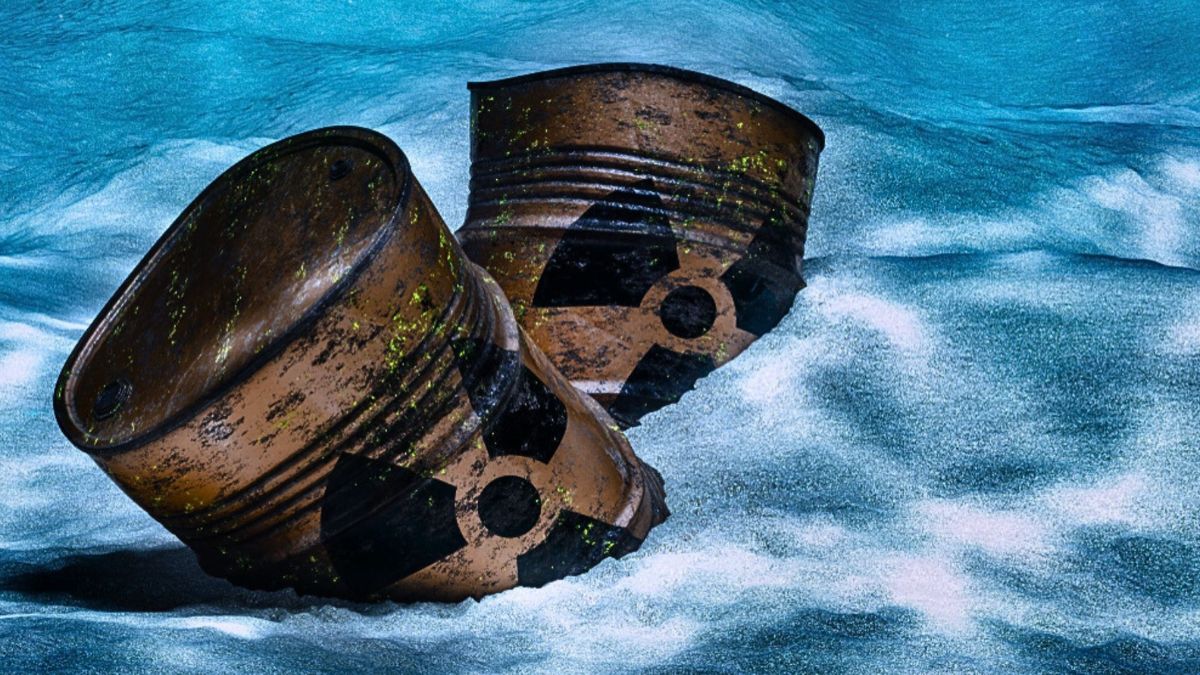
France is taking a big step toward environmental responsibility with a new mission to locate and study thousands of radioactive casks dumped in the Atlantic Ocean decades ago. These casks, remnants of a time when nuclear waste disposal was poorly regulated, could now pose serious risks to marine ecosystems.
Let’s break down what happened, why it matters today, and how France’s upcoming NODSSUM mission is trying to fix a long-buried mistake.
Table of Contents
Background
To understand why the ocean floor is hiding around 200,000 radioactive casks, we need to rewind to the years between 1946 and 1990. During this period, countries like France, Germany, and the United Kingdom were actively disposing of nuclear waste by dumping it directly into the sea.
The waste came from nuclear plants, hospitals, laboratories, and research facilities. At the time, ocean dumping seemed like the easiest and cheapest solution. The idea was simple: seal the waste inside sturdy metal casks, coat them with protective material, and sink them into the deep.
These casks were often dumped in a specific area of the Atlantic Ocean, near the French city of Nantes. Back then, people believed the ocean was vast and deep enough to hide humanity’s most dangerous waste forever.
Consequences

What those countries didn’t consider was that nuclear waste doesn’t just disappear. These materials remain toxic for thousands of years. Over time, the casks can corrode, break open, and release radioactive particles into the water.
The real danger is that we don’t know how many of these casks are still sealed—or how many have already started leaking. With more awareness now about pollution and environmental health, it’s clear that this method of disposal was a huge mistake.
We are only now beginning to understand the long-term damage this could cause to marine ecosystems, seafood safety, and human health.
Mission

France is now taking the lead in cleaning up the mess. On June 15, 2025, they will launch a month-long operation called the NODSSUM mission. This project will use modern technology, including submarines and underwater robots, to locate the casks and assess the damage.
The first phase of the mission involves mapping the ocean floor near the dumping zone and identifying where the casks are located. Next, scientists will collect samples of water, sediment, and marine life around the casks to check for signs of radioactive contamination.
Once they understand the situation, further steps will be planned—possibly including removing or securing the casks.
Importance
This mission is more than just a cleanup job. It’s about accountability. France, one of the countries that once contributed to the problem, is now stepping up to address it. The NODSSUM mission represents a shift in how nations deal with past environmental mistakes.
By investigating and acknowledging the potential harm caused by these radioactive casks, France is setting a new standard for environmental responsibility.
This mission is also likely to provide valuable scientific data that can guide future policies. It could even help shape global standards for the management of nuclear waste.
Hope
The NODSSUM mission serves as a reminder that while we can’t change the past, we can take responsibility for it. And when we do, we move closer to building a more sustainable future.
If other countries follow France’s lead, we could see more international cooperation around cleaning up ocean pollution—not just from nuclear waste, but from all forms of industrial dumping.
This mission sends a powerful message: protecting the environment isn’t just about what we do today—it’s also about fixing what was done decades ago.
FAQs
How many casks are in the ocean?
Around 200,000 radioactive casks are in the Atlantic Ocean.
Where were the casks dumped?
They were dumped near Nantes, France, in the Atlantic Ocean.
What is the NODSSUM mission?
It’s France’s mission to locate and analyze the casks.
Why were the casks dumped?
Between 1946–1990, it was seen as a cheap disposal method.
When does the mission begin?
It starts on June 15, 2025, and lasts one month.