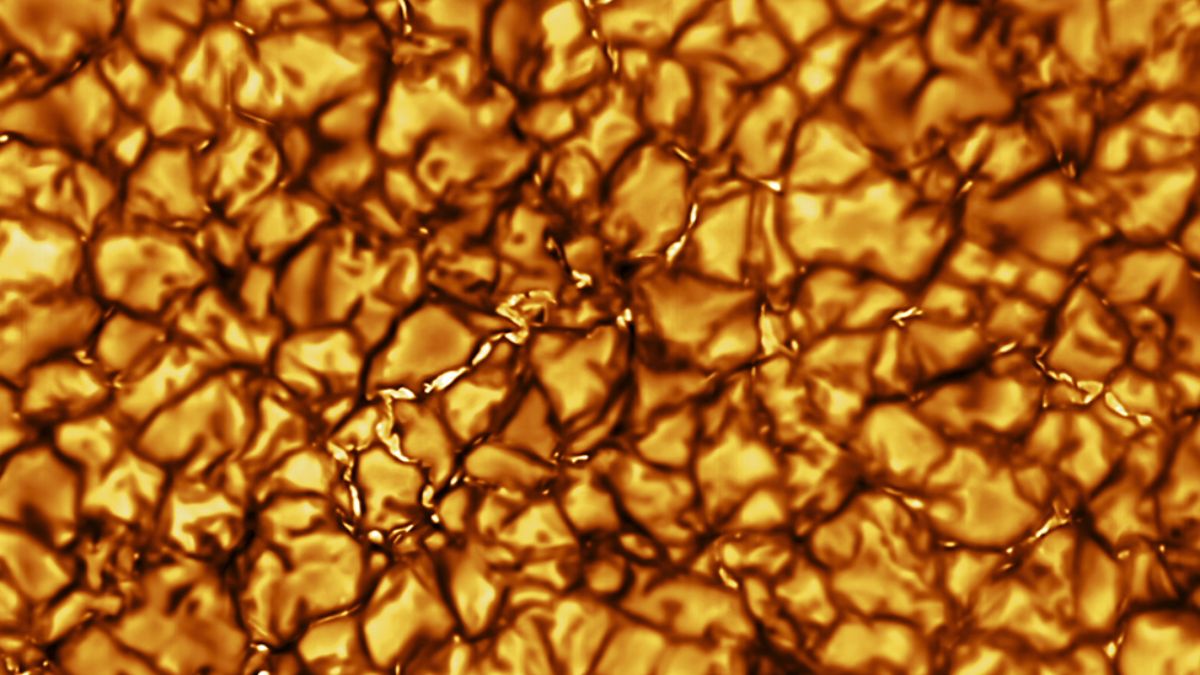
Think you know what the Sun looks like? Think again. Thanks to a groundbreaking leap in space imaging, scientists have found a way to capture something we’ve never really seen before: the Sun’s corona. And no, it’s not the same bright surface we’re used to—it’s something far more mysterious, and possibly far more important.
These new images are opening doors to understanding solar storms and protecting Earth from their harmful effects. Let’s break down what this discovery means, how scientists pulled it off, and why it might be more important than it sounds.
Table of Contents
Research

For decades, even our most powerful telescopes struggled to give us a clear picture of the Sun. Why? The problem wasn’t the telescope itself—it was Earth’s atmosphere. Light distortion caused by air layers made it impossible to focus in on certain features, especially the outer layer of the Sun.
But now, scientists have found a way around this. Using a cutting-edge tool called adaptive optics (AO), researchers have managed to capture incredibly detailed views of the Sun’s corona—the glowing outer layer that’s usually hidden by the Sun’s own brightness.
Corona
So, what exactly is the corona? It’s the outermost layer of the Sun, and it’s made of a super-hot, electrically charged gas called plasma. You might assume that being farthest from the Sun’s core would make it cooler. But it’s actually the opposite.

While the Sun’s surface burns at around 6,000 Kelvin, the corona can reach temperatures of more than 1 million Kelvin. That’s more than 150 times hotter. It’s a mystery that has puzzled scientists for years, and they’ve even given it a name: the coronal heating problem. No one knows why it’s so much hotter, but now we might finally get some answers.
Technology
Let’s talk about how scientists made this possible. Adaptive optics isn’t exactly new, but applying it to the Sun’s corona is. Originally used to sharpen images of stars and planets, AO helps correct distortions caused by the atmosphere in real time.
Here’s how it works: special mirrors inside the telescope constantly shift and adjust to correct incoming light. Imagine it like an advanced Instagram filter—but for space. This lets scientists get crystal-clear views of the Sun, something they could never do before from Earth.
Discoveries

With this new view of the corona, researchers are already spotting things that were nearly impossible to observe before.
One of those is something called coronal rain. This happens when the plasma in the corona cools down and falls back toward the solar surface. But it doesn’t just fall straight—it follows the Sun’s magnetic field lines, creating streams of plasma that rain down in glowing arcs.
Scientists have also observed massive loops of plasma that form complex shapes in the corona. These loops are tied to powerful solar explosions that can shoot charged particles into space—sometimes straight toward Earth. Understanding these loops could be key to predicting solar storms.
Benefits
Why should we care about any of this? Because what happens on the Sun doesn’t stay on the Sun. Solar storms can mess with Earth’s satellites, GPS systems, power grids, and even airline communications. Getting an earlier and more accurate warning could help avoid serious disruptions.
By getting a better view of the corona, scientists can study the very conditions that trigger these storms. This can lead to improved forecasting and even preventative measures to protect sensitive technology here on Earth.
Future
It might not seem like a huge deal if you’re not into space science, but make no mistake—this is a big step. These images are more than just pretty pictures. They’re a new window into the Sun, our most important star, and a possible tool for protecting the planet.
And who knows? This breakthrough could inspire new technologies, spark future discoveries, or even play a role in solving climate or energy problems. Space science has a way of starting small and leading to massive change.
Sometimes the most powerful discoveries are the ones we barely notice at first—until they change everything.
FAQs
What is the Sun’s corona?
It’s the outermost layer made of super-hot plasma.
Why is the corona hotter than the surface?
Scientists don’t know yet—it’s called the coronal heating problem.
What is adaptive optics?
A tech that adjusts telescope mirrors to remove atmospheric distortion.
What is coronal rain?
It’s when cooled plasma falls back to the Sun’s surface.
How can this help Earth?
It helps predict solar storms that can affect power and satellites.