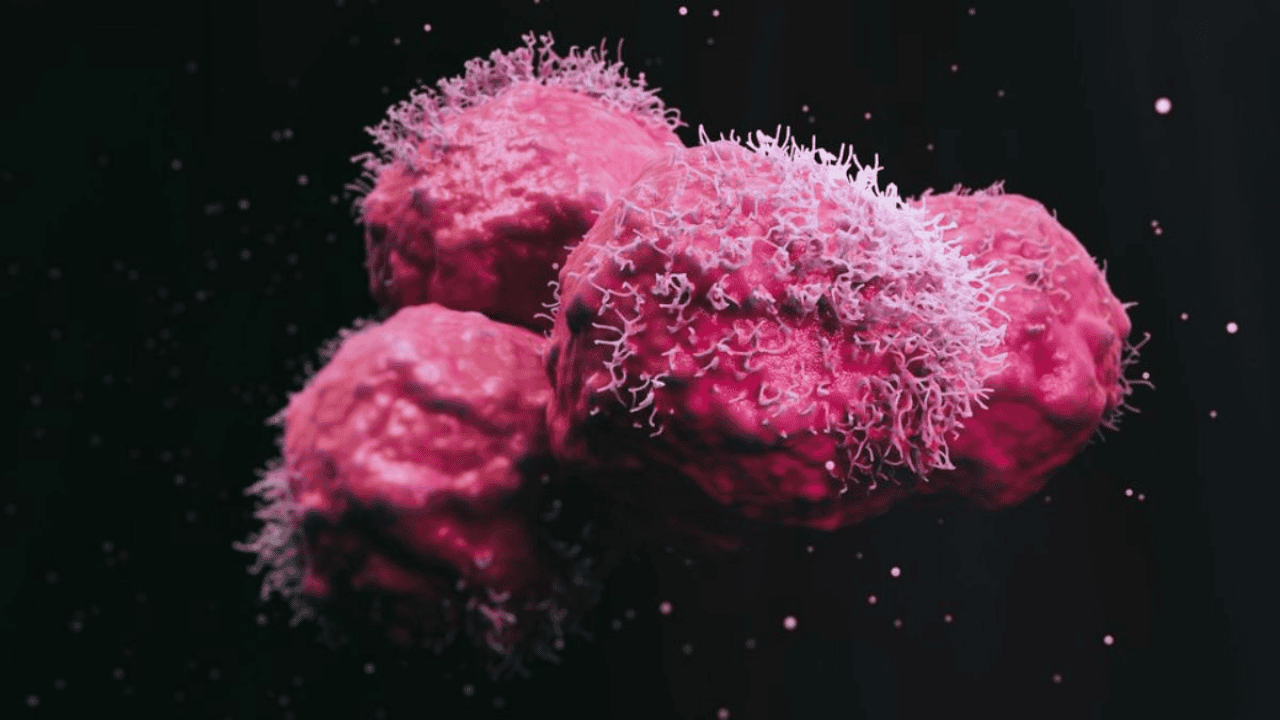
Pancreatic cancer has always been one of medicine’s darkest corners—aggressive, fast-moving, and notoriously resistant to treatment. Even with surgery, chemo, and the latest immunotherapies, most patients face devastating odds. The American Cancer Society pegs the five-year survival rate for pancreatic ductal adenocarcinoma (PDAC) at under 10%. What’s baffled scientists for decades is how the cancer spreads so quickly despite being encased in dense, fibrous tissue that should theoretically trap it in place.
Now, a team at Cornell University says they’ve found the missing link: a receptor that effectively hands cancer cells both the keys to unlock their prison and the tools to escape.

Read Also- Retirees Reveal How Moving Closer to Family Changed Their Lives
Table of Contents
The Receptor That Opens the Floodgates
The culprit is ALK7, a receptor protein that turns out to be a kind of “master switch” for metastasis. In their study, published in Molecular Cancer, Cornell researchers discovered two major effects once ALK7 becomes active:
- Mobility unlocked – ALK7 triggers epithelial-mesenchymal transition (EMT), the process that lets stationary cancer cells morph into mobile ones.
- Barriers broken – it also stimulates production of enzymes that weaken and puncture blood vessel walls, creating exit ramps into circulation.
Put simply, ALK7 doesn’t just let cancer cells walk free—it equips them to invade the bloodstream and seed tumors elsewhere. As lead author Esak Lee, assistant professor at Cornell’s Meinig School of Biomedical Engineering, put it: “ALK7 gives cancer cells both the engine to move and the tools to invade.”
| Key Finding | Role in Cancer Spread |
|---|---|
| ALK7 receptor (active) | Triggers mobility via epithelial-mesenchymal transition |
| ALK7 receptor (active) | Produces enzymes to break down vessel walls |
| Blocking ALK7 early | Dramatically slows metastasis |
| Blocking ALK7 late | No effect once cells are in bloodstream |
Clearing Up Past Confusion

ALK7 has long been a puzzle in oncology. Some studies painted it as a tumor suppressor, others as a tumor promoter. The Cornell team resolved this contradiction using two cutting-edge systems:
- Mouse models for biological relevance
- An “organ-on-chip” vascular model, essentially a living micro-replica of human blood vessels
That chip allowed scientists to watch in real time how pancreatic tumor cells interact with vessel walls—something traditional animal models can’t capture with the same clarity.
Why Timing Is Critical
The research also underscores a sobering reality: when ALK7 is blocked makes all the difference.
- Early intervention: Before cancer cells enter the bloodstream, shutting down ALK7 can dramatically slow or even prevent metastasis.
- Late intervention: Once cells have already escaped into circulation, ALK7 inhibition does nothing.

As Lee explained: “Once we miss this early opportunity to block ALK7 receptors, the cancer cells can freely circulate in the bloodstream and easily seed into other organs.”
This finding both raises the stakes and highlights opportunity: pair an ALK7 inhibitor with better early detection, and survival odds could shift.
Beyond Pancreatic Cancer
The Cornell discovery may ripple beyond PDAC. Because the organ-on-chip platform mimics blood vessel interactions, it can be adapted to study other aggressive cancers—breast, colon, brain—that also face dense tissue environments. Each tumor type has its own microenvironment quirks, and ALK7 (or similar pathways) may turn out to be critical escape hatches elsewhere.
What This Means for Patients
Right now, the finding isn’t a drug. But it does point toward one. The next logical step is the development of a targeted ALK7 inhibitor—a therapy that could be given at early stages, ideally just after diagnosis or surgery, to stop metastasis before it starts.
Of course, that depends on solving another challenge: catching pancreatic cancer early. Most cases are discovered late, when metastasis is already underway. If screening improves, and ALK7 inhibition is added to the arsenal, the grim five-year survival statistics could finally begin to move.
For now, the discovery answers a fundamental question oncologists have long asked: why does pancreatic cancer spread so fast? The fortress of fibrous tissue wasn’t keeping the enemy in—it was housing a receptor that had already picked the locks.
FAQs
What is ALK7?
It’s a receptor protein that activates pathways making pancreatic cancer cells mobile and able to invade blood vessels.
Why is pancreatic cancer so deadly?
Its aggressive spread and resistance to treatment keep survival rates below 10% over five years.
Can blocking ALK7 stop cancer?
Only if done early. Once cells are in the bloodstream, inhibiting ALK7 doesn’t slow metastasis.
What’s unique about Cornell’s study?
They used an “organ-on-chip” system that replicates human blood vessels, revealing how ALK7 enables escape.
Does this discovery lead directly to a new treatment?
Not yet, but it identifies ALK7 as a prime drug target for future inhibitors.