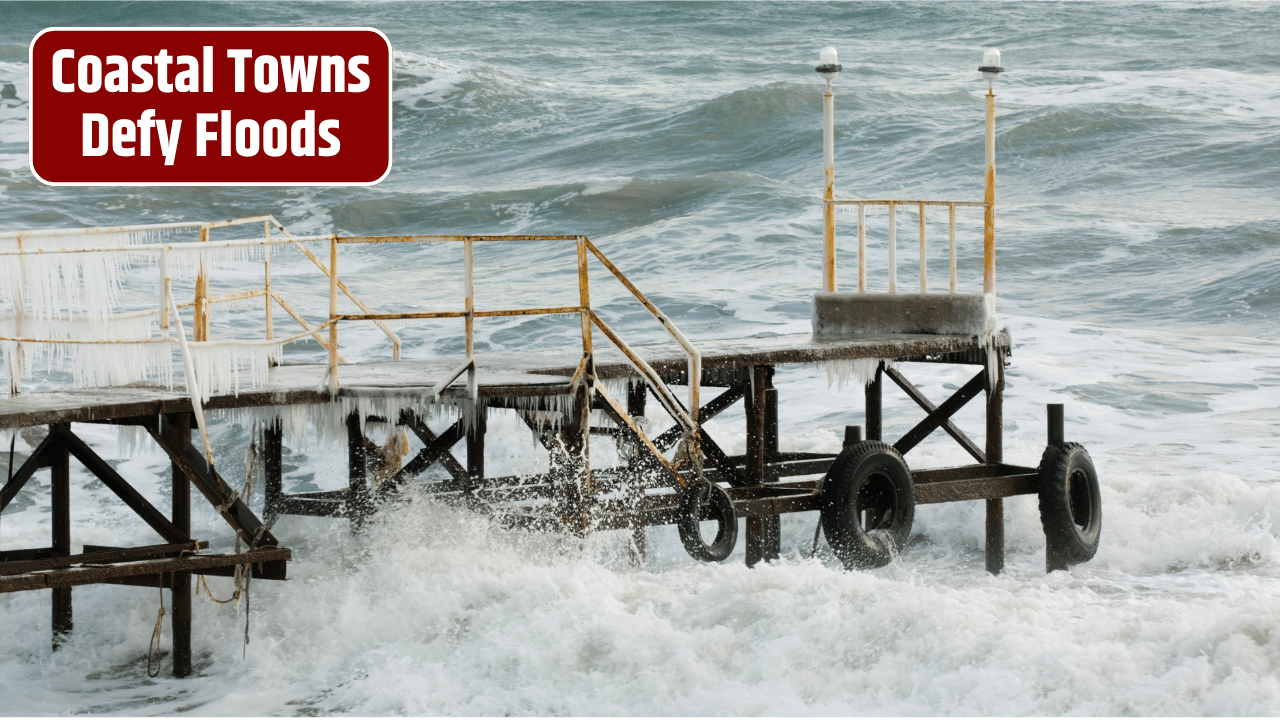
The tide is rising—literally—and coastal towns up and down the shoreline are scrambling to stay ahead of the water. This week, several municipalities unveiled bold new resilience strategies aimed at protecting homes, businesses, and critical infrastructure from the twin threats of flooding and sea-level rise. It’s not theory anymore: last summer’s king tides pushed seawater into downtown streets, and storms in recent years have caused millions in damages. Now, leaders are promising a “flood-proof future,” though skeptics wonder if the costs and engineering feats are realistic.
Table of Contents
The Playbook for Survival
From seawalls and living shorelines to elevating entire neighborhoods, the new resilience plans are sweeping in scope. Town engineers are testing both gray infrastructure—think higher levees and reinforced seawalls—and green infrastructure, like oyster reef restoration and expanded wetlands to absorb storm surges.
| Strategy | Example Project | Timeline | Est. Cost Range |
|---|---|---|---|
| Elevated Roadways | Raising 6 miles of coastal highway | 2026–2030 | $400–600M |
| Living Shorelines | Wetland restoration, oyster reefs | 2025–2035 | $50–75M |
| Seawall Expansion | 12-ft reinforced barriers | 2027–2032 | $1.2B+ |
| Home Elevations | Pilot of 500 homes | 2025–2028 | $80–100M |

Local leaders argue that a mix of solutions—hard defenses plus nature-based strategies—offers the best shot at protection. “We can’t build our way out of this with concrete alone,” one city planner said.
Climate Reality Bites
The National Oceanic and Atmospheric Administration (NOAA) projects sea levels along U.S. coasts could rise up to a foot by 2050. For many low-lying towns, that makes flooding less a rare event and more a seasonal headache. Add to that more intense hurricanes, and resilience isn’t just about safety—it’s about survival of local economies that depend on tourism, fishing, and shipping.
The Federal Emergency Management Agency has warned that communities failing to adapt could see skyrocketing insurance premiums under the National Flood Insurance Program. Already, some homeowners are paying more for flood coverage than for property taxes.
Residents React

Reactions are mixed. Some residents see the strategies as overdue, especially those who’ve had water in their living rooms more than once. Others bristle at billion-dollar seawalls, arguing that tax hikes and debt loads will sink the towns before the ocean does. And then there’s the hard truth: not every neighborhood can be saved. Behind closed doors, officials admit “managed retreat”—incentivizing families to move inland—remains on the table.
A Test Case for the Nation
These towns may become models for coastal resilience nationwide. Federal infrastructure dollars, tied to the Bipartisan Infrastructure Law, are expected to help bankroll many of the projects. If the strategies succeed, they could be replicated in Miami, New Orleans, and smaller fishing towns alike. If they fail? Billions may be washed away with little to show for it.
Rumors circulating online claim that entire towns are being “forced to relocate immediately.” That’s inaccurate. While some buyout programs exist, the approved resilience strategies prioritize protection and adaptation first, not mass relocation. Retreat is discussed only as a long-term, voluntary option.
FAQs
What are “living shorelines”?

They’re nature-based projects—wetlands, oyster reefs, mangroves—that buffer waves, reduce erosion, and provide habitat while protecting coasts.
Will seawalls stop all flooding?
No. They reduce storm surge risk but can’t fully prevent groundwater flooding or rain-driven flash floods.
Who pays for these resilience projects?
Costs are split between local taxes, state grants, federal funding, and sometimes private partnerships.
Will property insurance rates go down?
If projects succeed in reducing flood risk, FEMA’s flood insurance premiums could stabilize. Without action, rates are projected to climb.